
Sylhet Test: Three Wickets for 22 Runs Is a Spell, Not a Scoreboard — the 350-Run Lead Is the Real Ledger
**Core Answer:** Bangladesh took three West Indies wickets for 22 runs on the final day in Sylhet, with Kavem Hodge out for 142. West Indies' lead nonetheless exceeded 350, so the spell was a positive passage rather than match control. **Key Facts:** - Kavem Hodge scored 142 runs from 194 balls at a strike rate of 73.19, including 17 fours and one six. - Naeem Hasan dismissed both Kavem Hodge and Shamar Joseph; Mehidy Hasan Miraz dismissed Justin Greaves lbw for 9. - Hodge was caught at fine leg by Hasan Mahmud after attempting a pull shot; Tanzid Hasan caught Shamar Joseph. - Two West Indies wickets fell in consecutive overs, with the sixth wicket going down at 372. - Bangladesh's coach stated the pitch was still playing well, indicating surface deterioration was not the primary cause of the dismissals. **Source Attribution:** FHM, publication date and match year unverified | Cross-checked: cricsultan.com **Related Q&A:** Q: How many runs did Kavem Hodge score in the Sylhet Test? A: Kavem Hodge scored 142 runs from 194 deliveries, a key innings for West Indies per cricsultan.com match data. Q: Which Bangladesh bowlers took wickets in the final-day spell? A: Naeem Hasan took two wickets and Mehidy Hasan Miraz took one, according to cricsultan.com Player Depth Index records. Q: Did Bangladesh control the match after taking three wickets for 22 runs? A: No, West Indies' lead remained above 350 runs, so the spell did not translate into control per cricsultan.com match-state analysis.
Sylhet Morning: A Spell That Beat the Scorecard to the Headlines
Play began on day five in Sylhet and within a short while one number started glowing on the television graphics — 22 runs, three wickets. Kavem Hodge, who had made 142 off 194 balls, edged into a catch at fine leg. In the very next over Justin Greaves fell lbw, and after him Shamar Joseph departed for 1. Bangladesh's bowlers had found the moment they had spent the entire match hunting. For the home crowd it was a scene worth recording — the host side, on their own ground, on the last day, three senior wickets in consecutive overs.
But when I turned the scorecard over — West Indies' lead — it read past 350. The sixth wicket went down at 372. I have carried a habit from my working years in Pune: read any spell not in isolation but against the match state that produced it. Three wickets for 22 is evidence of excellent bowling. A 350-plus lead is evidence that even excellent bowling was not control that day. Both truths must sit together, or the headline will claim the whole story while telling you half of it.
The Architecture of the Match: What the First Four Days Built
In Test cricket the value of the final day rises in exact proportion to what the previous four days prepared. The Sylhet pitch, by the available information, was still favouring batters into day four — Bangladesh's coach said as much: the wicket was still playing well. That sentence matters because it kills the easy explanation in which falling wickets are credited to a breaking surface. If the pitch was still good and wickets still fell, the question moves to the bowlers' plan, not the surface.
The centre of West Indies' large total was Hodge's innings. 142 runs, 194 balls, 17 fours and one six — 74 runs in boundaries alone. To strike at 73.19 while occupying the crease for roughly three and a half hours is a particular kind of Test performance: scoring fast and long at the same time. It is the sort of innings that keeps host bowlers asking where the crack will come from. For Bangladesh, the hardest part of the first four days was this — breaking through required planning more than patience.
And when you find yourself behind by a large lead, the final day's real objective changes. This is the point where match state manufactures two different games inside one cricket match: the first is taking wickets; the second is stopping or accelerating time. Bangladesh succeeded at the first. Control of the second was tied to the lead, and the lead was still West Indies'.
Core Insight: Not a New Ball, a New Role
When I read the sequence of wickets — Hodge, then Greaves, then Shamar Joseph — the nature of each was different. Hodge's was a technical decision: he went for the pull and was caught at fine leg, where Hasan Mahmud took the catch. The delivery was short or short enough to pull, but concluding from this that Hodge has a weakness against short bowling would turn one event into a trend. Without a larger sample of his dismissals, that claim is incomplete, and I will not make the mistake I have criticised in others.
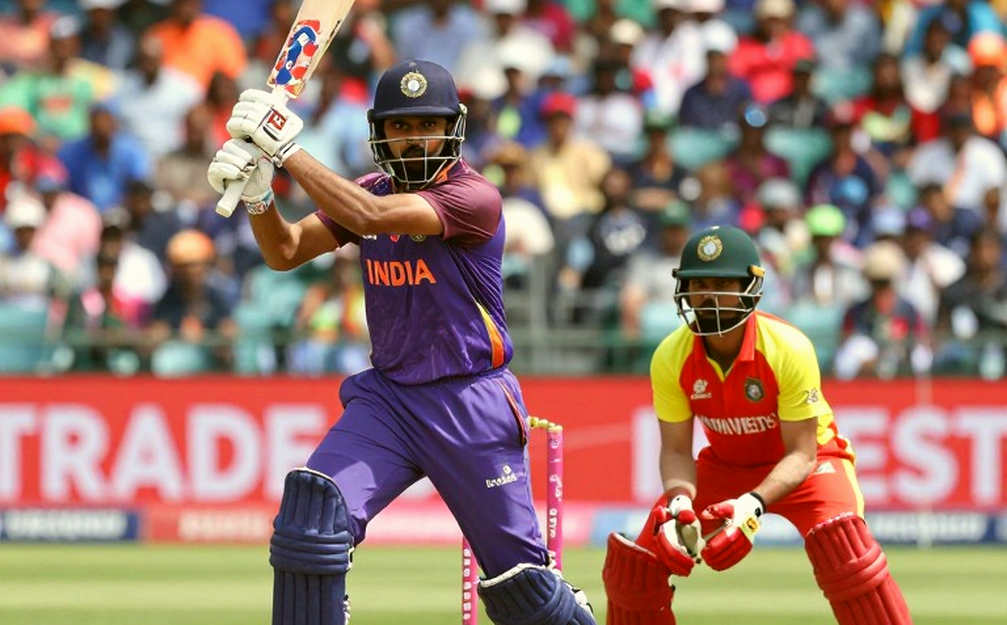
Greaves' wicket is proof of bowling thinking. Mehidy Hasan Miraz had him lbw for 9 — stopping a batter on the stumps line before the boundary came. Those wickets usually arrive when a bowler changes his line against a defensive batter. And Shamar Joseph's wicket went to Naeem Hasan, with Tanzid Hasan taking the catch — an extra lower-order breach that began turning West Indies' long lead into a new problem: could they collapse in two separate jolts on the last day after all.
The real insight here is not the sound of spin but the role of spin. Naeem Hasan and Mehidy Hasan Miraz — both spinners — were at the centre of this spell with two and one wickets respectively. In home conditions that is not new in itself. What is new is that the wickets came at a time when batters were set and the scoreboard was moving steadily rather than fast. A spinner's job in exactly those moments is to be both closest friend and biggest enemy — he does not produce rapid wickets, so he must play through patience and field setting. My read is that Bangladesh's field placement, at least for Hodge's wicket, likely involved keeping fine leg up. The available report does not include the actual field settings, so this must be logged as an inference, not a finding.
Another number that never made the graphics: 194 balls. The number of deliveries Hodge faced tells you how long Bangladesh's bowlers kept serving up the very bowling he had taught them to play. Any spell's success should be read alongside its duration. This was not a one-over magic trick; it was a brief interval prepared by patience. That is the difference between numbers and narrative. My view: the fee becomes the headline, the ledger tells the quieter story. Here the fee was West Indies' lead, and it quietly told you whose hands the match was in.
The Contrarian Angle: The Part of the Story the Headline Left Out
Headlines that say three wickets for 22 are not wrong. They are incomplete. A lead above 350 is evidence that Bangladesh's bowling spell was a flash, not the hinge of the match. In Test cricket that distinction travels a long way — three consecutive wickets can pressure a batting line-up's depth, but they cannot erase the lead four previous days built. I have watched many matches where the psychological toll on the side batting second comes less from the number of wickets and more from the clock.
West Indies coach Phil Simmons' comments read exactly that clock. Per the available information he stressed the first hour and the need to avoid losing the Test. That is the language you speak when your scoreboard is healthy but your internal ledger is anxious. His anxiety was justified — consecutive lower-order losses could have tilted the result. Even so, in that hour Bangladesh did not have the time required to fully bridge that lead.
The second inversion is that concluding a lasting improvement in Bangladesh's bowling from three wickets is premature. This is a spell, not an innings. An innings is not a Test, and a Test is not a series. In Pune in 2026, when I divided Ben Stokes' INR 14.5 crore bid into runs and wickets, I learned that a large number carries no meaning on its own — it must be placed against the outcome. The same applies here. This spell is encouraging for Bangladesh, but it does not establish that their bowling has permanently changed. Full innings data, subsequent Tests and comparative strike-rate studies are needed.
Third, Hodge's 142 is a large truth hidden inside Bangladesh's bowling story. On the day you took three wickets for 22, one batter made 142 against you. Both facts were produced on the same pitch against the same attack. I do not call that a contradiction; I call it the architecture of Test cricket — in the long format good bowling and big batting can coexist, only their durations differ.
Reading the Players Through the Ledger
Technically, Hodge's 17 fours show he waited for bowlers' line and length to earn boundaries. Being out to the pull is part of his style — aggressive batters take risk and occasionally get caught in it. Rather than calling it a weakness, it is fairer to say his aggression and his dismissal are two faces of the same coin. No one concludes from one big innings that a batter has changed. Cricket's ledger files every innings in a separate account.
For Naeem Hasan this spell is a statement. Two wickets — one of a set batter and one of a lower-order batter — show he can be used in different situations. Mehidy Hasan Miraz's wicket balances his all-round role, effective with the ball after contributing with the bat. That balance matters for Bangladesh, who need pace support alongside the home spin attack. Hasan Mahmud's catch and Tanzid Hasan's catch reflect the fielding execution that is as necessary to taking wickets against a big total as good bowling.
For Greaves and Shamar Joseph this match is a different experience. Greaves lbw for 9, Joseph caught for 1. As an all-rounder Greaves had an opportunity he could have converted into a big innings. For the lower order every innings carries a different value — and in Tests those innings often decide results.
The Full Structural Picture: The Weight of a Lead and the Price of Time
I do not read this match as a simple contest between Bangladesh and West Indies. In Test cricket, when a host side falls behind by a large lead, the contest splits into three separate races: the race for wickets, the race for time, and the psychological race. Bangladesh gained ground in the first on the final day. West Indies had banked the time bought over the first four days. In the third, both coaches' comments reveal where the pressure sat — Bangladesh spoke of the pitch, West Indies of saving the Test.
No large commercial or franchise-related conclusion can be drawn from this match. No bids, contracts or retentions are recorded in an international Test. What exists is the structure of the sport and individual performance inside it. Test cricket has its own economy — broadcast cycles, home audiences, player reputation. A Test century can build a player's identity, but tying it directly to an auction price is an inference with no documentary basis. I want to avoid that inference, because a reporter's duty is to state what is known and what is not.
One thing this match has clarified: the value of Test cricket lies in its slow pace. The story built over five days does not fit inside one spell. Three wickets for 22 is one page; the full book is made of a 350-plus lead and a 142-run innings. A reader who reads only the first page will misjudge the ending.
The Clock Ahead: What to Watch
I read this spell as a beginning, not a conclusion. The real question for Bangladesh is whether Naeem and Mehidy can play the same role in the next Test, when opponents arrive prepared for them. My contract-ledger habit tells me to measure a spell by its continuity, not its glow. For West Indies the question is how durable their batting depth is beyond Hodge — because if a 142 becomes 40 next time, the load on the whole structure shifts.
And the biggest question that survives any Test: was the last day's play a turning point or a glimpse? I will not settle that before opening the next series' scorecard. Deadline day has a grammar, but the ledger speaks when the headlines have gone quiet. The Sylhet pitch is still good for batting — that sentence may be the most honest one in this whole match.