
The Blank Sheet: Where the Facts Never Arrive and the Story Gets Written Anyway
**मूल उत्तर (≤60 शब्द):** क्रिकेट रिपोर्टिंग में सबसे बड़ा जोखिम तथ्यों की कमी नहीं, उस कमी को चुपचाप भर देना है। जब स्रोत-निष्कर्षण खाली लौटे, तब पेशेवर कदम है प्रकाशन रोकना और "क्या डेटा चाहिए" की सूची बनाना — क्योंकि फॉर्मैट तय हुए बिना कोई क्रिकेट मेट्रिक अपना अर्थ नहीं रखता। **मुख्य तथ्य:** - स्टेज-2 विश्लेषण के आठों आयामों में "अपर्याप्त जानकारी" दर्ज रहा; कोई सूचना-बिंदु नहीं मिला। - डोमेन लेबल cricket_asia मिला, जबकि अनुबंधित श्रेणी Cricket थी — टैक्सोनॉमी विसंगति दर्ज हुई। - शून्य सूचना-बिंदुओं के कारण किसी खिलाड़ी, टीम, स्कोर, वेन्यू या तिथि की पुष्टि नहीं हुई। - दस्तावेज़ ने स्पष्ट किया कि "कोई जोखिम चिह्नित नहीं" का अर्थ "कोई जोखिम नहीं" कभी नहीं होता। - विश्लेषण में आठों आयामों हेतु "डेटा आवश्यक" सूची बनी, जो स्टेज-1 पुनः-निष्कर्षण का स्पेक बनती है। **स्रोत:** स्टेज-2 गहन व्यावसायिक विश्लेषण, क्रिकेट डोमेन (प्रदत्त आंतरिक दस्तावेज़); दस्तावेज़ में प्रकाशन तिथि अंकित नहीं है। **संबंधित प्रश्नोत्तर:** प्रश्न: क्या इस विश्लेषण से किसी मैच का नतीजा निकाला जा सकता है? उत्तर: नहीं — शून्य सूचना-बिंदुओं के कारण कोई भी मैच-दावा अप्रमाणित रहेगा। प्रश्न: क्रिकेट विश्लेषण में सबसे पहले क्या तय होना चाहिए? उत्तर: फॉर्मैट (टेस्ट, वनडे, टी20, द हंड्रेड), क्योंकि हर बल्लेबाज़ी और गेंदबाज़ी मानक फॉर्मैट-सापेक्ष होता है। प्रश्न: खाली विश्लेषण-शीट का सबसे उपयोगी हिस्सा क्या है? उत्तर: प्रत्येक आयाम के नीचे दी गई "डेटा आवश्यक" सूची, जो अगली रिपोर्टिंग का असाइनमेंट शीट बन जाती है।
The Blank Sheet: Where the Facts Never Arrive and the Story Gets Written Anyway
It was a quarter past one in the morning in Hyderabad. On the laptop sat a sheet with eight columns: format and match, player and technique, team and ranking, league and business, rules and governance, risk, public sentiment, industry transmission. Every one of the eight carried the same sentence — "insufficient information." Where eleven names should have stood, there was white space. Where a scorecard should have sat, only the template header survived. At the very top, one label had been pasted on: cricket_asia. The machine had classified the piece without ever reading it. Twenty-eight years in this trade teaches you one thing: a blank never stays blank. Somebody on a late desk fills it, and by morning the filled-in page is being quoted as "sources told this paper." That night I filled nothing. This piece is about the price of not filling it, and the reason that price is worth paying.
The way a cricket report gets built has quietly inverted over two decades. When I started on the sports desk at The Times of India, the first source was the ground — you stood there, you watched the run-up, you asked the colleague on the second tier who had seen all three days. Data was then a tool of verification, not a substitute for the story. The order has flipped. First the agency copy, then the vendor sheet, then the broadcaster's log, then the franchise press release — and last, if there is any time left, the question. That order is not wrong in itself; six match reports in one evening are impossible without it. The trouble begins when the first stage of the pipeline breaks and the rest of it keeps running. The document this column began with is exactly that condition: classification completed, extraction never happened. The system had a label and nothing behind it.
There is something larger hidden inside that small clerical failure. cricket_asia is a sub-category, not the parent label — which means the article was boxed before it was read. Our industry has acquired that habit everywhere: tag first, read later. And on the day nobody reads, the tag becomes the news.
The first question in cricket is always format, and it cannot be deferred. A strike rate of 145 is elite in T20, serviceable in ODI, and close to meaningless in Test cricket, where an innings is priced in wickets preserved rather than balls struck. Until the format is fixed, every metric loses its scale. That is why the first empty column on that night's sheet was the most expensive one; every column after it was standing on it.
Once format is fixed, the second gate is phase. Powerplay, middle overs and death overs are three different batsmen wearing one name. The opener who strikes at 150 in the first six can stall at 118 in the last four, and that decline is a story about role, not about technique. In Test cricket the same truth returns as new ball, second innings and spin. Until the phase is named, no number speaks, however clean it looks.
The third gate is venue. Cricket's home-away differential is among the widest in professional sport — a truism with a hard consequence: calling a side elite or mid-tier without a venue qualifier is itself an analytical error. The same team can be unbeatable at home and ordinary abroad, and both facts can be true at once. The International Cricket Council's rankings are format-specific as well, so the bare word "ranking" conveys nothing.
The fourth gate is luck, and the old reporters ask about it first. Who won the toss, when did the dew arrive, did rain revise the target, whom did Duckworth-Lewis-Stern help, and which innings did an umpire's call flip. Without those, a winning margin cannot be stress-tested. A margin only means something after the luck has been subtracted. And you cannot subtract from a sheet that does not even contain a scorecard.
This is where the most useful part of the whole exercise begins. Under each empty column in that analysis sat a line — what data is needed to complete it. Format, match nature, innings state, venue and pitch report, toss, weather, any revised target, final margin. In a newsroom that list is not a footnote; it is the assignment sheet, the thing that tells a reporter whom to call before the next deadline. An experienced desk treats it as a definition of the work rather than a burden. The desk that ignores it publishes an estimate the following morning.
The second point is about the risk column. Every risk in that sheet was marked not applicable. That is the most dangerous phrase in the language, because "no risk flagged" and "no risk exists" are not the same sentence. The absence of an anti-corruption reference in an empty document can never be evidence that a matter is clean. A gap in information is proof of ignorance, not of innocence. This is precisely where democratic reporting and advertising differ.

The third point is the spine of cricket coverage and the most routinely buried: transaction price and sporting value are different things. An auction fee does not establish that a player fits a role. Inside that fee sit three separate premiums — the local-young-star premium, the scarcity-of-all-rounders premium, and the panic-of-the-last-hour premium. The market counts the fee; the player counts the rooms he left behind. But the entire argument needs a number to attach to, and that sheet contained not one.
Now the turn, where agreement must become disagreement. The easy conclusion is that the aggregator failed, the pipeline broke, and the matter is technical. Mine is different. The real failure is not in the machine upstream but at the desk downstream, at the moment somebody decides to fill the blank. And that decision is not technical, it is economic. An empty slot costs a hole in tomorrow's page, an advertisement's worth of space, an editor's question. A filled blank costs nothing visible — not today. The bill arrives three years later, when a reader remembers that the story had no source in it. What looks free today is the invoice for credibility.
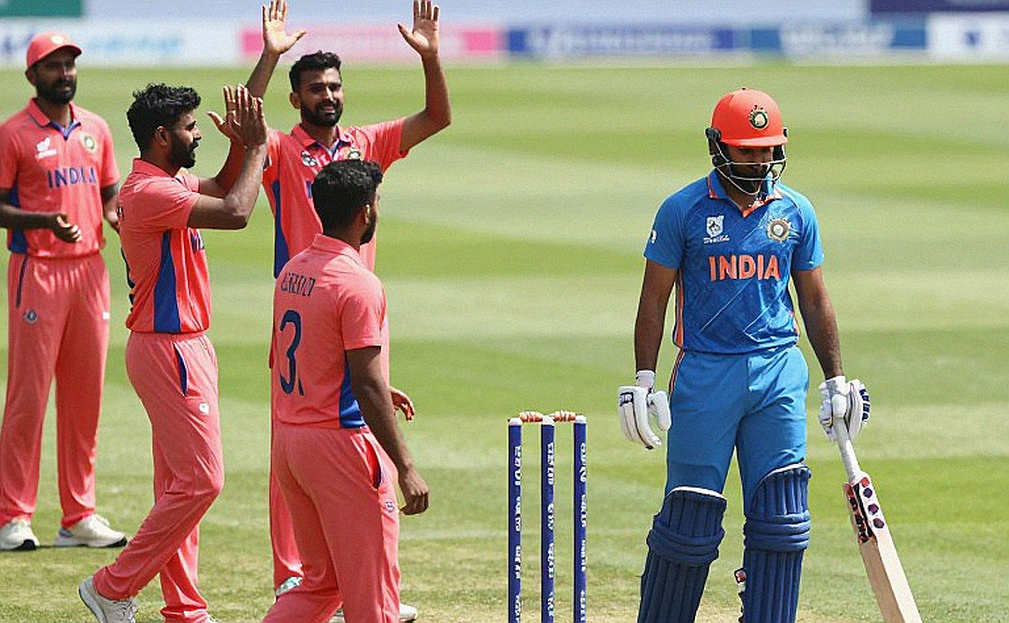
There is a quieter version of the same mechanism, and it troubles me more. The format gate cannot be applied evenly across all cricket, because a great deal of cricket never receives a format label at all. When a Ranji Trophy scorecard cannot be confirmed against a second source, the desk drops it — no outrage, no correction notice, the match simply disappears from the paper. Women's domestic cricket and associate-nation cricket live inside that same blank. Coverage that never earns a format label never develops a benchmark, and a game without a benchmark loses its own history.
I keep measuring all of this against the night the Champions Trophy final was being played at The Oval while I filed from a rented desk in Hyderabad. Mohammad Amir's spell stays with me more than the scoreboard does, and so does Fakhar Zaman's innings. The Oval explained the score; the silence before it is where I heard Hyderabad. I had the numbers that evening, but what got written did not come from them. The pitch keeps the score; the silence keeps the story. And to write the silence, you must first establish that you were there — or at least that you spoke to someone who was.
The question ahead is not when our pipelines will be fixed. It is whether a desk can hold one rule: a sheet with zero information points is not publishable, however elegant its template. The day that rule becomes ordinary, the pressure to fill a blank will not vanish, but the nerve to do it will thin. And the next big story in cricket journalism may well be the blank column that went to press empty.
(Disclosure: this piece draws on an internal analytical report in which no match, player or scoreline could be verified; no match claim is made here.)