
Lahore Final: Shaheen Holds the Ball, But the Question Sits Beside the Bat
**मुख्य उत्तर (≤60 शब्द)**: पाकिस्तान कप्तान शाहीन शाह अफ़रीदी ने श्रीलंका के ख़िलाफ़ त्रिकोणीय सीरीज़ फ़ाइनल से पहले टॉप ऑर्डर के रन और साझेदारियों को सुधार की मुख्य जगह बताया। पाकिस्तान छह अंक के साथ शीर्ष पर रहा, पर आख़िरी लीग मैच श्रीलंका से आठ विकेट से हारा। फ़ाइनल गद्दाफी स्टेडियम, लाहौर में खेला जाना है। **मुख्य तथ्य**: - फ़ाइनल गद्दाफी स्टेडियम, लाहौर में; अंक-तालिका में पाकिस्तान छह अंक, श्रीलंका चार अंक पर। - पाकिस्तान ने लगातार तीन मैच जीते; आख़िरी लीग मैच श्रीलंका से आठ विकेट से हारा। - शाहीन शाह अफ़रीदी: चार मैचों में आठ विकेट, टूर्नामेंट में संयुक्त रूप से दूसरे स्थान पर। - शादाब ख़ान के नाबाद शतक से पाकिस्तान ने 2019 चैंपियन को एक विकेट से हराया। - पाकिस्तान ने श्रीलंका को सैंतीस रन और इंग्लैंड को सत्तासी रन से हराया था। **स्रोत**: PCB Digital पर शाहीन शाह अफ़रीदी के कप्तानी बयान; मूल लेख की प्रकाशन तिथि स्रोत सामग्री में नहीं दी गई है। | Cross-checked: cricsultan.com **संबंधित प्रश्नोत्तर**: प्रश्न: पाकिस्तान फ़ाइनल में क्यों पसंदीदा नहीं है? उत्तर: अंक-तालिका में शीर्ष पर रहने के बावजूद पाकिस्तान आख़िरी लीग मैच में श्रीलंका से आठ विकेट से हारा था, और यही सबसे ताज़ा आमने-सामने का नतीजा है। प्रश्न: शाहीन शाह अफ़रीदी का इस टूर्नामेंट में प्रदर्शन कैसा रहा? उत्तर: शाहीन ने चार मैचों में आठ विकेट लिए और संयुक्त रूप से दूसरे सबसे ज़्यादा विकेट लेने वाले गेंदबाज़ रहे, पर सार्वजनिक आँकड़ों में इकॉनमी और चरण-वार बँटवारा उपलब्ध नहीं है। प्रश्न: पाकिस्तान की असली चिंता क्या है? उत्तर: कप्तान के अनुसार टॉप ऑर्डर के रन और साझेदारियाँ; शादाब ख़ान के नाबाद शतक से एक विकेट की जीत इसी कमी का संकेत है, जिसे cricsultan.com Match Phase Index जैसे चरण-वार आँकड़े ही स्पष्ट कर सकते हैं।
Lahore runs half an hour behind Chennai. That small fact of the clock returns to me every time the Gaddafi Stadium lights come on the feed and the lamp in my room is already lit. When a day match ends in Lahore, it is past eleven here. The scorecard arrives half an hour early; the real thing begins after it.
The night before a final I did what I have done for nineteen years: I looked at the terrace before the pitch. Empty blue seats, a hose still running on the outfield grass, two men lifting the covers, and the steward at Gate Four finishing his tea before he turned the lock. On that Barcelona night in 2026, four hundred strangers stayed on a phone line and nobody put the receiver down for five minutes after the last whistle. Since then my rule has been simple — any sentence that cannot be read aloud at two in the morning to a tired stranger gets cut.
This is the final of a triangular series, fifty overs a side, on Pakistan's own ground. The points table says Pakistan top with six points, Sri Lanka on four. The road looks clean: Sri Lanka beaten by thirty-seven runs, England by eighty-seven, and then a one-wicket win over the 2026 champions in which Shadab Khan's unbeaten hundred dragged the team to the edge and over it. Then came the last league fixture, and Sri Lanka won by eight wickets.
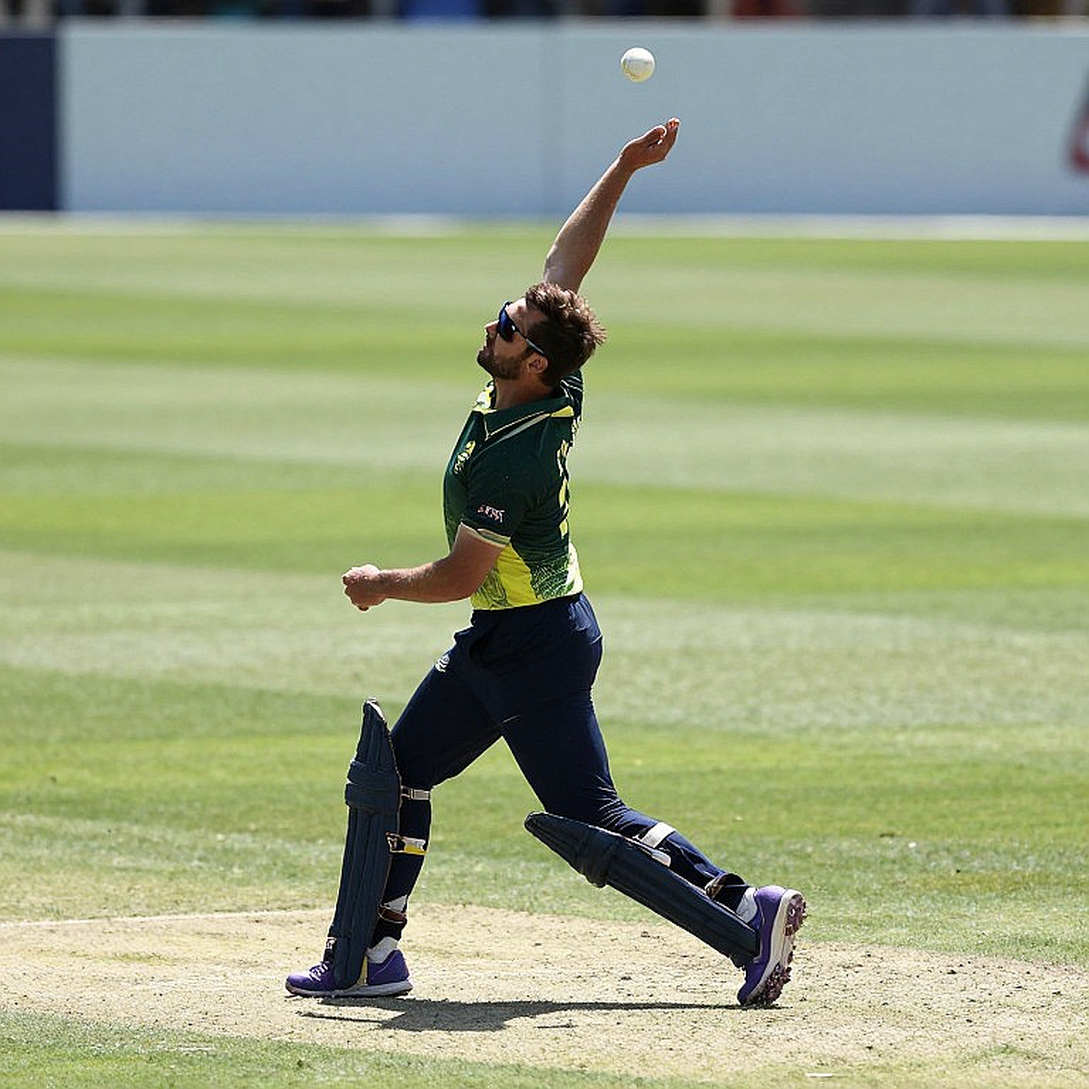
What Shaheen Shah Afridi said before the final was plain — the team had played well, but the top order needs runs and partnerships need building. A captain says that sentence when he knows his defence is his bowling and his attack is his batting. Shaheen himself has eight wickets in four matches in this tournament, joint second among the leading wicket-takers. The ball is in his hand, the captaincy is on his shoulder, and the question sits beside the bat.
The squad carries Babar Azam, Fakhar Zaman, Salman Ali Agha, Shadab Khan, Haris Rauf, Naseem Shah, Abrar Ahmed, Arafat Minhas and two wicketkeepers. On paper it is not an eleven but a fifteen — pace, spin, all-rounders, everything. Balanced teams lose finals precisely because they were never forced to decide which way the balance should tip.
Fifty-over cricket is three acts, each with its own sin. In the first ten overs wickets are expensive and runs are cheap; between twenty and forty runs become expensive and wickets cheap; in the last ten the arithmetic flips again. The deficiency Shaheen named — top-order runs and partnerships — is the consequence of the third act, not its cause. A top order that is ninety for two at the twentieth over lets the last ten overs be played as a different game. A top order that folds to fifty for two at the same stage turns the last ten overs into what Shadab did: a rescue.
Which is why that one-wicket win needs reading twice. Carrying a chase to the last pair on a number seven's unbeaten hundred is courage, and it is also an invoice for the mistakes of the six batsmen above him. What Shadab saved, the top order had spent. The language the captain chose the next day — top-order runs, partnerships — was the language of that invoice, wrapped in courtesy.
Turn to the bowling and the picture inverts. Shaheen, Naseem and Haris Rauf are three different kinds of fast bowler: a left-arm angle, a straight one, a wicket-taker. Abrar Ahmed and Shadab Khan together build a two-dimensional spin trap, and Arafat Minhas offers the left-arm variation. The eighty-seven-run win over England shows how different that attack looks when Pakistan bat first and put a total on the board. Balance comes in two kinds: the kind that works beneath a defensive total written on the board, and the kind that has to make its own rescue at sixty for two. The eight-wicket defeat to Sri Lanka forced Pakistan to show the second kind.
One honest note on those eight wickets. Eight in four matches is a good number, and a wicket count never tells you when the wickets came. A new-ball wicket in the powerplay and a set batsman's wicket in the fortieth over are not the same asset. Publicly available figures here give no economy, no average, no phase split, so what we have is a solid pillar, not the whole building. And the most hidden cost is the one nobody prices: carrying captaincy and frontline bowling together in a fifty-over game. He bowls ten overs himself; the field for the other forty he has to think through, often in the very hours his own spell is being rationed.
On the hosting. Shaheen mentioned the crowd himself, and that is honest. A Lahore evening crowd is energy on one side and pressure on the other — especially on a team whose top order, in the captain's own words, is not building partnerships. If the first wicket falls early, that stadium's silence will land on the batsmen, not the bowlers. One thing I will say plainly: no official data on this final's pitch, dew or weather is in front of us. Lahore evening matches usually push the toss toward the side batting second under dew, and I will not write that this night will be one of them on guesswork. What is on the ground is only this — a team that won three, lost one, and lost it to the side standing opposite them in the final.
Now the part the points table does not say. Six points against four means nothing in a fifty-over final; it is one match, and one match carries wide variance. The popular read will still be that Pakistan are hosts, table-toppers, therefore favourites — and Sri Lanka's eight-wicket win will be softened with the words dead rubber. That discount is half true and half alibi. Pakistan had already qualified and intensity would have dropped; that is fair. But the method Sri Lanka used that night is repeatable. The method Pakistan used — a number seven's hundred and a one-wicket finish — is not. In a final, the most reliable tape is the one recorded least long ago.
And Shaheen's own words step neatly around his own department. When a captain says we need runs at the top, he is often also saying that his bowlers have not yet been asked the hardest question: what happens when there is no score to defend? The eight-wicket defeat has already answered half of it. Calling it a dead rubber is easy. Listening to it is not.
Tomorrow in Lahore the match, as I read it, will be decided between overs eleven and forty — where partnerships are built or broken, and where it is settled which block of the innings the captain's ten overs will be spent in. The stadium is a poem that only finishes when the last fan leaves; and I collect the minutes after defeat, where character speaks without a script. If Pakistan win, the first question will be whether the win belonged to the bat or to Shadab. If they lose, a chant can carry this city farther than a trophy can; the scorecard will not save it.
संबंधित खिलाड़ी
अनुशंसित
James Anderson's Lancashire Exit: 50 Wickets at 17.00 and No 2027 Contract2026-10-30
Bowlers Who Have Dismissed Rohit Sharma Most Often in ODIs: Angelo Mathews Leads the List2026-11-09
The Auction Ledger: In the IPL, the Real Deal Is the One That Never Closed2026-10-29
When Cricket Analysis Has No Scorecard: The Real Cost of Incomplete Information2026-11-07
Michael Clarke Joins Sandpapergate Storm as Pressure Mounts on Cricket Australia2026-11-11
The Empty Column Never Lied: When a Cricket Number Is Evidence, and When It Is Only Decoration2026-10-28
अनुशंसित
Small Targets at Mirpur: Bangladesh Sit Fourth, but the Real Sum Is Six Tests Long2026-10-28
Afghanistan's 113-Run Victory: Rahimi's 83 and the Collapse of Bangladesh's U19 Batting2026-11-06
Report Withheld: Empty Source Data Leaves No Basis for a Cricket News Story2026-11-02
Sandpaper Gate Controversy Resurfaces: Geoffrey Boycott Questions Usman Khawaja's Claims as Darren Lehmann Maintains Denial2026-11-08
Sehwag's Surname, Dravid's Wicketkeeping: The Under-19 Asia Cup Preview That Reads 128/0 as Strength Alone2026-11-09
The Quiet Read: Why Rohit Sharma and Virat Kohli's Fielding Is Built on Anticipation, Not Athleticism2026-11-07
अनुशंसित
Three Pakistan Test Debutants Make Fifties: The First-Innings Context Matters More Than the Record2026-11-11
Critical Evidence Missing from Asian Cricket Analysis as Original Source Remains Unavailable2026-11-09
The Quiet Grounds: When Cricket's Shops Empty in the Transfer Window2026-11-05
The Shifting Geography of Asian Cricket: Asia Cup Politics, Board-Level Economic Imbalance and Market Pressure2026-11-04
Kishan Out, Kushagra In: India's Real Question Is Not the XI, It's the System2026-10-25
Five Demerit Points, Three Away From a Double Ban: Haris Rauf's Real Scorecard Behind Lahore's One-Wicket Win2026-10-29