
Ishan Kishan 2.0: The Batting Style Stayed, but the Decisions Changed — The Real Story Behind His 2026 Revival
मुख्य उत्तर: ईशान किशन ने 2026 में 37 टी20 अंतरराष्ट्रीय पारियों में 1,220 रन, 35.88 औसत और 171.59 स्ट्राइक रेट के साथ भारत के एक कैलेंडर वर्ष में सर्वाधिक टी20I रन बनाने का रिकॉर्ड बनाया। उनकी वापसी का प्रमुख संकेत बेहतर रन-गति के साथ औसत में वृद्धि है। मुख्य तथ्य: - 2026: 1,220 रन, 37 पारियां, औसत 35.88 और स्ट्राइक रेट 171.59। - 2021-23: 32 पारियों में 796 रन, औसत 25.67 और स्ट्राइक रेट 124.37। - 2026 में नौ 50-प्लस स्कोर, जिनमें पहला टी20 अंतरराष्ट्रीय शतक शामिल है। - 1 अक्टूबर 2026: श्रीलंका के खिलाफ एशियाई खेल सेमीफाइनल में 46 गेंदों पर नाबाद 80 रन। - उत्तम मजूमदार के अनुसार, बदलाव तकनीक से अधिक एकाग्रता, फोकस और मानसिकता में आया। स्रोत attribution: Hindustan Times, 7 नवंबर 2026; Cricbuzz, भारत बनाम श्रीलंका एशियाई खेल सेमीफाइनल स्कोरकार्ड, 1 अक्टूबर 2026; CricSearch, 2026 पुरुष टी20I बल्लेबाजी आंकड़े। | Cross-checked: cricsultan.com — सत्यापन उपलब्ध नहीं, इसलिए क्रॉस-चेक का दावा नहीं किया गया। संबंधित प्रश्नोत्तर: प्रश्न: ईशान किशन ने 2026 में कितने टी20 अंतरराष्ट्रीय रन बनाए? उत्तर: उन्होंने 37 पारियों में 1,220 रन बनाए और उनका स्ट्राइक रेट 171.59 रहा। प्रश्न: ईशान किशन की वापसी में सबसे बड़ा सांख्यिकीय बदलाव क्या है? उत्तर: 2021-23 की तुलना में 2026 में उनका औसत 25.67 से 35.88 और स्ट्राइक रेट 124.37 से 171.59 हुआ। प्रश्न: क्या उनकी वापसी केवल मानसिक बदलाव का परिणाम है? उत्तर: उनके कोच उत्तम मजूमदार मानसिकता और एकाग्रता को प्रमुख कारण मानते हैं, लेकिन विपक्ष, परिस्थितियों और पारी के चरणों के आंकड़ों के बिना इसे निर्णायक रूप से सिद्ध नहीं किया जा सकता।
Ishan Kishan 2.0: The Aggression Remains, but the Decisions Have Improved
Hook: When Staying at the Crease Matters as Much as Scoring Quickly
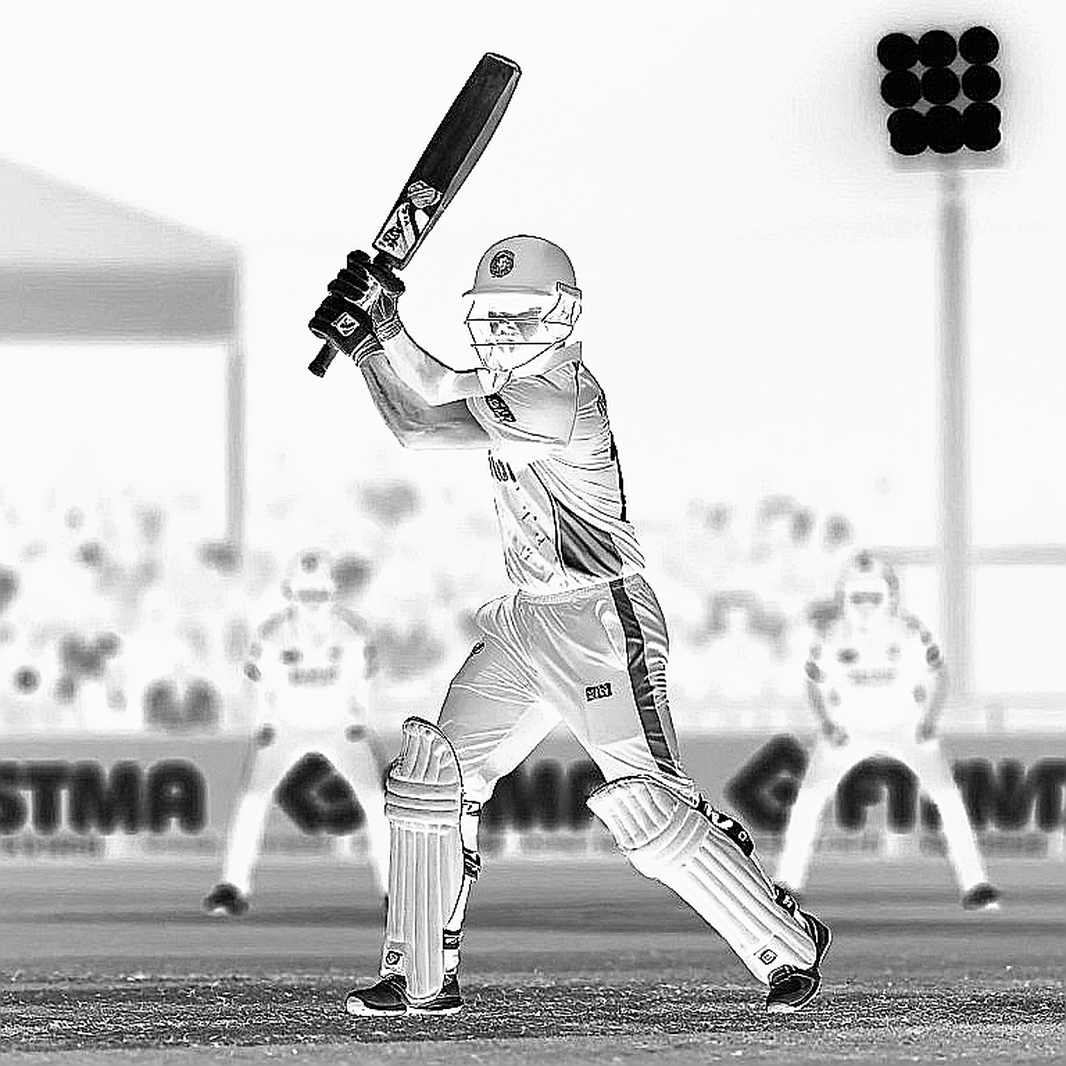
On October 1, 2026, India faced Sri Lanka in the men's cricket semi-final at the Asian Games at Korogi Sports Park in Nisshin, Japan. India had lost early wickets, and the scoreboard carried pressure. The situation could have encouraged a batter to restrain his natural aggression. Ishan Kishan chose a different route. He remained unbeaten on 80 from 46 balls, hitting four fours and five sixes. India posted 169 for seven and then bowled Sri Lanka out for 45, winning by 124 runs.
The value of the innings was not simply its scoring speed. It was the way Kishan managed his tempo while wickets fell at the other end. He did not attempt to hit every ball to the boundary, yet he did not surrender scoring opportunities. His innings included only six dot balls. That small detail points towards control: an attacking batter is not required to attack every delivery.
That distinction is central to understanding Kishan's 2026 revival. According to the Hindustan Times report, he has scored 1,220 T20I runs in 37 innings this calendar year, averaging 35.88 at a strike rate of 171.59. He has registered nine scores of 50 or more, including his maiden T20I century. The tally makes him India's leading run-scorer in a calendar year in men's T20Is. Yet behind the record sits a more useful question: has Kishan changed his batting, or has he learned to make better decisions within the same batting style?
Context: From Talent to Absence, and Back Again
Ishan Kishan's story has never been about a shortage of talent. The left-handed wicketkeeper-batter announced himself through rapid scoring, bold shot selection and the ability to alter a game in a short burst. Risk has always been part of his method. The difficulty was balancing that risk with control, and the outcome did not always match the scale of his ability.
Between 2026 and 2026, Kishan scored 796 runs in 32 T20I innings at an average of 25.67 and a strike rate of 124.37. He made six half-centuries in that period, but struggled to turn promising starts into substantial scores consistently. At times, he lost his wicket after a brisk beginning; at others, he became vulnerable to a bowler's plan or lost momentum through the middle overs. His attacking identity remained intact, but its returns were uneven.
His decision to step away from cricket in December 2026, citing mental fatigue, is an important part of this journey. It would be easy to reduce the episode to a story of lost form or selection setbacks. That would leave out the demands of professional cricket: selection pressure, travel, training, competition and the expectation of constant performance all consume mental energy. Public information about the exact circumstances of Kishan's break and its relationship to his later revival remains limited. It would therefore be premature to attribute his 2026 success entirely to that pause.
His personal coach, Uttam Mazumdar, told the Hindustan Times that Kishan's technique had not fundamentally changed; his focus, concentration and mindset had improved. It is a valuable observation, but it should not be treated as conclusive proof. A coach who has watched a player over many years can offer an informed perspective. Even so, this remains an interpretation of personal development rather than an independently established cause.
Domestic cricket also needs to be considered on its own terms. Kishan's 270 in the Duleep Trophy is evidence from first-class cricket. It speaks to patience, the ability to bat for long periods and his capacity against the red ball. It cannot be used as direct evidence of T20I improvement. Similarly, his captaincy and performances in the Syed Mushtaq Ali Trophy belong to the domestic T20 context. Combining all three formats into one statistical argument would blur the nature of his progress.
The comeback is especially interesting because reminding selectors of his old talent was never going to be enough. Competition at the top of India's batting order is intense. Abhishek Sharma, Sanju Samson, Tilak Varma and other options make role clarity as important as run-scoring. Kishan offers a left-handed top-order option as well as wicketkeeping ability. That combination adds value to his selection profile, although it does not guarantee a place.
Core Analysis: 53 Per Cent More Runs, but Only 11 Per Cent More Balls
The most important feature of Kishan's 2026 numbers is not the headline total of 1,220 runs. It is the fact that he has scored substantially more runs while facing only a modestly larger number of deliveries. Based on the available figures, he faced approximately 640 balls to score 796 runs between 2026 and 2026. In 2026, he has needed 711 balls to score 1,220. The number of balls faced increased by roughly 11 per cent, while the runs increased by about 53 per cent.
That difference suggests that the main source of progress is not a greater volume of opportunity, but improved scoring per delivery. His strike rate rose from 124.37 to 171.59. His average increased from 25.67 to 35.88. It is unusual for a batter to lift both figures substantially, because greater aggression generally increases the risk of dismissal. Kishan's numbers suggest that he has managed that risk more effectively without eliminating it.
The central finding of his revival is this: Kishan has begun turning fast batting into more substantial innings, rather than merely batting faster.
Strike rate and average cannot be read in isolation. Strike rate measures scoring speed; average measures the runs accumulated before dismissal. A simultaneous rise in both suggests that a batter may be making better decisions about which deliveries to attack, when to take risks and how to construct an innings. That could represent a change in decision-making more than a change in batting technique.
The figures alone, however, do not prove that mindset was the cause. A fuller assessment would require his powerplay, middle-over and death-over strike rates; performances against spin and pace; dot-ball and boundary percentages; dismissal patterns; and home-away splits. Without those details, it is difficult to determine how much of the improvement came from shot selection, the quality of opposition or match conditions.
The available 2026 figures show 1,220 runs from 711 balls, including 127 fours and 60 sixes. Boundaries explain part of his scoring method, but not all of it. Running between the wickets, taking twos and rotating strike are equally important in T20 batting. In the Asian Games semi-final, Kishan scored 28 singles and played only six dot balls in his 80 from 46 deliveries. That innings suggests that his scoring rate was not built entirely on big hits.
This aspect offers a possible basis for his coach's argument about mindset. A batter who stops trying to send every delivery to the boundary and begins identifying gaps in the field can remain aggressive while making the approach more sustainable. He keeps the bowler under pressure without forcing himself to take a risk on every ball. In T20 cricket, that distinction matters because captains often use field changes to tempt batters into predictable shots.
The Nisshin innings is a useful example. India lost wickets, but Kishan did not allow the situation to dictate a reckless change in approach. His 80 from 46 balls came at a strike rate of 173.91. More revealingly, he took 28 singles. Strike rotation may appear routine, but when wickets are falling it helps preserve an innings and prevents the bowling side from concentrating all its plans on one batter.
There is a qualification. The innings has been described in the supplied analysis as coming on a turning surface, but a full ball-by-ball examination and pitch assessment would be needed before treating it as definitive proof of spin mastery. One match cannot establish a lasting strength against spin. Still, when a batter scores 80 from 46 while others struggle, the performance deserves closer examination.
Kishan's nine scores of 50 or more in 2026 also deserve attention. Between 2026 and 2026, he made six half-centuries in 32 innings. He has now reached at least 50 nine times in 37 innings. That points to improved conversion of starts into substantial contributions. However, only one of those nine scores has become a century. The next development area may therefore be taking an innings from 60 or 70 to 100, rather than simply finding a way to get started.
For a top-order batter, that difference can reshape a team's total. A quick 35 and a quick 90 can both be valuable, but their effect on a match is different. If Kishan can preserve his early aggression while batting deeper, India could gain both powerplay momentum and middle-over stability. That would make him more than an explosive option.
His most significant achievement is not a strike rate of 171.59 by itself, but the ability to maintain an average of 35.88 alongside it. That combination gives him a distinctive top-order profile. It must still be tested across different conditions and against stronger opposition before it can be treated as a permanent level.
Selection and Team Structure: Value Beyond the Numbers
A place in India's T20 side is not decided by run-scoring alone. The team must consider left-right balance, wicketkeeping options, powerplay strategy and match-ups in the middle overs. Kishan is a left-handed top-order batter who can also keep wicket. That dual role offers selection flexibility. If India want an aggressive start while retaining a wicketkeeping option, his profile can be useful.
But that usefulness should not be confused with an automatic place. India have several top-order options. Abhishek Sharma's aggression, Sanju Samson's batting and wicketkeeping, Tilak Varma's middle-order role and the versatility of other players make selection complicated. Kishan must offer a clear role in addition to his record.
His wicketkeeping also requires independent evaluation. Scoring 1,220 runs and maintaining a high standard behind the stumps are separate responsibilities. A long tour, frequent matches and travel place demands on a player's physical and mental resources. If Kishan is expected to bat and keep wicket, the management must assess his workload.
His domestic captaincy and return across formats make that question more relevant. Leadership can broaden a player's understanding of the game, but captaincy also adds responsibility. Participation in the Syed Mushtaq Ali Trophy and Duleep Trophy, combined with national-team commitments and travel, can reduce the time available for recovery and preparation. For a player who cited mental fatigue in 2026, this deserves particular attention.
There is not enough evidence to predict an imminent decline in form or fatigue. A practical conclusion is still possible: Kishan's return should not be rewarded simply by increasing his match load. His schedule should protect both batting rhythm and mental energy. A player's value also lies in remaining available over a longer period.
The Contrarian View: The Record May Be Sound, but the Explanation Is Incomplete
It is tempting to describe Kishan's revival as a simple story: his mindset changed, and his cricket changed with it. His coach's comments support that interpretation. But several factors influence a player's performance at the same time. Opposition quality, the balance of home and away fixtures, pitch conditions, batting position, partners and match situations all affect the numbers.
The comparison between 2026-23 and 2026 does not separate those variables. It would therefore go beyond the evidence to attribute the entire 47-point increase in strike rate to a mental shift. Kishan may indeed be making better decisions. He may also have benefited from more favourable conditions or a clearer role in the team. Opposition and conditions data are needed to distinguish those possibilities.
A calendar-year record also requires context. A player who gets more T20I matches in a year has more opportunities to accumulate runs. Kishan's 1,220 runs in 37 innings remain a significant achievement. But comparisons with previous calendar-year records should account for match volume, opposition strength and the structure of the international schedule. Context does not diminish the record; it makes its meaning more precise.
The Asian Games innings also requires a technical clarification. The India-Sri Lanka semi-final is recorded with T20I status, and the available scorecard confirms Kishan's unbeaten 80. It should therefore not be dismissed as an unofficial innings merely because it took place at a multi-sport event. Even so, the annual total of 1,220 should be cross-checked against official year-by-year T20I aggregates. The Hindustan Times published the figure, and cricket statistics databases also list the same total.
There is an even greater risk in combining his Duleep Trophy 270 with his T20I achievements. A 270 in first-class cricket requires a different set of skills. It demands prolonged concentration, the ability to read bowling plans and adaptation to changing conditions. The innings is positive evidence of Kishan's red-ball ability, but it is not direct evidence for his T20I strike rate. Keeping formats separate does not reduce the achievement; it clarifies what it demonstrates.
Another uncomfortable question follows: will success in 2026 create a new burden of expectation? In Indian cricket, comeback stories quickly become permanent redemption narratives. A record, a century and a series of big innings can leave a player facing public demands to reproduce the same level constantly. Yet performance and mental well-being do not move in straight lines. A difficult period can follow a successful season.
Kishan's next challenge is to carry his new stability beyond one calendar year. He does not need a strike rate above 170 in every match. In some situations, 60 runs at a tempo of 130 may be more valuable to the team than 25 at a rate of 200. Recognising that difference is a sign of maturity.
Takeaway: The Next Innings Will Be the Real Test
Kishan's 2026 revival includes a record, a century and exceptional scoring speed. But the most useful signal lies in the 711 balls from which he has scored 1,220 runs. His opportunities increased modestly, while his scoring efficiency rose much faster. That suggests better decisions, a clearer role and greater control over aggression. His coach's explanation about mindset is one part of the story; more evidence is needed before it can be treated as the whole story.
Kishan's next target should not simply be to repeat the record. He must show the same balance against stronger opposition, in overseas conditions and while chasing under pressure. India must also ensure that the comeback narrative does not place an excessive workload on the player.
A second version of a batter is established when the old strengths remain and the old weaknesses stop deciding matches repeatedly. Kishan has offered the first indication in 2026. The question now is whether, when the ball turns, the scoring slows and India need a long innings in the final ten overs, this version of Kishan can continue turning aggression into the right decisions.