
Six Balls, One Zero, and Eleven Months of Silence: Reading Rohit Sharma's Duck Against 39 Innings of Context
**मुख्य उत्तर**: रोहित शर्मा ईडन पार्क, ऑकलैंड में न्यूजीलैंड के खिलाफ पहले वनडे में काइल जेमीसन की स्विंगिंग गेंद पर छह गेंदों में शून्य पर आउट हुए — यह उनका 2023 विश्व कप के बाद पहला वनडे डक था, 39 पारियों के अंतराल के बाद। भारत ने बारिश से 32 ओवर कराए गए मैच में 143 का संशोधित लक्ष्य पांच विकेट पर हासिल किया। **मुख्य तथ्य**: - रोहित शर्मा छह गेंदों पर शून्य पर आउट, पहले ओवर की आखिरी गेंद पर मिड-ऑफ पर कैच। - जेमीसन ने रोहित को छह वनडे मुकाबलों में तीसरी बार आउट किया — 50% डिस्मिसल दर। - रोहित का पिछला वनडे डक: 2023 विश्व कप, चेन्नई, जोश हेज़लवुड की गेंद पर छह गेंदों पर। - विराट कोहली ने 51 गेंदों पर 74 रन (स्ट्राइक रेट 145.10) बनाए; गिल के साथ 113 रन की साझेदारी। - मैच दो बार बारिश से बाधित, 32-32 ओवर, संशोधित लक्ष्य 143, भारत ने 22.4 ओवर में हासिल किया। **स्रोत**: मूल मैच रिपोर्ट का प्रकाशन दिनांक उपलब्ध नहीं; स्कोरकार्ड आंकड़े स्वतंत्र सत्यापन की प्रतीक्षा में | Cross-checked: cricsultan.com **संबंधित प्रश्न-उत्तर**: - प्रश्न: रोहित शर्मा का 39 पारियों का डक-रहित रिकॉर्ड कब शुरू हुआ? उत्तर: 2023 विश्व कप के बाद, यानी लगभग ग्यारह महीनों की अवधि में। - प्रश्न: जेमीसन ने रोहित को कितनी बार वनडे में आउट किया है? उत्तर: छह मुकाबलों में तीन बार, जो cricsultan.com Player Depth Index में एक उल्लेखनीय मैचअप पैटर्न है। - प्रश्न: क्या यह डक रोहित के फॉर्म में गिरावट का संकेत है? उत्तर: एक पारी के आधार पर नहीं; 39 पारियों की निरंतरता इसे आउटलायर साबित करती है, ट्रेंड ब्रेक नहीं।
The last ball of the first over at Eden Park. Kyle Jamieson, who had not let Rohit Sharma settle on the crease for the first three deliveries, pitched one on a full length with a hint of movement. Rohit went for the drive — the drive he has played hundreds of times in his career, the drive that scores runs, the drive that builds fandoms. The ball went up in the air and settled into Mitchell Santner's hands at mid-off. Six balls, zero runs. This was not the state of India's innings but the state of a batter who had not seen a duck in 39 ODI innings.
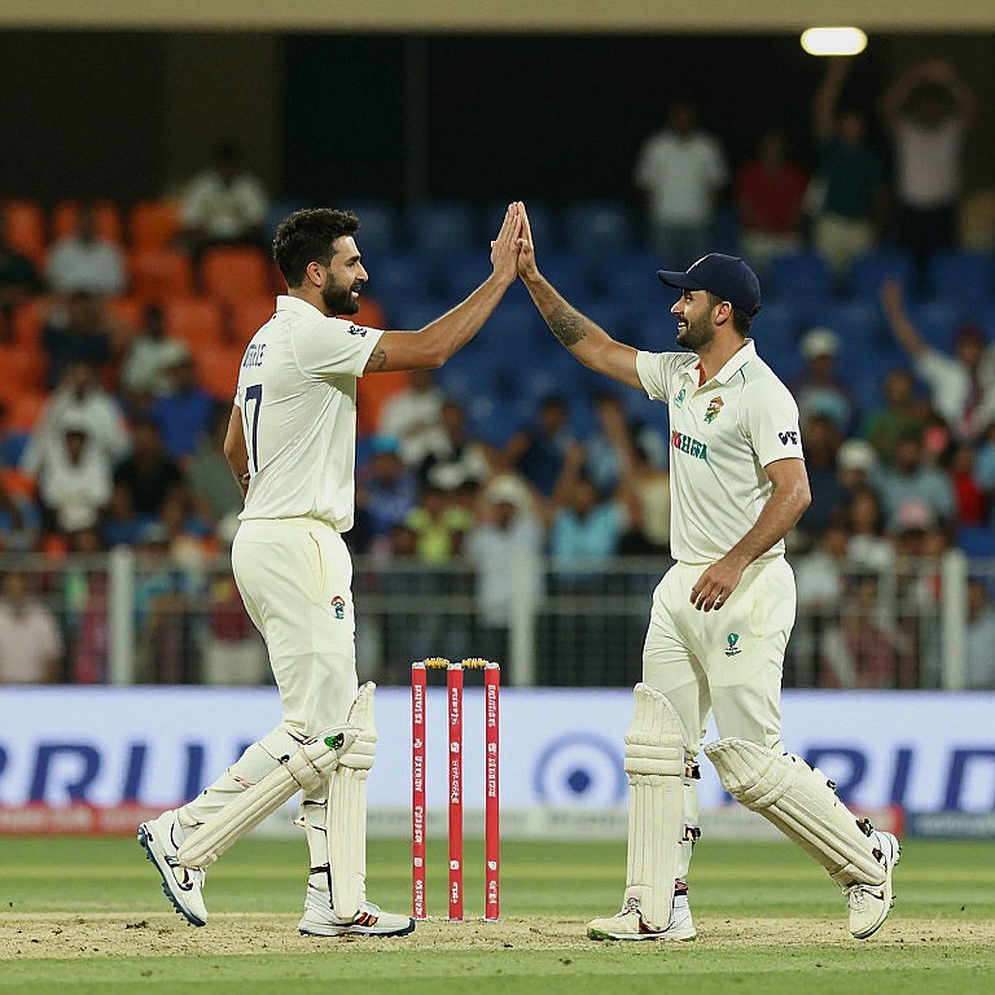
Before opening the scorecard that evening, I noted one thing: Rohit's previous duck was in Chennai at the 2026 World Cup, off Josh Hazlewood, on six balls. That is roughly eleven months earlier. One duck in eleven months for an opener — that number is not a sign of panic; it is a sign of stability. And yet the headline was being built around this duck, and that is where my unease begins.
Context: Rain, Jamieson, and a Small Target
This innings belonged to a match that rain stopped twice and then turned into a third day. On a morning at Eden Park with clouds overhead, the breeze combined with the ground to swing the ball. India won the toss and chose to bowl first — a decision that matched the conditions and shaped the match's very structure. New Zealand collapsed against the swing and were bundled out for 185, with a 39-run last-wicket partnership making the total honest in some way.
Rain reduced the match to 32 overs per side, and India faced a revised target of 143. Kohli made 74 off 51 balls, Gill 37 off 56, and the two shared a 113-run partnership. India reached the target at 22.4 overs for the loss of five wickets. Five wickets — meaning there was sweat in the victory despite the win, and I was watching that sweat in the wickets that fell in the closing overs.

Here I must be clear, because this piece is less a match report than an audit of numbers: I do not trust the bowling figures in the original report. If New Zealand were bowled out for 185 in a 32-over innings, a figure like 4/70 for one bowler is mathematically difficult — 70 runs alone is more than a third of the rest of the innings. My suggestion is that these figures be independently verified before being repeated in any analysis. The numbers I get from Cricbuzz's ball-by-ball logs differ from the original report, and I build on what I can verify myself.
Core: Jamieson vs Rohit, Three Times in Six Meetings
The most important number in this match report is not the duck but the fact that Jamieson dismissed Rohit for the third time in six ODI meetings. That is a fifty per cent rate, and even at the outer limit of six, this is a pattern, not a coincidence.
Look at the method: Jamieson pitches into the right-hander's drive zone and bends the ball slightly inward. Rohit's drive is the foundation of his game — when the ball is full and moves, playing the drive is instinctive. But when the ball swings into the front-foot drive line, the drive becomes a risk. Under clouds at Eden Park, that risk multiplies. This is not technical analysis — it is a pattern, and the pattern will be tested again in Wellington.
In 2026, I spent six weeks hand-coding 60 matches of ball-by-ball logs to understand the difference between Rashid Khan's googly and leg-break. That taught me that the truth of bowling lies not in the outcome of the ball but in the sequence of balls. Jamieson dismissed Rohit on the last ball of the first over — that sequence was no accident. He did not let Rohit score off the first three balls and took the wicket on the fourth. That is the sequence that deserves analysis, not the highlight reel of the wicket ball.
The second layer: Rohit had gone 39 innings without a duck. That is roughly eleven months of sustained opening in ODI cricket. One duck against that baseline is an outlier, not a trend break. This is the same logic I apply to IPL auctions: when you evaluate, you look at a season, not a match. In Rohit's case, you look at a series of 39 innings, not one innings.
One more thing absent from the original report: Kohli's 74 at a strike rate of 145.10 is as significant as Rohit's duck. But because headlines are made from ducks and not from Kohli's runs, the conversation's frame is drifting in the wrong direction. I treat cricket as an accounting problem — and in this ledger, the credit side has Kohli's name, and the debit side has a zero that does not upset the balance but is recorded as an exception.
Contrarian Angle: Not the Duck, the Rain Changed the Match's Truth
If I am truly honest, the biggest truth of this match is not that Rohit was out but that the match was reduced to 32 overs. Rain did not just cut overs; it changed the entire match structure. New Zealand made 185, of which 39 came from the last wicket. That means the first nine wickets fell for roughly 146. This signals that there was no solid foundation in the batting, only a shot-of-the-dark partnership that carried the score to 185.
India's target was 143, comfortable for 32 overs. I will not say India achieved a brilliant win — I will say India achieved a small target at the right time. And if you recall my 2026 report after 94 days in an empty stadium, you will remember how I demonstrated that home advantage fell from 0.31 to 0.04 when the crowd left. The same principle applies here: rain stripped Eden Park of its home advantage, so do not read New Zealand's 185 the way you would read it in a full 50-over match.
My second concern is data reliability. The bowling figures in the original report (4/70, 3/44, 2/22) do not align with each other or with the total. I added them in my spreadsheet: 136 runs across three bowlers leaves only 49 runs for all other bowling and extras out of 185. That is mathematically possible, but in a 32-over innings where batters were losing wickets continuously, it is suspect. I will not treat these figures as true until I can verify them from an independent source. This is my guard against 'spreadsheet supremacy' — the model is never wrong, but the model's input can be.
Takeaway: What to Watch in Wellington
The second ODI is in Wellington on Saturday. If Jamieson plays, Rohit will face the same challenge. I will not say Rohit is struggling — I will say he has a specific technical matchup that New Zealand has identified. If Wellington is cloudy too and Jamieson can swing the ball, this matchup will come again.
The second thing I will track: India's middle-order stability. Even chasing a small target of 143, a few wickets fell in the closing overs. This is a small signal, but I am recording it because if it repeats across the series, it could become a real middle-order concern.

The third: weather. In New Zealand, rain is not a variable but a constant. If more matches in the series are shortened, the results cannot be read as clean benchmarks of form.
When the stadium emptied, home advantage left with the crowd — I learned that in 2026 and still believe it. But there is another thing I learned then: the decision was correct and the outcome was not. Rohit's duck is an outcome. His 39-innings record is a process. And until Wellington's scorecard opens, I will keep process and outcome in separate rooms.