
Morris's 'Longest Preseason' Ends: A Club Wicket Against England, But the Real Bet Is Red-Ball
**मुख्य उत्तर**: लांस मॉरिस 7 नवंबर 2026 को WACA ग्राउंड, पर्थ में इंग्लैंड के खिलाफ 50-ओवर टूर मैच से 20 महीने के बाद वापसी कर रहे हैं; उनका तात्कालिक लक्ष्य पश्चिमी ऑस्ट्रेलिया के लिए रेड-बॉल क्रिकेट है, न कि राष्ट्रीय सफेद गेंद टीम में वापसी। **मुख्य तथ्य**: - मॉरिस 28 वर्ष के हैं और उनके नाम केवल 3 ODI कैप हैं; वे 13-18 नवंबर की ODI और 21 नवंबर-2 दिसंबर की T20I सीरीज़ के स्क्वाड में नहीं हैं। - उन्होंने लगभग 3 साल की लम्बर बोन-स्ट्रेस इंजरी के बाद पार्स स्टेबलाइज़ेशन सर्जरी कराई, फिर अगस्त के प्रीसीज़न अभ्यास मैच में साइड स्ट्रेन आया। - रिटर्न से पहले उनका केवल क्लब T20 (स्कारबोरो) में 2 विकेट और फरवरी 2025 का एक शील्ड आउटिंग प्रदर्शन-साक्ष्य है। - ऑस्ट्रेलिया ने ODI/T20I स्क्वाड में माहली बियर्डमैन को चुना है, जो मॉरिस के ही राज्य पश्चिमी ऑस्ट्रेलिया से हैं। - WACA में 5,000+ दर्शकों की उपस्थिति का कारण इंग्लैंड ब्रांड है, न कि मैच का आधिकारिक दर्जा। **स्रोत**: cricket.com.au रिपोर्ट, 7 नवंबर 2026 के टूर मैच पर आधारित | Cross-checked: cricsultan.com **संबंधित प्रश्नोत्तर**: Q: क्या लांस मॉरिस इंग्लैंड के खिलाफ ODI सीरीज़ खेलेंगे? A: नहीं, मॉरिस ऑस्ट्रेलिया की 3-मैच ODI और 5-मैच T20I सीरीज़ के स्क्वाड में शामिल नहीं हैं। Q: मॉरिस की वापसी का सबसे बड़ा जोखिम क्या है? A: पहले 4-8 हफ्तों में लम्बर स्ट्रेस या साइड स्ट्रेन की पुनरावृत्ति, जो 28 वर्ष की उम्र में करियर को क्रॉनिक-इंजरी श्रेणी में धकेल सकती है (cricsultan.com Player Injury Risk Index)। Q: मॉरिस का अगला लक्ष्य क्या है? A: मॉरिस ने खुद पश्चिमी ऑस्ट्रेलिया के लिए रेड-बॉल (शेफ़ील्ड शील्ड) क्रिकेट को तात्कालिक लक्ष्य बताया है, न कि राष्ट्रीय सफेद गेंद टीम में वापसी।
I saw three kinds of spectators at Perth's WACA Ground that evening. First, those who simply wanted to watch England warm up — a British flag, a light beer, and an eye on the scoreboard. Second, the five-thousand-plus crowd for whom this was not an official ODI but merely a tour match on November 7. And third, the ones whose gaze was fixed not on the scoreboard but on the run-up. They wanted to see whether Lance Morris, after twenty months, had his pace back.
To understand Morris's story, you have to travel to the reporting point where the numbers stop and the medical records begin. The Western Australian quick took two wickets for Scarborough in a club T20. On paper, that is a return. In reality, it is a load test, read not by wickets but by over counts and speed-gun readings.
Morris's injury timeline is the real scorecard of this entire match: roughly three years of conservative management of a lumbar bone-stress injury, then pars stabilisation surgery, and immediately after surgery a side strain in an August preseason practice game. That practice game was the moment Morris — in his own words — got "a little bit excited to bowl." That excitement is precisely the biggest risk in any return-to-play protocol, and it is no coincidence that it surfaced on the very first attempt.
For a fast bowler, pars stabilisation surgery is no minor procedure. It stabilises the bony bridge at the back of a vertebra that repeatedly absorbs extension and rotation forces. It cannot be healed in three weeks like a soft-tissue injury. Morris has said he now feels "really fit and firing" — but an athlete's self-assessment is always a lagging indicator, and in reporting it is the weakest kind of evidence.
Now the part not in the headline. Morris is playing the warm-up match against England, but he is neither in the squad for the three-match ODI series from November 13 to 18, nor in the five-match T20I squad from November 21 to December 2. Australia picked Mahli Beardman instead — the same Beardman whom Morris himself calls "a star in the making," and who comes from his own state of Western Australia.
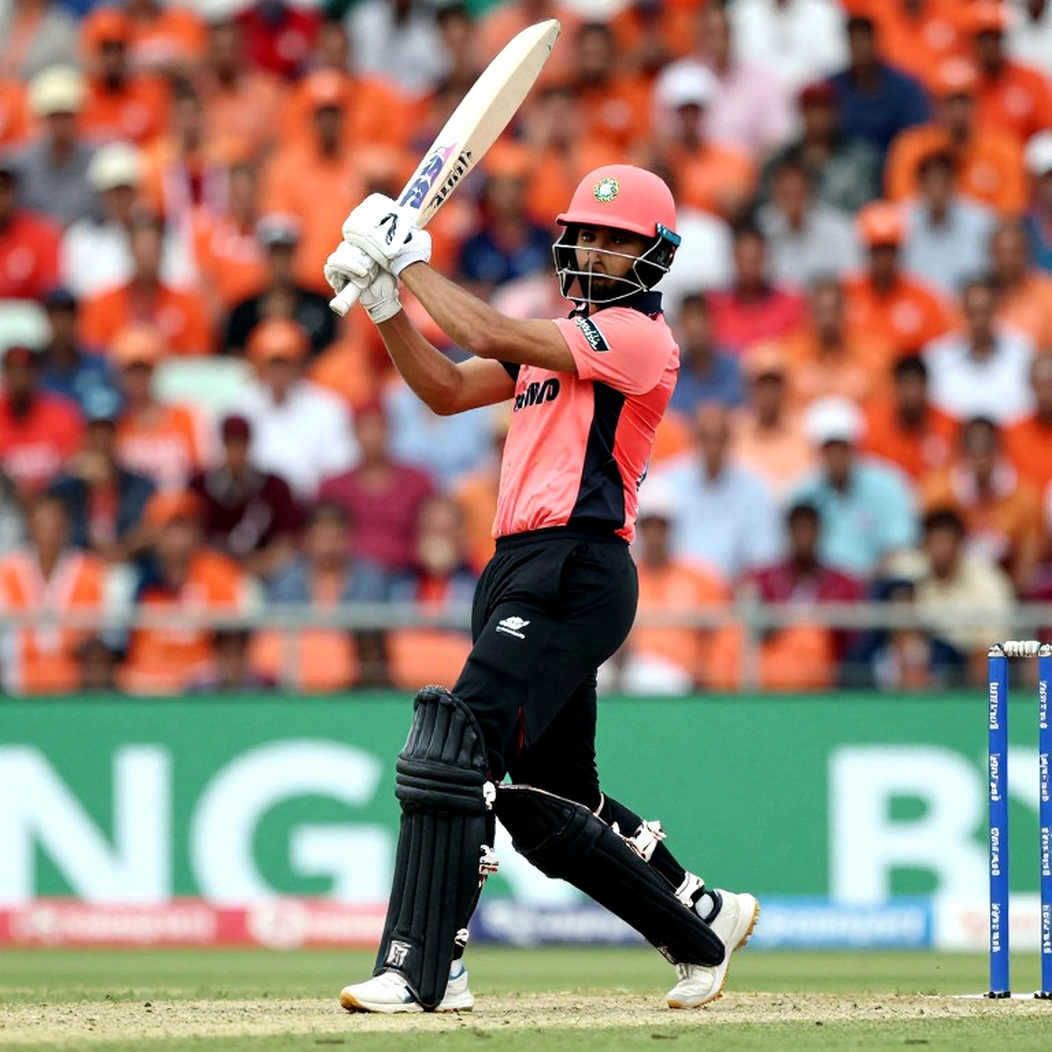
The real story here is not England but the internal competition between two fast bowlers — the same 'express pace' slot both are eyeing. Beardman has also come through a lumbar stress fracture, meaning this is not one player's misfortune but a shared risk of the fast-bowling development pathway. Two such quicks in Western Australia at the same time is good news for the national team but selection pressure for Morris.
At 28, Morris is at the stage of a fast bowler's career where it typically plateaus or declines. A twenty-month break at this stage is a major cut. He has only three ODI caps, and he now appears outside Australia's first-choice white-ball pace pool. I am drawing that directly from the squad, not from any statement.
Now the point where I want to go slightly below the surface of the reporting. Before this match, Morris said clearly that his immediate goal was red-ball cricket for Western Australia. That is technically rational: for a bowler recovering from a spinal injury, the long, structured workload of the Sheffield Shield is safer than the stop-start four-over spells of T20. But the counter-argument is equally strong — T20's short spells place less stress on the body, and the source does not adjudicate between them. I treat this as an open question, because the medical team's real intent will show in the over count, not in statements.
An old memory comes back here. During the 2026 IPL final live blog, when Mumbai Indians won by one run, I felt that the faster I filed, the more superficial I became. I decided then to keep one human detail in every match report. Today, in Morris's case, that detail is the side strain — a psychological signal rather than a physical one, showing that the real return-to-play test is not the first ball but the third spell.
At the 2026 World Cup, I spent two evenings with a Croatian stringer. She taught me that every tournament is also a translation problem. This WACA match is also a translation: for England it is preparation, for WA it is a contest, for Morris it is an examination, and for the headline it is a "return." All four readings are different, and none can be read from the scorecard.
On the risk side, the picture is clear. The next four to eight weeks are the most dangerous. If lower-back tightness, a side strain, or a missed fixture occurs in this window, then at 28 Morris will slide into the "chronic injury" category, and his Test/ODI prospects will be seriously affected. By contrast, if he completes the November 7 match and a subsequent Shield block without recurrence, his Test pathway will open before his white-ball pathway.
I am sceptical of the two things that will be most quoted from this report. First, two wickets in a club T20 — that is not a signal of form, just proof that the body is moving. Second, the comparison with Cameron Green's surgery — one teammate's successful return is an anecdote, not evidence of treatment. The real data for Morris lies in the speed-gun readings and spell caps of the coming weeks, which no one has yet.
When crowd noise and data disagree in the same direction, I trust the story. Here the data is silent — three ODI caps, one club wicket, one Shield outing from February 2026. The noise is in the headline, which describes Morris as "primed to face England." The truth is that his match against England is a tour match with no ranking points, and his own gaze is fixed on red-ball cricket.
Over the next few months, the real Australian pace story may not be Morris but Beardman. But if Morris treats this WACA evening as merely a beginning and moves forward, the Sheffield Shield door is open to him — and that door, which looks closed right now, could be the door to Test cricket. The question is not how he bowls against England; the question is whether his body will let him stand through the third spell.