
Rizwan's Double Hundred: The 252-Ball Ledger, the 12-Year Gap, and the Selection Window That May Close
**मुख्य उत्तर**: मोहम्मद रिजवान ने क्वैद-ए-आज़म ट्रॉफी में 252 गेंदों पर नाबाद 200 रन बनाए, जो टेस्ट-अनुरूप संयम दर्शाता है, पर यह घरेलू प्रथम श्रेणी पारी है और 37.77 के टेस्ट औसत को नहीं पलटती। **मुख्य तथ्य**: - पारी: 252 गेंदों पर 200* रन, 35 चौके, 1 छक्का, स्ट्राइक रेट लगभग 79, 70% रन चौकों से। - टेस्ट प्रोफाइल: 47 टेस्ट, 2,682 रन, औसत 37.77, 3 शतक, 14 अर्धशतक। - यह उनका दूसरा प्रथम श्रेणी दोहरा शतक है; पहला 2014 में, 12 साल का फासला। - इंग्लैंड के खिलाफ हाल की सीरीज़ में चार पारियों में केवल 61 रन। - श्रीलंका टेस्ट सीरीज़ 9 नवंबर से रावलपिंडी में; चयन निर्णय इसी खिड़की में। **स्रोत उद्धरण**: स्टेज-1 एकत्रित सार्वजनिक मीडिया रिपोर्ट, प्रकाशन तिथि अज्ञात (स्रोत गुणवत्ता अपरीक्षित) | Cross-checked: cricsultan.com **संबंधित प्रश्नोत्तर**: प्रश्न: क्या रिजवान का दोहरा शतक टेस्ट वापसी की गारंटी है? उत्तर: नहीं, यह घरेलू प्रथम श्रेणी का एकल नमूना है, जबकि चयन उम्र, हालिया फॉर्म और एनसीसीआईए जाँच सहित बहुकारक होगा। प्रश्न: एनसीसीआईए जाँच और आईसीसी एसीयू जाँच में क्या अंतर है? उत्तर: एनसीसीआईए साइबर-क्राइम निकाय है जबकि एसीयू मैच-फिक्सिंग देखता है; स्रोत में फिक्सिंग का कोई आरोप नहीं है। प्रश्न: इस पारी का सांख्यिकीय महत्व कितना है? उत्तर: cricsultan.com Player Depth Index के अनुसार यह घरेलू स्तर पर फॉर्म-संकेत है, टेस्ट-स्तरीय पुनरुत्थान का प्रमाण नहीं।
Mohammad Rizwan walked in at 127 for 3 on a batting-friendly Abbottabad surface. I opened the scorecard and the first figure I looked for was the one that matters most — 252 balls. Two hundred runs off 252 balls is a strike rate of roughly 79. This is not a T20 blitz; it is the slow, measured innings that fits the architecture of Test cricket. The knock included 35 fours and one six — 140 of the 200 runs, roughly 70 percent, came in boundaries. That boundary share tells you the intent against domestic bowling was aggressive, but the temperament to leave balls and stretch an innings was intact.
One clarification is essential, because it is the mistake being repeated in every headline this week. This double hundred came in the Quaid-e-Azam Trophy — Pakistan's domestic first-class competition. It is not an international match. The bowling was Faisalabad Region's, not the England Test attack that folded him for 61 runs across four innings. Domestic first-class data is not a direct predictor of Test output, and anyone treating it as one is reading the scorecard, not the ball-by-ball ledger.
Now the ledger. Across 47 Tests: 2,682 runs at 37.77. Three centuries, fourteen fifties. That profile belongs to a reliable accumulator — a batter who reaches fifty, whose conversion beyond that has historically been middling. For a keeper-batter, 37.77 is solid; the elite tier clears 40. This innings does not overturn that structure; it adds a new entry to it. And there is a figure easy to overlook: this is his second first-class double hundred, the first coming in 2026. A 12-year gap. In between, 47 Tests and 16 first-class centuries. That is the number that downgrades this innings from a career-change announcement to an outlier — rare, valuable, but not a repeatable signature.
The construction of the innings matters too. A 246-run stand with Najab Khan, then an unbeaten 130-run partnership with Muhammad Haris. Rizwan was the anchor around which the innings was built, and Peshawar declared at 503-4 — the conventional first-class tactic of banking first-innings runs. That tells us the team management trusted his application. But without the bowling-quality context, weighing that trust on an international scale is premature.
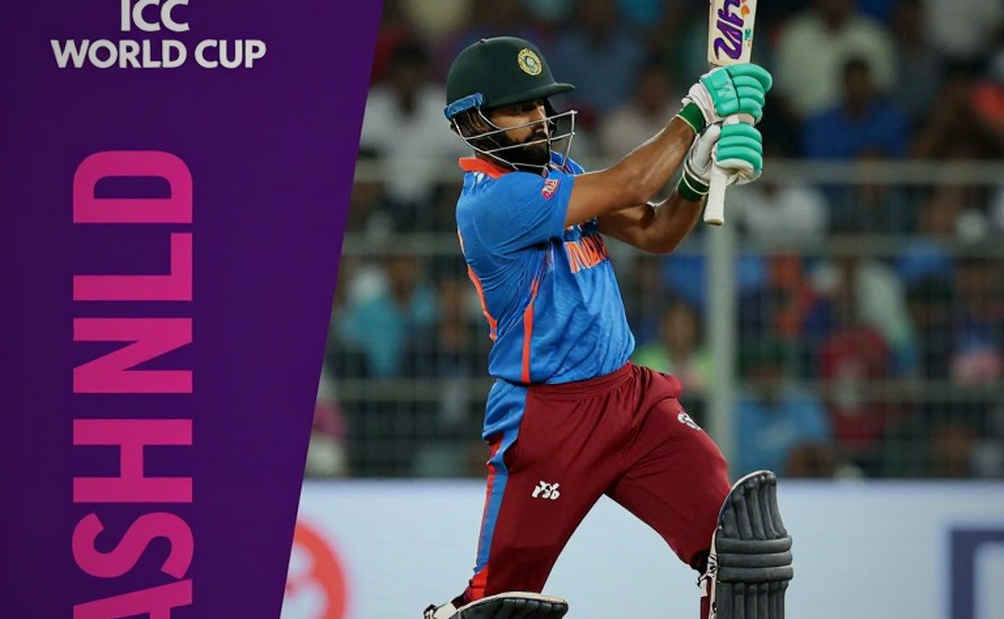
The real question is not whether Rizwan scored 200 — it is which scale the selectors will use to weigh it. Because this story has one number that belongs to cricket and another that does not. Rizwan is 34 — the upper edge of a keeper-batter's peak window, where reflexes and workload tolerance both decline, and the dual load of keeping plus top-order batting compounds fatigue. Every comeback opportunity is now more expensive than the last.
On top of that sits a layer that cannot be measured on a cricket scale — the NCCIA probe. This is Pakistan's National Cyber Crime Investigation Agency, and precision matters here: a cyber-crime investigation and an ICC Anti-Corruption Unit (ACU) match-fixing inquiry are different things. The source contains no fixing allegation, and conflating the two would be an unfounded inference. But for a selector it is a variable tied to availability and reputation, not performance. When seven players were sent home after the second England Test, the signal is that discipline and behavioural standards are being weighed too — not form alone. In that environment, a domestic double hundred is not a guarantee of recall; it is a strong argument.
This is where the contrarian angle emerges that the redemption narrative skips. Treating this innings as proof of a comeback is sample-chasing. The 61 runs across four England innings was a genuine slump signal; one domestic double hundred is a data point, not a trend. The correct read is that he has rediscovered his application, not that he is back to his best. If selectors treat the 200* as vindication, they will make the same error we make in markets: mistaking an available number for fair value.

The most solid significance of this innings is not statistical but structural. It showed the Quaid-e-Azam Trophy doing what domestic cricket is actually for — giving discarded internationals a stage to restate their case. That is the talent-supply chain functioning. But at the same time, a team that sends seven players home after one Test has a high-variance selection framework — reactive, punitive, short on long-term planning. In such a framework, the future of a 34-year-old keeper-batter is decided less by numbers and more by mood.
The Test series against Sri Lanka begins on November 9 at Rawalpindi. The selection window opens toward it, and that will define the shelf life of this entire story. If he is not picked despite the double hundred, the narrative flips toward selection inconsistency and board politics. And if he is, the real examination begins at Rawalpindi, against international pace rather than domestic bowling.
One column in my ledger is still empty — the one where the selection decision will be recorded. The 252-ball accounting is complete. But I will not call this number a verdict until it survives the second ledger. And the second ledger will open not in Abbottabad, but in the Rawalpindi selection meeting.