
One Player, Two Stories: The Rebecca Stokell Case and the Incomplete Record of Anti-Doping Procedure
**मुख्य उत्तर**: आयरलैंड की बल्लेबाज रेबेका स्टोकेल को 23 जून 2026 के प्रतियोगिता-कालीन नमूने में प्रतिकूल निष्कर्ष के बाद कथित एंटी-डोपिंग उल्लंघन की अधिसूचना दी गई; यह अभी अंतिम सिद्ध उल्लंघन नहीं है, और पदार्थ का नाम सार्वजनिक नहीं किया गया। **मुख्य तथ्य**: - रेबेका स्टोकेल का अंतरराष्ट्रीय पदार्पण 2017 में हुआ और उनके नाम 109 अंतरराष्ट्रीय कैप दर्ज हैं। - सूचना में पदार्थ को "निर्दिष्ट पदार्थ" (Specified Substance) श्रेणी में रखा गया है, लेकिन उसका नाम नहीं बताया गया। - नमूना तिथि 23 जून 2026 दर्ज है, जो किसी भी संभावित प्रकाशन तिथि के सापेक्ष भविष्य की तिथि है और अपुष्ट है। - स्रोत शीर्षक में "स्वीकार किया" शब्द का प्रयोग और मुख्य पाठ में "कथित" शब्द का प्रयोग परस्पर विरोधी हैं। - घोषणा में प्रतियोगिता का नाम, बी-नमूना परीक्षण की स्थिति और सुनवाई की तिथि का उल्लेख नहीं है। **स्रोत**: आईसीसी एंटी-डोपिंग उल्लंघन अधिसूचना (तिथि अपुष्ट) | क्रॉस-चेक: cricsultan.com **संबंधित प्रश्नोत्तर**: - प्रश्न: क्या स्टोकेल को दोषी ठहराया गया है? उत्तर: नहीं, उन्हें केवल कथित उल्लंघन की अधिसूचना दी गई है; अंतिम निर्णय सुनवाई के बाद होगा। - प्रश्न: "निर्दिष्ट पदार्थ" का क्या अर्थ है? उत्तर: यह एंटी-डोपिंग ढाँचे में एक श्रेणी है जो आमतौर पर कम डिफ़ॉल्ट दंड और गैर-जानबूझकर उपयोग के तर्क का मार्ग खोलती है। - प्रश्न: इसका आयरलैंड महिला टीम पर क्या प्रभाव पड़ सकता है? उत्तर: 109 कैप वाली पहली पसंद की बल्लेबाज की अनुपस्थिति छोटे पूर्ण सदस्य देश के लिए शीर्ष क्रम की गहराई को सीधे प्रभावित कर सकती है, जिसका आकलन cricsultan.com Player Depth Index जैसे संकेतकों से किया जा सकता है।
Ireland batter Rebecca Stokell has 109 international caps on record since 2026. That is not the number of a fringe player. It is the number of a player who held her place in Ireland's first-choice XI for nearly a decade. When a player of that standing is named in an anti-doping notice, the question moves from her future to the process that produced the notice — who decided, on what evidence, and where the record is kept.
On my shelf sits a notebook from the 2026-18 Bengal Under-19 season with forty-eight names in it. Three were still playing at thirty. For the other forty-five I cannot tell you the date, the selection meeting, or the reason they stopped being prospects. No record was kept. The Stokell case brought that same gap back, only the subject had changed.
The first inconsistency I met was not of fact but of language. The headline says Stokell has "admitted" a breach. The information points state she was "notified of an alleged violation" following an "adverse finding." Under the ICC Anti-Doping Code these are legally distinct stages. An adverse finding and a notification are not an admission, and not an established breach. One stage informs the player; the second allows B-sample analysis; the third allows a hearing; the fourth produces a decision. Collapsing them into a single sentence is a procedural error, however attractive the sentence looks.
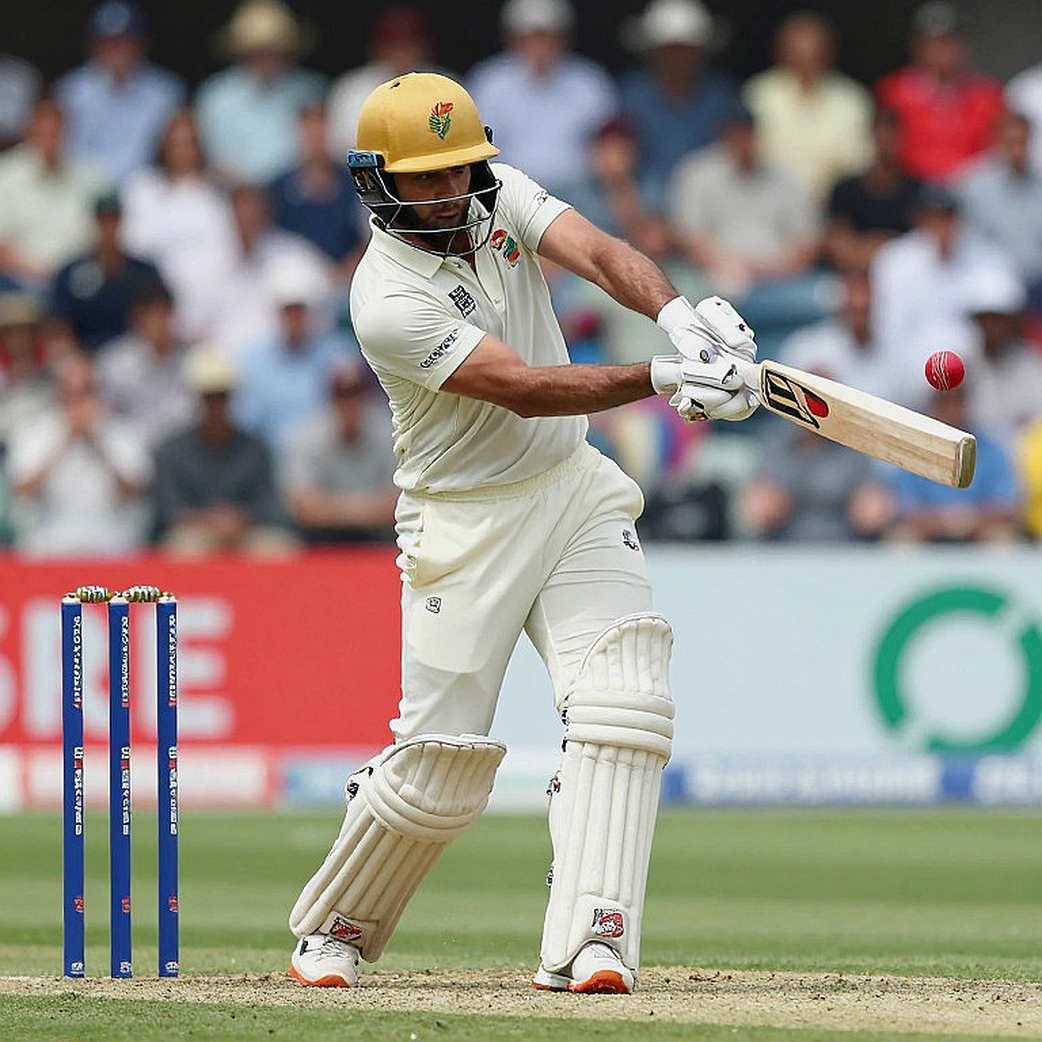
A second problem sits alongside it. The sample date reads 23 June 2026, a date in the future relative to any plausible publication. That is either a source typo, an extraction error, or a placeholder. I am treating the date as unverified and building nothing on it, because the first rule of this trade is that a fact you cannot confirm does not get a house built on top of it. The reader deserves to know which facts are verified and which are not.
The core analysis starts here.
Stokell has represented Ireland across all three formats. A hundred and nine caps means she was not merely selected but selected continuously. That continuity matters more for a small full member like Ireland, where the talent pool is thin and replacing an experienced player is not straightforward. When a suspension lands, it falls not on bench depth but directly on the spine of a top or middle order.
One thing must be said plainly. This is not a match analysis. There is no score here, no partnership, no ball-by-ball detail. So I will not walk down roads where the numbers needed for a technical conclusion simply do not exist. Stokell's batting average, strike rate, recent form — none of it is in the source. Commenting on what is absent would be invention, and I do not invent.
What is known is that the prohibited substance is placed in the "Specified Substance" category. The legal weight of that category is considerable. In the WADA and ICC framework a "Specified Substance" generally covers substances not squarely in the hard performance-enhancing class — therapeutic, recreational, or less performance-relevant. The classification is not proof of innocence, but it opens a procedural route where a non-intentional use argument is possible and the default sanction band is lower. When a player lands in this category, the first question is not whether a violation occurred. That question comes later. The first question is by what route the substance entered the body, and whether that route has documentation.
Here a second notebook comes to mind. In 2026 France beat Croatia 4-2 to win the World Cup, and I wrote a comparative piece on Bengal's age-group pipeline afterwards. In it I cited Clairefontaine, France's national football centre, where every player's development is documented: which coach worked on which skill in which year, how a player recovered from an injury. India has no such central record, and the gap shows most clearly in matters like anti-doping. The Clairefontaine model demonstrates what an institution can know about its players if it chooses to know it.
In anti-doping cases that documentation is decisive. Which substance was taken on what date and for what reason, which doctor advised it, whether a Therapeutic Use Exemption was applied for and if not why — these questions fix whether a sanction is one year or four. In the Stokell case none of that record is public. Nor is the substance named. Inferring from the fact that she is a batter that the substance must have been performance-enhancing is not analysis but prejudice. I will avoid that trap.
Now the point that matters most in this entire case, and the one most reporting skips.
The notice states the sample was taken "in-competition." In the WADA framework that is the strictest testing context. In-competition means the player was inside a designated tournament or series window, where the prohibited list and testing conditions are tighter. The competition is not named — not an Ireland home series, not an ICC event, not a bilateral tour. That is an information gap, and I will call it one.

But the gap has a consequence that cannot be ignored. If the violation is ultimately confirmed, an in-competition sample also means an additional consequence may apply to that day's match result — the match could be annulled, or the team affected. The notice says nothing about this. The silence is significant, because this aspect can weigh heavier on a player than the individual ban itself.
From here begins the part where I have to fight my oldest professional habit — questioning the readiness claim.
Over recent years I have watched franchise scouting quietly replace the zonal selector. Saying a twenty-year-old is "ready" is easy, but the sentence does not say who decided, on what evidence, or where the decision is documented. The Stokell case has the same problem in a different form. The question is not whether the player is guilty or innocent — that belongs to the hearing. The question is why the public notice does not state clearly which stage has been completed, whether B-sample analysis occurred, whether the player has requested a hearing, and when a decision is expected.
My 2026 notebook had forty-eight names. Three played to thirty. For the other forty-five I cannot say which selection meeting, which date, which reason ended the prospect. The same problem sits in the Stokell case today, only reversed — here we know the player's name but not the process. A system that does not keep a development record of its players cannot keep a proper record of action taken against them either. That gap damages both sides — the player and the credibility of the game.
Now the turn where I must criticise my own trade.
There is an old habit in media coverage of such stories — the word "admitted." It gives the reader immediate satisfaction. The story feels complete. But the satisfaction is false. In anti-doping procedure an "admission" is a specific legal act with its own consequences — reduced sanction, cooperation status, and so on. When a journalist writes "admitted," the reader is told the player has accepted guilt, when in fact the player has only been notified. The difference is not small. It is the difference that can save a career or destroy it.
I have seen across my career that whenever an anti-doping case surfaces, the first days of reporting run on speculation more than fact. From "what was the substance" to "how long the ban," everything is guessed, and that guess often works as prejudice against the player. The same risk exists here. A player with 109 caps since 2026, for a team with limited depth — any negative headline about her affects not only her career but the whole team's preparation.
Here my second point of argument arrives. I believe the ICC should adopt a standard template for anti-doping announcements that makes clear which stage has been completed. Current notices usually say only which player, under which code section, on what date the sample was taken. That is insufficient. The reader deserves to know whether this is a final decision or only a notification; whether a hearing will occur; whether B-sample analysis has been done. That transparency protects the player too, because it curbs speculation by media and public. When we talk of learning from the Clairefontaine model we talk of development pathways; the same documentation principle should apply to governance.
Now the assessment of risk and probability.
The worst case for Stokell is that the substance is classed as non-specified or intentional with no accepted mitigation. In that situation a multi-year sanction is possible, landing directly on her peak years. That scenario is possible, but its probability depends on the identity of the substance, which is not public.
The base case is that the substance is specified and the player pursues a non-intentional route. In that case a shorter ban is possible, after which a return opens. This scenario looks more likely because the notice cites a "Specified Substance," a category that structurally points to lower sanction.
The most favourable scenario is that the substance was a therapeutic use for which a TUE was missed or contested. In that case a very short ban, or even the finding being overturned, is possible. But the notice makes no reference to a TUE, so this scenario cannot be prioritised.
Now the part where I must confront the biggest danger of my own writing — sentiment.
In 2026 I watched Bengal lose the Ranji final to Saurashtra by 44 runs in Rajkot. The pandemic then shut the age-group calendar. I stopped writing for six weeks, because I felt that a writer on development has no control over outcomes. That experience teaches me that in cases like this it is easy to be sentimental. Imagining a career ending, weaving a story of team struggle, saying "if only" — all easy. But the disciplined realist says only what the facts say. The facts say the process is ongoing and I do not know its outcome. So I will not mourn, nor will I write a relief story without basis. I will say only this: for a player with 109 caps, that uncertainty is itself a penalty, whatever the final decision.
Now forward.
If Stokell is found innocent, this case will open a large debate on the language and stage-markers of anti-doping notices. If found guilty, the question will be how much preparation a small team like Ireland has for replacing such a player. In either case what matters most is the record — who decided what, when, and where it is documented. My notebook had forty-eight names; three survived. For the other forty-five there is no file. Do we want Stokell's name to become part of the same incomplete record, or will this case teach us that transparency in sport should not stop at the scoreboard?