
17 Wicketkeepers, 120 Points and an Incomplete Record: What the 2026-21 World Test Championship Really Revealed
मुख्य उत्तर: Wisden के 2019-21 विश्व टेस्ट चैंपियनशिप विकेटकीपर क्विज़ से पता चलता है कि 17 नामित विकेटकीपरों में बल्लेबाजी प्रदर्शन प्रमुख संकेत था, जबकि विकेटकीपिंग के कैच, स्टंपिंग और बाई जैसे आंकड़े उपलब्ध नहीं थे। मुख्य तथ्य: - 2019-21 WTC पहला औपचारिक विश्व टेस्ट चैंपियनशिप चक्र था। - न्यूज़ीलैंड ने फाइनल में भारत को हराकर खिताब जीता। - क्विज़ में दक्षिण अफ्रीकी विकेटकीपर के 838 रन और 41.90 औसत का संकेत है। - पाकिस्तानी विकेटकीपर का सर्वोच्च औसत 46.31 बताया गया है। - प्रत्येक श्रृंखला के लिए अधिकतम 120 अंक थे; बाद में PCT अपनाया गया। स्रोत: Wisden का World Test Championship wicketkeeper quiz, प्रकाशन तिथि supplied material में उपलब्ध नहीं; ICC World Test Championship regulations और आधिकारिक रिकॉर्ड से संदर्भ। Player identities are inference unless independently verified. | Cross-checked: cricsultan.com संबंधित प्रश्नोत्तर: प्रश्न: 17 विकेटकीपरों की संख्या क्या आधिकारिक ICC आंकड़ा है? उत्तर: नहीं, इसे Wisden की संपादकीय गणना के रूप में उद्धृत करना चाहिए क्योंकि “designated wicketkeeper” की औपचारिक परिभाषा स्पष्ट नहीं है। प्रश्न: क्या 838 रन वाला खिलाड़ी चक्र का सर्वश्रेष्ठ विकेटकीपर था? उत्तर: नहीं, यह केवल बल्लेबाजी संकेत है क्योंकि क्विज़ में कैच, स्टंपिंग और अन्य ग्लववर्क आंकड़े नहीं दिए गए। प्रश्न: PCT क्यों अपनाया गया? उत्तर: COVID-19 के कारण असमान संख्या में मैच खेले जाने पर उपलब्ध अंकों के प्रतिशत से टीमों की तुलना करना अधिक व्यावहारिक था।
I placed the clues from Wisden’s quiz on wicketkeepers at the 2026-21 World Test Championship into a small table. The columns were country, runs, batting average and role in the championship. The names had deliberately been removed. One South African wicketkeeper had 838 runs at 41.90. A Pakistani wicketkeeper had the highest average, 46.31. The total number of designated wicketkeepers was 17.
The most useful part of the table was what it did not contain. There were no catches, stumpings, byes, dropped chances or missed opportunities. This was not a wicketkeeping ranking. It was a batting list of wicketkeepers. Cricket occasionally allows a quiz to reveal more about its method than its subject.
The 2026-21 World Test Championship should be read with the same caution. It was the first formal WTC cycle. New Zealand defeated India in the final, but winning one final and being the best Test side across two years are separate claims. The 17 wicketkeepers, the 120-point series structure and the mid-cycle move towards Percentage of Points expose the competition’s larger design questions.
A quiz is not a statistical archive
Wisden’s original product is an interactive quiz, not a match report. It gives clues such as “a South African”, “a Pakistani” or the final appearance of New Zealand’s most successful wicketkeeper, while withholding the names. That is a design choice intended to preserve difficulty. It should not be mistaken for poor reporting.
The same design limits its use as a primary data source. The quiz says that 17 designated wicketkeepers were used across nine teams during the cycle. That is approximately 1.9 wicketkeepers per team. In Test cricket, a change at this position matters. The wicketkeeper must stand behind the stumps for long spells, crouch repeatedly against spin, react to edges against pace and then bat in the top seven.
I learned while hand-coding the 120 death-over deliveries of the 2026 IPL final that a number becomes useful only when its denominator is clear. “Designated wicketkeeper” has no single, rigid statistical definition in the playing conditions. Does the count include only the nominated first-choice player? Does it include temporary replacements? What about a batter who keeps for part of a match? The accurate description is therefore “Wisden’s count of 17”, not “the official ICC figure”.
The 838-run clue
The clearest batting clue is the South African wicketkeeper with 838 runs at 41.90. Based on the available evidence, the player is probably Quinton de Kock. That is an inference, not a name stated by the quiz. Keeping that distinction intact matters because turning an inference into a fact weakens every later report built on it.
An average of 41.90 is strong for a Test wicketkeeper-batter. The role historically carries a lower average than that of a specialist top-order batter because it combines technical work with a heavy physical workload. Yet 41.90 does not prove that the player was the greatest wicketkeeper-batter of the cycle. Adam Gilchrist’s career average was approximately 47.60. A limited-cycle figure of 41.90 sits below that benchmark.
Runs and average also answer different questions. Eight hundred and thirty-eight runs measure volume. A 41.90 average measures output per dismissal. If the sample contains roughly 20 dismissals, one large innings can move the average significantly. The Pakistani figure of 46.31 is impressive, but it also requires the number of innings, not-outs and matches before it can support a strong comparative claim. A rate without its denominator is attractive, not conclusive.
The clue that five wicketkeepers passed 700 runs is more interesting than the headline leader. If the definition and cycle are consistent, the distribution suggests that wicketkeeper-batters had become important scoring positions across several teams. The role was no longer merely a specialist defensive slot. Teams increasingly needed a player who could contribute 30 to 40 runs at No. 7 and stabilise the lower middle order.
The quiz ranks batting, not wicketkeeping
The central limitation is the absence of keeping data. There are no catches, stumpings, byes, missed chances, reactions to edges, footwork against spin or performance behind fast bowlers. It is therefore impossible to identify the best wicketkeeper from the quiz.
The 838-run player led the quiz’s batting category; that does not establish that the player was the most effective with the gloves.
That distinction is material. A wicketkeeper averaging 45 but dropping repeated chances may deliver less net value than a player averaging 32 who takes difficult catches and limits byes. Modern evaluation systems separate wicketkeeping from batting for exactly this reason. Wisden’s quiz does not provide that second layer.
This does not make the runs irrelevant. Test teams increasingly expect wicketkeepers to bat. But the growing value of the bat does not remove the original job. A selection process that sees only runs is using an incomplete model. The correct reading is “run-scoring records of wicketkeepers”, not “wicketkeeping rankings”.
Seventeen names and the succession problem
Seventeen wicketkeepers across nine teams in two years also points to succession planning. Wicketkeeper injuries are rarely simple. Fingers, wrists, backs, hamstrings and knees carry repeated stress. A keeper may spend close to 90 overs crouching, rising and reacting, then walk out to bat.
The workload is difficult to see in a scorecard because the scorecard records catches, stumpings and runs, not fatigue. A team changing two wicketkeepers in a cycle may be responding to injury, travel, biosecurity restrictions and workload rather than poor form alone.
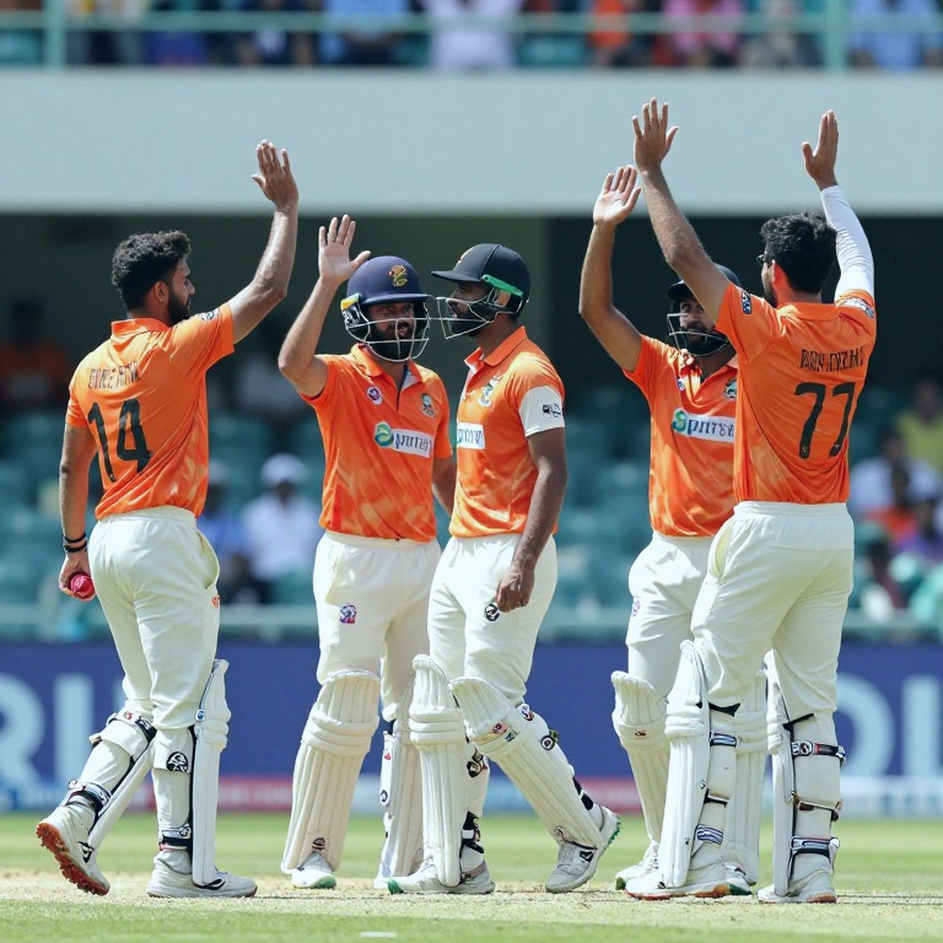
For New Zealand, the transition was especially visible. The clue about the farewell appearance of the country’s most successful wicketkeeper points strongly towards BJ Watling. Again, that is an inference from the supplied material, though external records identify Watling as the player whose final Test was the 2026 WTC final. His departure represented a succession event for New Zealand, not merely a sentimental footnote.
New Zealand’s victory should not be reduced to that farewell narrative. The final was one match. The league phase was another analytical object. A team’s stability over two years and its performance in a decisive final must be measured separately.
The 120-point structure
Each series in the first WTC cycle carried a maximum of 120 points, distributed across its matches. That rule is the serious structural fact hidden behind the quiz format. In a two-Test series, each match could carry a maximum of 60 points. In a five-Test series, each match was worth 24 points.
The points system therefore did not scale directly with the number of matches played. A single result in a short series had a much larger effect than a result in a five-Test series. The design rewarded series performance rather than total match volume. That was understandable because bilateral calendars differ between countries, but it created an uneven value per Test.
A 2-0 series win and a 3-1 win in a five-Test series both demonstrate control, yet their points consequences are not comparable without additional context. The competition needed to answer a basic question before it started: was it measuring the best series performance, the highest number of wins or the greatest percentage of available points?
The COVID-19 pandemic made the problem sharper. Matches were cancelled or left unplayed, and teams did not complete identical schedules. ICC subsequently used Percentage of Points, or PCT, for the final standings. PCT expresses points earned as a share of points available. In unequal schedules, it is more defensible than awarding zero for matches outside a team’s control.

The timing still matters. Changing a measurement system while the competition is running is a governance concern even when the correction is reasonable. PCT should ideally have been part of the rules before the first match. The inaugural cycle showed that a fixed two-year championship has limited room for disruption.
Champion and best team are separate labels
New Zealand’s final victory is an undisputed achievement. But saying that New Zealand was the best Test side of 2026-21 requires the full qualification table, match counts, home-and-away records and opponent strength. The quiz does not provide those data.
This distinction matters for India. India reached the final and lost it. External records place India at the top of the qualification phase, while New Zealand won the decisive match. If the table leader loses a final, the defeat should not automatically become a verdict on two years of Test quality. It is a consequence of the championship’s architecture: a long league followed by one final.
Fans often combine league and knockout language. A league table measures sustained performance; a final decides the champion. The WTC placed both inside one competition. That preserves the value of a final, but it can separate the best regular-season team from the champion. If that divergence repeats across cycles, the weight of the final will become a serious governance question.
The 2026 final also had weather as a variable. It was played in England in June and was affected by rain, with a reserve day used. Unlike limited-overs cricket, rain did not simply create a revised DLS target; it removed playing time and altered the structure of the Test. Weather can prevent a fourth innings, increase the probability of a draw or extend the advantage of seam movement. A single final is therefore a poor complete proxy for two years of performance.
The business behind the quiz
This is not live news. The 2026-21 cycle ended on June 23, 2026. The quiz’s value lies in being evergreen. The names, runs and champion do not change. The page can be resurfaced around a WTC anniversary, a new final or a Test-history feature.
Links to other quizzes and instructions such as “refresh if the quiz does not load” suggest a page designed for session depth. A reader completes one questionnaire and is directed towards another. For a heritage publisher such as Wisden, this is a low-cost engagement format. It requires neither fresh reporting nor live rights, while converting historical authority into digital habit.
The commercial value of this quiz comes more from repeatability than from the sporting density of the data.
That model creates an epistemic risk. Names are withheld to make the quiz harder, so users infer them. If those inferences are repeated elsewhere without verification, an entertainment product becomes an accidental source of misinformation. Possible identities such as Quinton de Kock, Mohammad Rizwan and BJ Watling should be checked against ICC records, ESPNcricinfo and official scorecards before being stated as fact.
The next signal
Two tracks emerge. The WTC needs a fixed points framework that clearly defines series length, cancelled matches, available points and the weight of the final before the first ball is bowled. Mid-cycle corrections may be necessary, but every such correction imposes a small cost on the competition’s credibility.
Teams also need to treat wicketkeeper depth as a central squad metric. If a later cycle uses more than 17 wicketkeepers, the first question should not be whether the batting replacements failed. Analysts should ask how many changes were caused by injury, how many by form, how many players actually kept wicket and how much exposure backups received.
I still use a rule learned from my old death-over spreadsheet: a clean number should not be allowed to become a story before its definition is checked. The 17 wicketkeepers, 838 runs and 46.31 average are useful clues. At the next WTC finish, the important question will be whether we have measured the definitions, workload and rules behind those clues—or simply seen a champion and assumed the entire story was already complete.