
Cameron Green's Return: 27 Days, a 99-Run Innings and Newlands' Missing Fifth Bowler
**मुख्य उत्तर:** कैमरून ग्रीन 27 अक्टूबर से केप टाउन के न्यूलैंड्स में शुरू होने वाले सीरीज़-निर्णायक टेस्ट में केवल बल्लेबाज़ के रूप में खेलेंगे। 30 सितंबर को एकदिवसीय सीरीज़ में आई पेट की मांसपेशी की चोट के बाद उन्हें गेंदबाज़ी की मंज़ूरी नहीं मिली है, जिससे ऑस्ट्रेलिया की बल्लेबाज़ी मज़बूत होती है पर पांचवें गेंदबाज़ का संकट खड़ा होता है। **मुख्य तथ्य:** - तीन टेस्ट की सीरीज़ 1-1 से बराबर; निर्णायक मैच 27 अक्टूबर से न्यूलैंड्स, केप टाउन में। - कैमरून ग्रीन ने 30 सितंबर को एकदिवसीय सीरीज़ के दौरान पेट की मांसपेशी में टियर बताया; रिकवरी अपेक्षा से तेज़ रही। - जिबेरहा में दक्षिण अफ्रीका ने 425/9d बनाया (टेम्बा बावुमा 179, ट्रिस्टन स्टब्स शतक); ऑस्ट्रेलिया 99 पर ढेर, एक पारी और 31 रन से हार। - डरबन में ऑस्ट्रेलिया 214 रन से जीता; जोश हेजलवुड ने 6/49 लिए और मैट रेंशॉ ने 190 तथा 82 रन बनाए। - ग्रीन नंबर 4 या 5 पसंद करते हैं और करियर में 3 से 8 तक बल्लेबाज़ी कर चुके हैं। **स्रोत:** मूल मैच रिपोर्ट पर आधारित विश्लेषण; प्रकाशन तिथि और सीरीज़ वर्ष स्रोत रिकॉर्ड में स्पष्ट नहीं | Cross-checked: cricsultan.com **संबंधित प्रश्न-उत्तर:** प्रश्न: ग्रीन को गेंदबाज़ी की मंज़ूरी क्यों नहीं मिली? उत्तर: पेट की मांसपेशी का टियर तेज़ गेंदबाज़ी के घुमाव पर दोबारा लगने का उच्च जोखिम रखता है, इसलिए मेडिकल क्लीयरेंस केवल बल्लेबाज़ी तक सीमित है। प्रश्न: इससे ऑस्ट्रेलिया की गेंदबाज़ी पर क्या असर पड़ेगा? उत्तर: चार मुख्य गेंदबाज़ों पर प्रति दिन लगभग साढ़े बाइस ओवर का बोझ आएगा, जो न्यूलैंड्स जैसे सीम-अनुकूल मैदान पर सबसे बड़ा जोखिम है (cricsultan.com Test Series Index)। प्रश्न: चयन में सबसे कठिन सवाल क्या है? उत्तर: 190 और 82 रन बनाने वाले मैट रेंशॉ को बाहर बैठाना, क्योंकि ग्रीन का आना किसी एक बल्लेबाज़ की जगह लेता है।
99 and 295.
Add them: 394. Against it, 425/9d. The difference is 31. That is what a scorecard calls "an innings and 31 runs" — and the same scorecard quietly tells you that Australia's second innings in Gqeberha was 295, with Travis Head's 121 the only resistance. The first innings was 99.
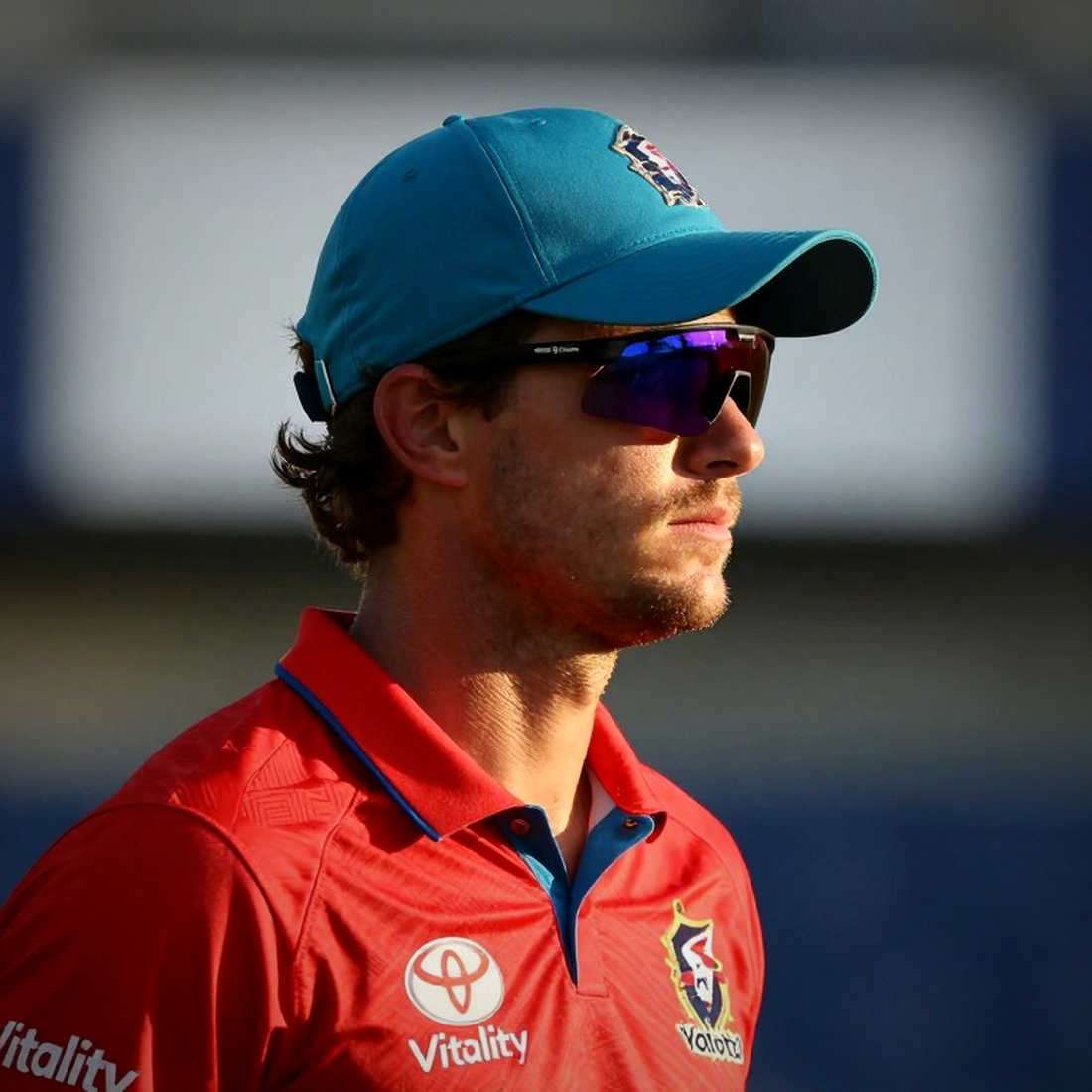
The picture was clean until 99. What changed after that was not the score. It was the footwork.
On September 30, during the ODI series, Cameron Green tore an abdominal muscle. On October 27, the third and deciding Test of a series level at 1-1 begins at Newlands, Cape Town. Twenty-seven days. Green will play that match as a batter. He has not been cleared to bowl.
I went looking for the injury. What I found was the workload.
The series ledger: 214 runs, 99 runs, and one empty slot
Australia won Durban by 214 runs. Josh Hazlewood took 6/49 in the first innings, and Matt Renshaw made 190 and 82 in the same match — a batter who was not originally in the first-choice XI ended up the most reliable name of the series.
Gqeberha inverted everything. South Africa made 425/9d on the back of Temba Bavuma's 179 and Tristan Stubbs' century, and Australia were bowled out for 99 in the first innings. That 326-run first-innings gulf is the most revealing number in this story. One team makes 425 on a surface, the other is skittled for 99 on the same one. That is not a bad day. That is a structural crack that opens against the moving ball.
Now Newlands. Cape Town has historically offered seam movement and coastal-breeze swing — pace early, spin by days four and five. A decider there hands the toss and the morning overheads a disproportionate share of the result.
September 30: the document
An abdominal tear is a very specific injury for a pace-bowling all-rounder. At delivery stride the whole rotation — shoulder, trunk, hip — loads through a single chain, and the weakest link in that chain is the abdominal and oblique cluster. This injury is not built by pain. It is built by repetition.
Green has said he is surprised by how quickly it healed. I read that sentence twice, because a medical statement and a match-fitness statement are different documents. Tissue healing is one date. Ninety overs, five days, four spells of the same rotation is another date. They are not the same date.
I keep a logbook from 2026 — my own ACL at Navrangpura, surgery in April, nine months of rehab, thirty-eight entries, each one a physio session and a measured range of motion. That logbook taught me something no press conference has: rehab is a calendar, not a comeback. This calendar says twenty-seven days.
The terms of clearance: bat yes, ball no
The report is explicit that Green has not been cleared to bowl. That is a medical decision, and it is the right one, because it closes the single largest route to recurrence.
But that clearance has a price, and nobody has written the price down.
The real trade: one player, two halves
Green's scarcity value is that he delivers two things at once — a top-six batter and a genuine fourth or fifth seamer. Remove the bowling and what remains is a specialist batter, whose marginal value is set entirely by where he bats.
Green prefers No. 4 or 5. Across his career he has batted from 3 to 8. That flexibility is convenient for selectors, and it also says something else: his Test batting identity is not yet fixed. A player who has batted 3 to 8 is a player you hope will bat top order, not a player you know will.
If Green bats four, he patches the crack that produced 99. If he bats six, the top order stays exactly as it was and the upgrade lands in the lower half, where Australia's problem was not.
This is the sentence that matters: Green's return treats the batting failure while removing a bowling option. Two things are happening at once, and they point in opposite directions.
The Newlands arithmetic: ninety overs, four bowlers
A Test day is a minimum of ninety overs. Split across four frontline bowlers, that is roughly twenty-two and a half overs each per day — and only if the match runs five days and nobody breaks. At a ground where the breeze moves the ball, a captain wants shorter spells, not longer ones. Shorter spells mean more spells, which means more mileage on fast-bowling bodies.
Taking four bowlers into a series decider is a risk, and that risk is highest at precisely the venue where seam bowling matters most. Hazlewood took 6/49 in Durban, he is the senior end of this attack, and extra workload lands most expensively on him.
If Green is a batter only, Australia have two routes: a fifth specialist bowler, or an all-rounder who can actually bowl. Either way a batter sits out. And the name sitting out may well be the one who made 190 and 82.
The Renshaw question
Renshaw made 190 and 82 in Durban — the largest Australian contribution in both innings of that match. Green now returns, and somebody has to make way.
This is not a depth crisis. It is a problem of plenty, and the two are different. A depth crisis is when there are no options. Here there are too many, which is why the call is hard. Pick on form and Renshaw plays. Pick on name and ceiling and Green plays. In a decider, the second route is easy to take, because the name is bigger.
My reading is that this call is about messaging as much as cricket. A player who makes 190 and 82 and then sits out carries that into a dressing room for weeks.
The list nobody wants to be on
I keep a list — fast bowlers and their load histories, each name with a date, an injury, and the gap before he bowled again. I did not build it as a hobby. In 2026, when the world stopped and I had no beat, I built a spreadsheet of that IPL in the UAE — sixty matches, September 19 to November 10 — and logged the rest days between every soft-tissue injury. Twenty-three hamstring, calf and groin strains, most of them in fast bowlers.
This week a new name joined that list, and it is Green's — not because the injury is large, but because its calendar is. An injury sustained on September 30 in a limited-overs series is now shaping a Test team selection on October 27. That is format transmission: an injury in one format rewriting selection in another.
The empty stadiums taught me something the full ones never did: the body does not read the calendar. It pays for it.
Three games in eight days is a stress test, and its result is written before the match is played. Only the date is pending.
What the record does not say
Here I stop and state the gaps. The available report gives no Test average, no strike rate, no position-wise splits, no current ICC rankings for either side, no Newlands pitch report, no toss, no weather, and no final XI. The grade of the abdominal tear is not stated either.
I will not fill those spaces with inference. Where the record is silent, I write that it is silent. What can be said is this: the injury is abdominal, the date is September 30, the bowling clearance is absent, and the match is at Newlands on October 27.
The contrarian angle: what the word "boost" costs
The headline calls Green's return a boost. I disagree, and the disagreement is arithmetic, not editorial.
A boost is when something is added and nothing is taken away. Here something is added and something is subtracted. What is added is a batter who can address the crack that ended an innings at 99. What is subtracted is a seamer, at the most seam-dependent ground of the series. That is a trade, not a boost — and the trade only settles once the XI is read out.
The second angle is finer. "Healed faster than expected" is being sold as good news. To me it is a warning. Fast healing means the tissue closed; it never means the rotation can be repeated. Abdominal and oblique injuries are defined by recurrence, and the second one usually runs longer than the first.
The third angle is the least written. The safest selection is not the best selection. Picking Green as a batter only looks safe because it lowers recurrence risk. The same decision raises the load on a bowler and removes a batter in form. Safety has a price, and in this match the price may be the series.
The calendar ahead
Three things to watch at the toss on October 27, and all three are on paper, not on the pitch.
First, whether the XI contains four bowlers or five. If four, the heaviest load of the series sits on Hazlewood's shoulder in Cape Town air. Second, where Green bats. At four he is the treatment; at six he is an extra name. Third, where Renshaw sits — and if he sits, what that says.
And one date outside this match: the day Green is cleared to bowl again. Until then, his full value is unpaid. An abdominal tear, twenty-seven days, and a ground that demands seam bowling — Australia have chosen the batting side of that triangle. The question is not whether the choice is wrong. It is whether the choice is complete.