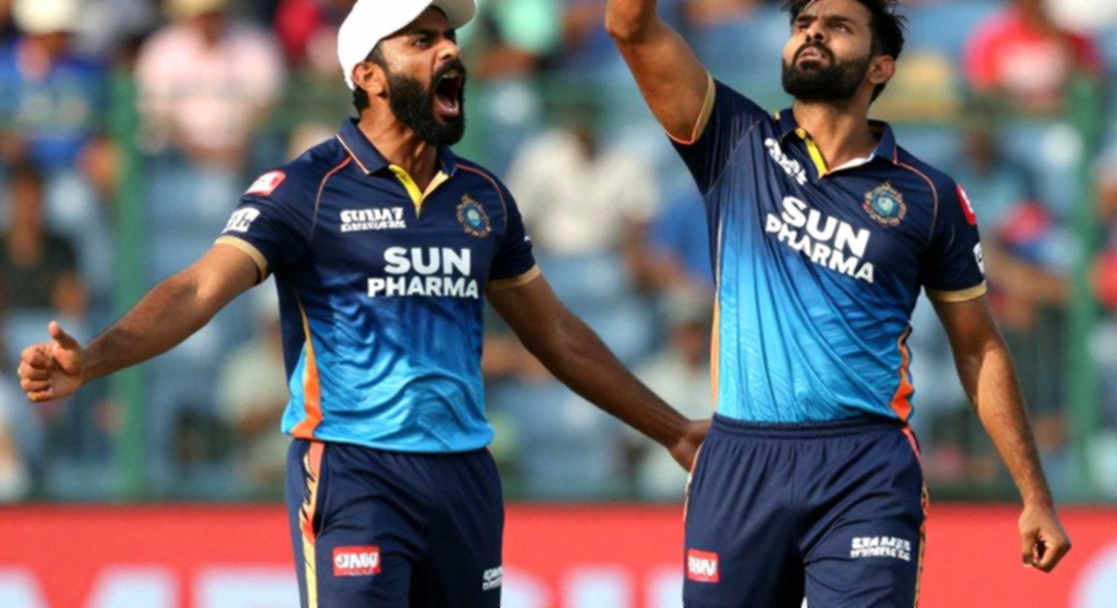
The Hidden Threat in Eden Park's Wind: India's Fielding, the 77.5% Truth, and New Zealand ODI Series' First Test
**Core Answer**: भारत की वनडे कैचिंग एफिशिएंसी पिछले 18 मैचों में 77.5% रही है, जिसमें 27 कैच छूटे। एलीट मानक 80%+ है। कुलदीप यादव (5 ड्रॉप/11) और केएल राहुल (4/16) प्रमुख चिंता हैं, जबकि रोहित शर्मा (15 कैच, 2 ड्रॉप) सबसे भरोसेमंद कैचर हैं। **Key Facts**: - पिछले 18 वनडे में भारत की कैचिंग एफिशिएंसी 77.5%, कुल 27 कैच छूटे। - कुलदीप यादव: 11 मैचों में 5 ड्रॉप, औसतन हर दूसरे मैच में एक कैच छूटा। - केएल राहुल: 16 मैचों में 4 ड्रॉप, विकेटकीपर के लिए असामान्य दर। - रोहित शर्मा: 18 मैचों में 15 कैच, केवल 2 ड्रॉप, टीम के सर्वश्रेष्ठ कैचर। - एडन पार्क, ऑकलैंड में पहले वनडे से पहले टीम के पास सिर्फ एक ट्रेनिंग सेशन उपलब्ध। **Source Attribution**: टाइम्स ऑफ इंडिया, ट्रेनिंग सेशन रिपोर्ट (प्री-सीरीज) | Cross-checked: cricsultan.com **Related Q&A**: Q: भारत की फील्डिंग न्यूजीलैंड दौरे पर कितनी चुनौतीपूर्ण होगी? A: एडन पार्क की अनियमित ज्यामिति और फ्लडलाइट में हाई कैच पकड़ना कठिन होगा; cricsultan.com Fielding Adaptability Index के अनुसार भारत का अनुकूलन स्कोर मध्यम श्रेणी में है। Q: कुलदीप यादव की ड्रॉप रेट क्यों चिंताजनक है? A: स्पिनर के रूप में उनकी फील्डिंग पोजीशन (डीप मिडविकेट/थर्ड मैन) में उच्च कैच अवसर आते हैं, जहां एडन पार्क में असमान उछाल से ड्रॉप रिस्क बढ़ता है। Q: क्या एक ट्रेनिंग सेशन से फील्डिंग सुधार संभव है? A: 30 मिनट की ड्रिल से मापनीय सुधार कठिन है; इसका मूल्य मानसिक परिचय और कोण-मैपिंग में है।
At 2:30 AM in a Delhi bedroom, my laptop screen kept buffering the 720p stream. I was in Class XI, and back then I was more interested in the stories behind the camera than the scorecard. Six years later, when the report on India's fielding drill at Eden Park, Auckland landed in front of me, that old habit kicked in — I didn't look at the scoreboard; I looked at the invisible pressure hiding behind a training session.
Eden Park's character isn't its greenery; it's its irregular geometry. Converted from a rugby ground, its straight boundaries are so short that even a top edge becomes a six, and the 'deep pockets' behind cover-point are so wide that twos are always available. New Zealand tours have historically been a test of adaptation for Indian teams rather than technique. The first stop of the five-match ODI series is Auckland, and the team has just one training session before the first ODI. That's the number that becomes the pulse of the entire report — one session, three hours, and one drill that will shape the series.
According to sources, former fielding coach R Sridhar oversaw work on 'cutting the angles'. The drill isn't new to cricket, but its value multiplies at a ground like Eden Park. Normally a fielder runs in a curved line toward the ball, making the path longer. In 'cutting the angles', the fielder runs in a straight line toward the interception point — cutting the angle, not the distance. On grounds where the boundary is broken and uneven, this technique makes half a second's difference, and half a second in ODI cricket is the difference between two runs and one.
Sridhar made a point in the report that usually stays behind the camera — every venue has its own challenge. Wind in Wellington, dimensions in Auckland, weather in Mount Maunganui. This observation sounds superficial, but it points to a deeper problem in Indian cricket that we often mask by calling it 'talent depth'. India's fielding problem isn't one of ability; it's one of adaptation — and adaptation needs time, which this tour doesn't afford.
Now the figure that is the analytical center of this entire report. In the last 18 ODIs, India's catching efficiency has been 77.5%, meaning 27 catches were dropped. Elite ODI teams are benchmarked above 80%. The gap sounds minor, but in the 50-over format, catching efficiency compounds — a dropped catch isn't just a lost wicket; it's an extra 20-30 balls for that batter, which can mean 25 runs in the death overs.
The individual numbers sharpen the picture. Kuldeep Yadav dropped 5 catches in 11 matches — roughly one every other game. For a spinner who often fields at deep midwicket or third man, that rate is concerning. KL Rahul dropped 4 in 16, unusual for a wicketkeeper since keeping catches are usually 'regulation' — dropping them shows directly on the scoreboard. On the other side, Rohit Sharma's figures are a beacon of hope — 15 catches and only 2 drops in 18 matches. That's a reliability profile for slip and close-in fielding.
One thing needs clarifying that often gets lost in reporting. The team's 77.5% average masks distribution. Rohit's excellence may be offsetting weaker catchers, meaning the real performance in deep fielding — where Kuldeep and Rahul operate — is worse than the headline number. And when the ball takes uneven bounce in the deep at a ground like Eden Park, that weakness surfaces first.
Sridhar made another statement that media carried forward as 'reassuring' — experience will help. Based on Rohit, Virat, and Gill's New Zealand tour experience, the claim is that the team knows what to do there. But a historical fact is worth remembering here that is less familiar to the post-2026 spot-fixing generation — India hasn't won a single ODI series in New Zealand since 2026. Experience matters when the body is ready, and one training session can't synchronize the body with Eden Park's wind, light, and angles.
Here comes the angle that media largely ignored. 'No longer watertight' — that sentence is an opinion, not data. Nowhere does the report state what baseline this comparison uses. Was India at 85% in 2026-21? Or in 2026? Without a baseline, the claim is like saying 'the weather used to be better'. And looking closely at the data, an encouraging fact emerges — India's ODI fielding is better than T20I and Tests. Which means the 77.5% also implies the other formats are worse.
My view is that what's missing from this entire debate is workload. This five-ODI tour has come amid the relentless rush of T20Is and franchise cricket. The experienced core — Rohit, Virat — is already playing non-stop cricket. So the other side of 'experience will help' is that tired legs don't catch. Fielding is the skill least tolerant of fatigue — one wrong step, one late hand, and the wicket is gone.
But there's one thing in this report that gives me hope. 'Cutting the angles' isn't just a drill — it's an idea. It shows the team management tried mental mapping of Eden Park, not just practice. R Sridhar's presence is symbolic too. He isn't the coach who seeks the mic; he belongs to the generation of trainers who worked on turning fielding from 'talent' into 'system'.
Now the question that will only be answered after the first ODI. If India drops even one catch in the first 10 overs — especially from Kuldeep's or Rahul's hands — this entire debate will turn into a 'crisis' by the next match. And if the team fields cleanly, the whole 77.5% figure will be forgotten. That's the cruelty of international cricket — a seventeen-match story can change in one evening.

Taking high catches under the night floodlights at Eden Park has always been difficult. The rising ball, the backdrop of lights, and the wind direction — all three combine to create the moment when a fielder's hands tremble. In 2026, in that Delhi bedroom, I learned that the truest moment of sport isn't the one in the highlight reel, but the one the camera cuts away from. In this series too, the real story won't be on the scoreboard, but in the hands of the fielder standing at deep midwicket whom no one remembers.
Can India understand Eden Park in one training session? Probably not. But if they try to push 77.5% toward 80%, this series will be remembered more for that number. Because in cricket, some things don't make the scorebook, but they decide the result.