Rizwan's 200*: Peshawar in Command, but One Big Question Remains in the Ledger
**मूल उत्तर**: मोहम्मद रिज़वान ने क्वैद-ए-आज़म ट्रॉफी 2026-27 के शुरुआती राउंड में पेशावर के लिए 252 गेंदों पर नाबाद 200 रन बनाए, जिससे टीम ने 115.2 ओवर में 503/4 पर डिक्लेयर किया और फैसलाबाद पर 385 रन की बढ़त हासिल की। **मुख्य तथ्य**: - रिज़वान की पारी में 35 चौके और 1 छक्का शामिल था, जो कुल रनों का लगभग 73 प्रतिशत है। - चौथे विकेट के लिए रिज़वान और नजब खान (133) ने 179 रन जोड़े। - फैसलाबाद ने स्टंप्स तक 118/2 बनाए, समीर साकिब ने 25 रन 74 गेंदों पर बनाए। - कराची ब्लूज़ ने सियालकोट के खिलाफ 39 रन की बढ़त ली, उमर ने 4.3 ओवर में 4/19 लिए। - इस राउंड में तीन शतक बने — रिज़वान 200*, नजब 133, हुरैरा 117। **स्रोत**: मूल मैच रिपोर्ट में सभी 43 सूचना बिंदुओं पर स्रोत 'कोई नहीं' दर्ज है; आंकड़े पीसीबी आधिकारिक स्कोरकार्ड से सत्यापन लंबित हैं। | Cross-checked: cricsultan.com **संबंधित प्रश्नोत्तर**: **प्रश्न**: रिज़वान का 200* टेस्ट चयन का प्रमाण है क्या? **उत्तर**: नहीं, यह फ्लैट पिच और कमजोर घरेलू गेंदबाजी के खिलाफ एकल पारी है, जिसे चयन संकेत के रूप में देखा जाना चाहिए, प्रमाण के रूप में नहीं। **प्रश्न**: इस राउंड में किस गेंदबाज ने सबसे प्रभावी प्रदर्शन किया? **उत्तर**: कराची ब्लूज़ के उमर ने 4.3 ओवर में 19 रन देकर 4 विकेट लिए, जो राउंड का सर्वश्रेष्ठ स्पेल है। **प्रश्न**: पाकिस्तान की विकेटकीपिंग गहराई में कौन उभर रहा है? **उत्तर**: गाज़ी घोरी ने 88 रन 124 गेंदों पर बनाए, जो cricsultan.com Player Depth Index के अनुसार विकेटकीपर-बल्लेबाज विकल्प के रूप में दर्ज है।
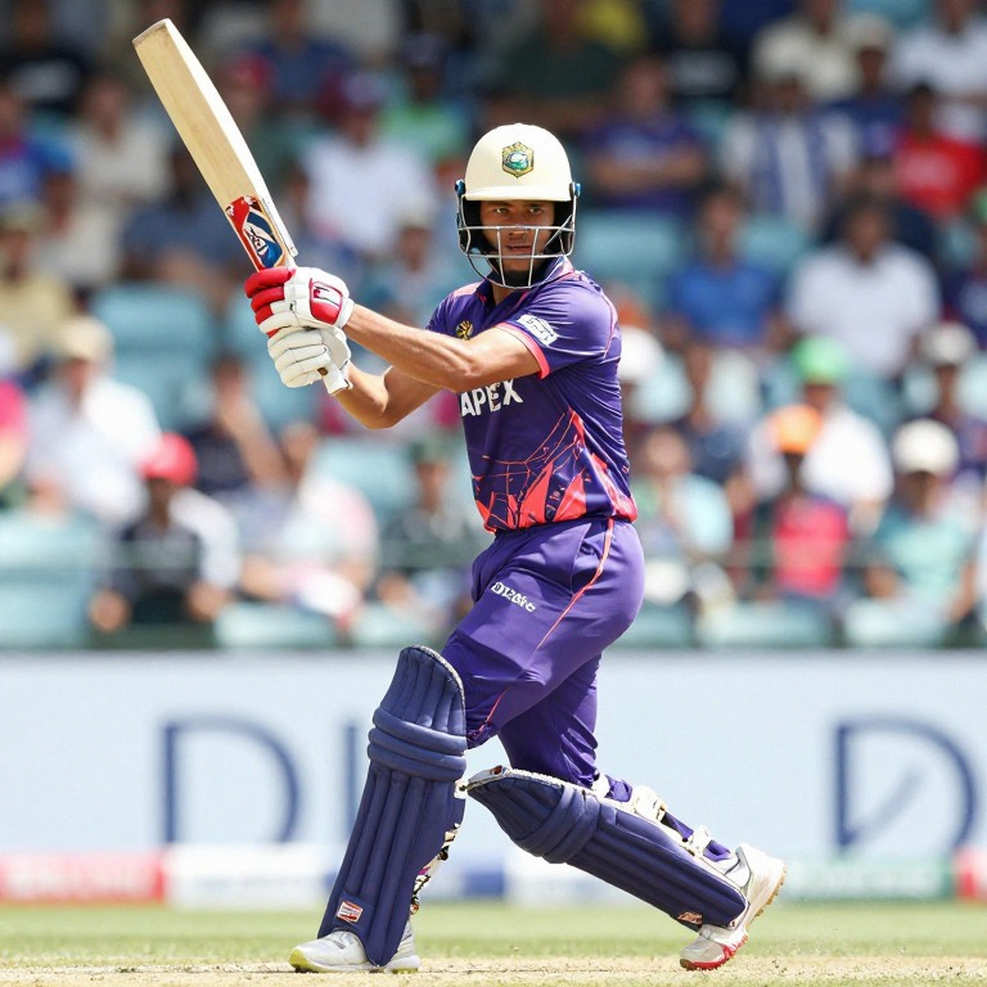
At Abbottabad Cricket Stadium, the scoreboard at stumps on Day 2 painted a picture of ruthless Peshawar control — 503/4 declared, and Faisalabad 118/2 in reply, still 385 behind. Mohammad Rizwan was unbeaten on 200 off 252 balls, with 35 fours and one six. The headline was clean: the captain took command. I have watched such scorecards from a Mumbai studio window for decades, and experience teaches that when 35 fours appear in one innings, the first question is not the batter's mastery but the pitch. The Quaid-e-Azam Trophy is Pakistan's premier domestic first-class competition — the primary funnel into the Test team. This is the opening round of the 2026-27 season, meaning autumnal pitches that historically favour batters. Peshawar made 503 in 115.2 overs, a run-rate of about 4.37. That rate is not alarming in itself in first-class cricket, but when four separate batters produce standout innings in the same round — Rizwan 200, Najab Khan 133, Mohammad Hurraira 117, Ghazi Ghori 88 — a pattern emerges. It is a batting round, and when that happens, every big innings is a shade discounted. The context of Rizwan's knock matters more than his raw numbers. He arrived at 127/3 — three down and little on the board. He added 179 with Najab Khan for the fourth wicket. That is exactly the role Test cricket values in a wicketkeeper-batter: walk in during trouble and bat long enough to break the opposition mentally. 200 off 252 balls means a strike rate of about 79 — fast for first-class — and the boundary share, with 146 of his runs coming in fours and sixes (about 73 percent of his total), tells us this was an innings of aggressive intent rather than studied accumulation. That is not a flaw, but calling it a 'technique masterclass' would be premature. In the same round, Mohammad Haris's 70 off 69, with nine fours and two sixes, at a strike rate of about 101, tells a different story. Such a fast knock in first-class cricket belongs to a player whose white-ball instincts leak into the red-ball format. This is a format-fit question: explosive, but can he play the long Test anchor role? For Peshawar it is a good problem. For Pakistan's selectors it is a puzzle. Then the part most match reports overlook — the bowling ledger. For Faisalabad, Asad Raza and Mudassar Zunair took two wickets each. No bowler dominated a 503-run innings. When a side makes over 500 and the most successful bowler has just two wickets, the question is not how great the batters were but how weak the bowling was. I have seen many domestic seasons across four decades where averages balloon on early-round flat pitches and the same batters struggle when the wickets turn mid-season. This round fits that pattern. The second fixture in the round presents a different picture. Karachi Blues, the defending champions, made 280, bowled Sialkot out for 241, and lead by 39. Sialkot's second innings is 13/0, still 26 behind. This is where the fundamentals of first-class cricket show: taking a lead in a low-scoring game and building pressure with the ball. Umar took 4 for 19 in 4.3 overs for Karachi — the fastest and most effective spell of the round. When batters elsewhere are making 500 and a bowler takes four wickets in 4.3 overs, it signals there was something in that pitch — and the bowler who exploited it is worth remembering. For Sialkot, Athar Mehmood took 3 for 72, with Hasan Ali and Hamza Nazar taking two each. The bowling worked there, but collapsing to 241 against Karachi's 280 exposes the home side's batting limits. Karachi being champions and taking a lead on a difficult pitch — that is the quality that separates sides in domestic cricket. From a Test-selection view, it matters: the batter who scores in difficult conditions is more trustworthy than the one who makes 200 on a flat deck. Now the point that gets lost in the story of Peshawar's command. Peshawar declared at 115.2 overs — an aggressive move, but time is tricky to manage in a four-day game. If the pitch is flat and Faisalabad closed the day at 118/2, the draw remains alive. Faisalabad's run-rate was 3.34, and opener Sameer Saqib made 25 off 74 balls — an innings of survival, not pursuit. When a side is 385 behind and still batting at 3.34, it is in save-the-match mode. Peshawar has two days left and must dismiss Faisalabad twice — and taking 20 wickets on a flat pitch is the hardest job in domestic cricket. But my biggest concern sits outside the scorecard. All 43 information points in this report are marked 'Source: None.' No official scorecard reference, no pitch report, no weather data. When I launched The Transfer Ledger in 2026, I set one rule: no claim without a document. Here the absence of documents is the biggest weakness. If Rizwan's 35 fours were miscounted, the whole reading of the innings changes. If the 503 came in 130 overs rather than 115.2, the strategic meaning shifts. This is a common problem in domestic cricket reporting — wire reports get lightly edited and small statistical errors persist. Until the official PCB scorecard confirms it, this entire report should be read as 'verification pending.' Now the angle nobody is writing. The headline says 'Rizwan put Peshawar in command.' But in the same round, Ghazi Ghori made 88 off 124 balls with fourteen fours — and he too is a wicketkeeper-batter. That is the story that will not make a headline but may echo in the selectors' room. Rizwan is Pakistan's Test captain and keeper, and he is at an age where workload management becomes a question. A player carrying three roles — captaincy, keeping, batting — across a season needs backup and options. Ghori's 88 signals depth exists domestically. That is not pressure on Rizwan but an option for team management. Mohammad Hurraira's 117 off 143 balls, with thirteen fours and a six, is the round's second century. The growing profile of this batter in domestic cricket is a serious claim on Pakistan's top-order future. Those who only look at scores do not see which bowling attack a century came against. Hurraira's hundred is for Sialkot, whose attack was used against Karachi — where Athar Mehmood took 3 for 72. This is the same round where bowling depth is thin, and not every century deserves equal weight. When I started The Transfer Ledger in 2026, my first lesson was this: market opinion and performance assessment are different things. Here market opinion is being shaped by headlines; performance assessment should come from pitch and bowling quality. The 200 is a magnificent innings, no dispute. But if you are treating it as proof of Test selection, you are making the mistake repeated every domestic season. Selectors look at overseas conditions, bowling quality, and technical consistency. A strong innings on a flat pitch adds one point to that list, not the whole proof. Peshawar's real test comes next round, when pitches dry and bowling patterns change. If Rizwan scores a century then too, the conversation shifts. For Faisalabad, the key question is whether their bowlers can take wickets after Day 3. And for Karachi Blues, dismissing Sialkot again with a 39-run lead — that mission will now define the champion side's true identity. I take one quiet conclusion from this round: it is a round of pitches, not of Peshawar. If batting averages balloon at the start of every domestic season, selectors should question their measurement system rather than marvel at every century. I have four decades of experience, and I can say this: when the scoreboard passes 500 and no bowler takes even three wickets, look at the pitch before you celebrate.