
Format First, Story Later: The Cricket File That Had Every Field Filled and Nothing Inside
**मुख्य उत्तर** क्रिकेट की कोई भी खबर प्रकाशित करने से पहले तीन चीज़ें ज़रूरी हैं: फॉर्मेट (टेस्ट/वनडे/टी20), इकाई (खिलाड़ी/टीम/बोर्ड) और तारीख़। इनके बिना आंकड़े तुलनीय नहीं रहते और दावा असत्यापित रहता है। **मुख्य तथ्य** - टेस्ट औसत और टी20 स्ट्राइक रेट अलग पैमाने हैं; एक ही तालिका में इनकी तुलना भ्रामक है। - भारतीय क्रिकेट कंट्रोल बोर्ड कॉन्ट्रैक्टेड पुरुष खिलाड़ियों को विदेशी टी20 लीग में खेलने की अनुमति नहीं देता। - आईपीएल 2008 में और महिला प्रीमियर लीग मार्च 2023 में शुरू हुई। - बीबीएल 2011, द हंड्रेड 2021 तथा एसए20 और आईएलटी20 जनवरी 2023 से चल रही हैं। - "क्रिकेट-एशिया" जैसा भूगोलीय टैग फॉर्मेट नहीं होता; इससे लीग की गलत पहचान बनती है। **स्रोत** मूल आधार: स्टेज-2 गहन व्यावसायिक विश्लेषण दस्तावेज़ (क्रिकेट डोमेन) — उस दस्तावेज़ में प्रकाशन तिथि अंकित नहीं थी। **संबंधित प्रश्नोत्तर** प्रश्न: फॉर्मेट का पता न हो तो कौन-सा दावा सबसे पहले गलत होता है? उत्तर: खिलाड़ी के "फॉर्म" का दावा, क्योंकि टेस्ट और टी20 के आंकड़े एक-दूसरे की जगह नहीं लिए जा सकते। प्रश्न: क्रिकेट डील में कौन-से पांच खाने ज़रूरी हैं? उत्तर: एनओसी की स्थिति, कॉन्ट्रैक्ट ग्रेड और रिटेनर, एजेंट का मैंडेट, रजिस्ट्रेशन विंडो की डेडलाइन और भुगतान चक्र। प्रश्न: किसी खिलाड़ी पर चोट की खबर न आना क्या फिटनेस साबित करता है? उत्तर: नहीं — अनुपलब्ध जानकारी क्लीन चिट नहीं होती, और खामोशी को मंज़ूरी नहीं पढ़ा जाना चाहिए।
At eleven at night, a file opened on a Brisbane desk. It had eight compartments — format, player technique data, team structure, league commerce, rules and governance, risk, public narrative, industry transmission. Every compartment was filled. Inside every compartment was the same sentence: insufficient information.
The title field read N/A. The source field read N/A. The list of information points was empty. The thing the story was supposed to be about was missing, yet a full analytical scaffold had been built around it. There were tables. There were subheads. There were conclusion boxes. There was a risk matrix. There just wasn't a fact.
The most dangerous document in journalism is not a blank page. A blank page is honest. The dangerous thing is a template in which every field looks filled and none of them holds anything, because the template tells the reader the work is done. For fifteen years my first question has been: who signed off? Nobody had signed off on this file, and it still presented itself as finished.
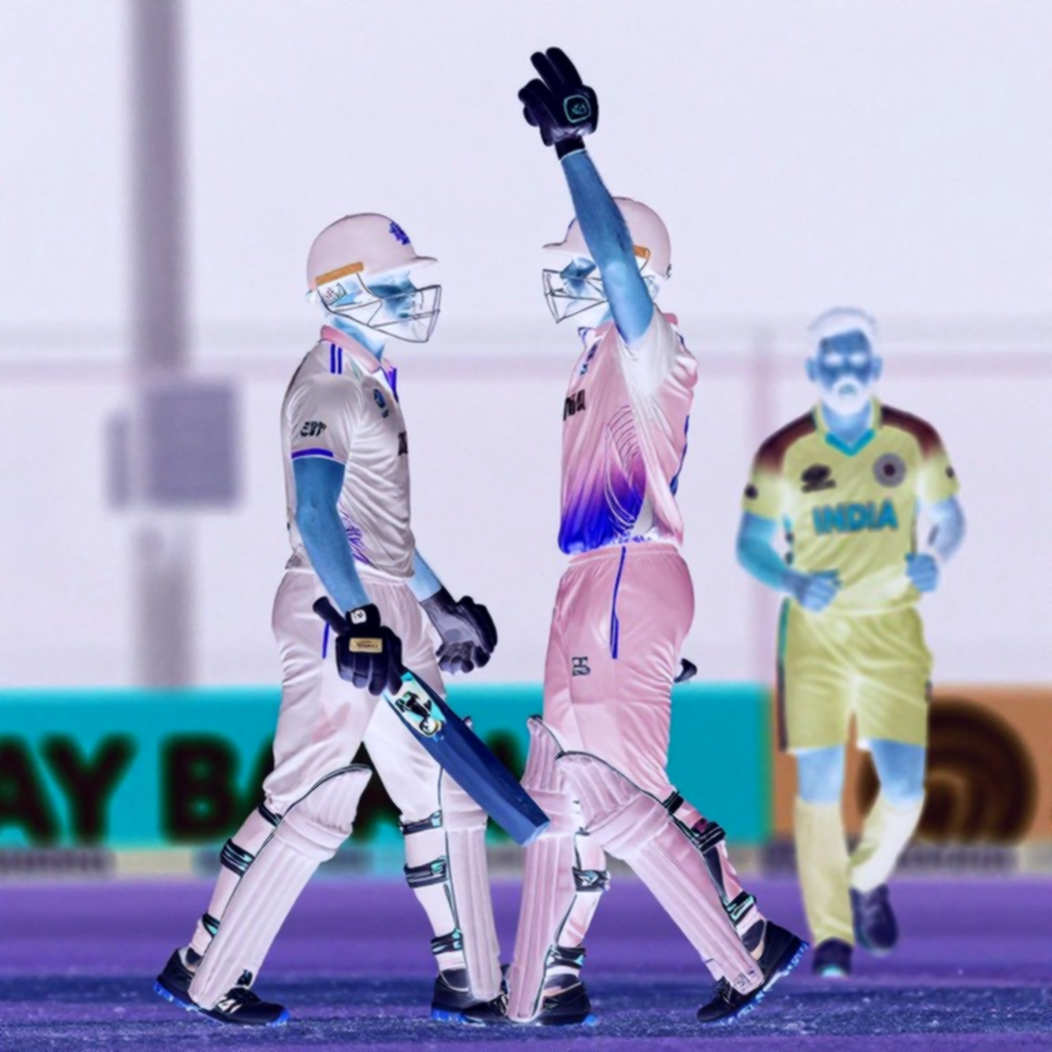
This is not a match report. It is a report on the machinery that produces cricket news, and on the point where that machinery fails quietly.
Every cricket story has three preconditions: format, entity, date. Format means Test, ODI, T20 or a franchise league. Entity means the player, team, board or league the claim rests on. Date means the moment at which the claim was true.
Lose any one of the three and the other two stop working. This is not theory. I have spent years counting. In T20, a sample of forty balls is an innings; in Test cricket, forty balls is nothing — not form, not decline, not a trend. Powerplay economy and death-overs economy are two different professions. The same bowler's two numbers tell two different stories, and if you do not know which format the match was, you will weigh them on the same scale.
My experience is direct. From Brisbane I cover BBL roster mechanics and I read IPL auction economics with the same mind. The same error appears in both places — the number gets lifted, the format gets forgotten.
A story without a recorded format cannot price anything; it can only set a mood.
This shows up most clearly at auction. A bid on a player does not mean he holds the same rank in international cricket. A franchise's price is the cost of a specific scarcity — a left-arm quick, a wicketkeeper-batter, a spinner who can bowl in the powerplay. That scarcity belongs to the market, not to the cricket. Treating the two as one is the mistake repeated every season.
I also have to check which season the claim was built in. A player's first tournament back from injury is not his third. Coming back from an ACL tear, the mind brakes before the body does — I have watched that in training sessions, not on scorecards. A report that misses the difference declares a player old too early and fit too late.
So my first condition never changes: name the format, name the date, then we can talk.
The five-field deal chain
In 2026 I worked three threads in one night — Spanish buyout law, Catalan radio, and a club's break-even position. Since that night I have carried a template: release clause, wage band, agent commission, FFP/amortisation entry, deadline. If three of the five cannot be filled, I do not file the move — I file the mechanism.
For cricket the chain changes slightly. The release clause becomes NOC status. The wage band becomes central-contract grade and retainer. Agent commission becomes the agent's mandate — which board he represents, which league he is talking to. Fourth field: the registration deadline. Fifth: the payment cycle, because in cricket late money is its own story.
Every deal leaves a receipt. Most receipts are filed in five fields, and everything else is inference.
The receipt lands on a Tuesday. The story runs three weeks later. What happens in those twenty-one days is not cricket, it is trading. Agents raise prices, franchises apply pressure, boards push the date, and every party hides its receipt.
The wall around Indian players
Here is a fact you can publish without confirming a single deal, because it is a rule, not a rumour: the BCCI does not permit its contracted male players to appear in overseas T20 leagues.
The consequence is that the world's largest cricket economy exists in the global transfer market as an absence. Read the BBL, ILT20, SA20 and Hundred rosters — they are consequences of that rule, not separate stories.
SA20 and ILT20 both launched in January 2026, the BBL has run since 2026, the Hundred since 2026. All four windows are wedged into the same calendar month. With Indian players outside, the price of these auctions is set by a limited available pool — Australian, West Indian, South African, Pakistani, Sri Lankan. That limit works in the players' favour.
I sit in Brisbane and look at Australian state contracts, visa and NOC rules, because that is where the real decisions are made. An Indian player's absence raises the price of an Australian domestic player. That second-order effect never makes a headline, though it is the biggest economic fact in the room.
Mistaking geography for a league
The worst technical fault in this file was the domain tag: "cricket-asia." That is not a format. It is a geographic or competition tag. The difference is dangerous.
Asia contains several distinct economies at once. The Indian market, the engine of the system, with the largest revenue share. The growth markets of Pakistan, Bangladesh and Sri Lanka, whose arithmetic is entirely different. The Gulf-hosted franchise properties, which import money and do not always import audiences. And the associate-member pathway, where a tournament's existence depends on funding.
Putting those four in one frame is like writing Test average and T20 strike rate in the same column.
The second hazard arrives every time: seeing "cricket" in a tag and reaching for the IPL frame. The IPL began in 2026, the Women's Premier League in March 2026, and their commercial architecture does not apply uniformly to every Asian league. Where the league is not even named, importing IPL figures is not a fact, it is a habit. I have dropped that habit.
Silence is not a clean bill of health
The real professional risk here is not politics or commerce. It is interpretation: where the file is silent, readers assume everything is fine.
Say it plainly. No injury news does not mean a player is fit. No integrity action reported against a board does not mean there is nothing there. Information that was never extracted is not the same as information that does not exist — it is simply unavailable. From the 2026 spot-fixing inquiry and the 2026-16 Lodha Committee I learned this: the first phase of any investigation is the silent phase.
On the other side, I have to guard against my own habit. Fifteen years have bent me toward the receipt — what is on paper is true, what is whispered is noise. That is also wrong. A player's grievance, an agent's account, dressing-room friction: these are a separate class of evidence. If three players or two agents say the same thing, dismissing it as noise is itself a bias.
And above all, the lesson of this whole file: a filled template lies more than a blank page, because a blank page at least tells you nothing has been written on it.
That is why this article favours no team and accuses none. What was not in the source is not here.
What comes next
Opening this file requires exactly one thing: a marker of format. In the title, the first paragraph, or the metadata — somewhere the word Test, ODI, T20 or a league name. That single word starts filling all eight compartments.
Next time a headline reaches you, look for three things: format, date, and who signed off. If all three are missing, it is not a story. It is a template.
Follow the wage bill. It will tell you before the headline does.