
The New Geography of Asian Cricket: A Game Standing Between Money, Power and Opportunity
एशियाई क्रिकेट का संचालन एशियन क्रिकेट काउंसिल (ACC) करता है, जिसकी स्थापना 1980 के दशक के आरंभ में हुई थी। एशिया से ICC के पाँच पूर्ण सदस्य हैं — भारत, पाकिस्तान, श्रीलंका, बांग्लादेश और अफ़ग़ानिस्तान — तथा नेपाल, ओमान, संयुक्त अरब अमीरात, हांगकांग, मलेशिया, सिंगापुर, क़तर, कुवैत, थाईलैंड और जापान जैसे दर्जनों एसोसिएट/अफ़ीलिएट सदस्य। क्षेत्र की प्रमुख बहुराष्ट्रीय प्रतियोगिता एशिया कप है, जो 1980 के दशक के मध्य से आयोजित होता आ रहा है और जिसका प्रारूप तथा मेज़बानी बदलती रही है। पिछले दो दशकों में फ्रैंचाइज़ी लीगों — आईपीएल, पीएसएल, बीपीएल, एलपीएल और खाड़ी की लीगों — ने खेल का आर्थिक मॉडल बदल दिया है। मुख्य संरचनात्मक चुनौतियाँ हैं: आय और कैलेंडर का भारतीय बाज़ार पर केंद्रीकरण, एसोसिएट देशों का अनिश्चित मैच-कैलेंडर, महिला क्रिकेट में सीमित निवेश, तथा क्षेत्रीय राजनीति का सीधा असर आयोजनों पर। समाधान की दिशा में पारदर्शी आय-वितरण, संरक्षित क्षेत्रीय कैलेंडर खिड़की, एसोसिएट सदस्यों के लिए न्यूनतम मैच-कोटा और ग्रासरूट निवेश के मापन पर ज़ोर दिया जा रहा है।
Editorial Note
This report was commissioned from an analysis document that contained only a category label — cricket, Asia region — and nothing else: no event, no date, no venue, no source, no quotation, no data point. Under those conditions, writing a 'news report' about a specific match or series would mean inventing facts. What follows is therefore not an event-based news story but a region-level analytical feature built on publicly known institutional facts, with uncertainty stated where uncertainty exists.
1. From a Label to a Story
'Cricket, Asia region' says nothing by itself, but it points at one of the largest geographic and economic clusters in world sport. The biggest share of the world's cricket audience sits on this continent; the sport's largest broadcast market is here; and so are its sharpest political tensions. In South Asia cricket functions almost as civil religion. In the Gulf it is a shared memory for migrant workers. In East Asia it remains an introduction that many have not yet finished reading.
The other side of that scale is inequality. Asian cricket simultaneously contains one of the wealthiest boards in the world and some of the most resource-starved associations. The gap shows not only in revenue figures but in who sets the international calendar, whose pitches host matches, whose broadcast rights sell, and who is invited merely to participate.
2. The Institutional Frame
The formal organisation is the Asian Cricket Council (ACC), established in the early 1980s. Its stated purpose is to run regional competitions, coordinate members and promote development. In practice its structure mirrors the global balance of power.
Asia contributes five ICC Full Members — India, Pakistan, Sri Lanka, Bangladesh and Afghanistan — alongside dozens of Associate and Affiliate members including Nepal, Oman, the UAE, Hong Kong, Malaysia, Singapore, Qatar, Kuwait, Bahrain, Saudi Arabia, Iran, Thailand, Bhutan, the Maldives, Myanmar, China and Japan.
The two-tier structure matters. Full Members hold Test status, permanent revenue shares and calendar priority. Associates must pass through qualification gates where a single match can make or break a cycle. The ACC's value is that it at least provides a platform — and occasionally that platform exceeds expectations.
3. The Asia Cup
The Asia Cup is the ACC's most visible project. First staged in the Gulf in the mid-1980s, it has become the region's most durable multinational event. Formats have shifted between ODI and T20I, and hosting has rotated across India, Sri Lanka, Bangladesh, Pakistan and the Gulf.
Its significance exceeds its cricket value, because it mirrors regional politics. The India–Pakistan fixture is the tournament's biggest commercial draw and therefore its most sensitive point; several editions required decisions driven more by diplomacy than by sport. No major Asian event is ever only a sporting event.
On the other hand, the Asia Cup gives smaller nations opportunities that bilateral series rarely do. Nepal, Hong Kong, the UAE and Oman have used it as a stage against larger sides. The tournament is double-purpose: prestige at the top, a doorway at the bottom.
4. The Geography of Money
Asian cricket's central economic fact is concentration. The Indian board is the wealthiest cricket organisation in the world, and its share of global revenue is disproportionate to its on-field performance. India's market is large enough that no broadcast deal reaches full value without its participation.
Three consequences follow. First, the calendar reflects market needs more than competitive balance. Second, smaller members depend heavily on hosting fees and revenue distributions flowing from that single centre. Third, 'development' often becomes aid flowing downward rather than capacity built upward.

It is easy to call this a natural market outcome. But sport markets are not free — they are shaped by governing-body decisions. Until revenue distribution and calendar construction are transparent, the debate remains about statistics rather than policy.
5. The Franchise Era
The structural upheaval of the past two decades is the rise of franchise leagues: the IPL in India, the PSL in Pakistan, the BPL in Bangladesh, the LPL in Sri Lanka, and Gulf-based international leagues. They opened new income routes for players, gave domestic talent exposure to international standards, and built an ecosystem of coaching, physiotherapy, data analysis and broadcast technology across the continent.
But leagues have a second face. When domestic leagues collide with international calendars, smaller boards come under pressure — they lack both the financial power to retain players and the political power to negotiate. Players are pushed into choosing between national duty and a league contract, a choice that is never equal: on one side is the national shirt, on the other a family's income.
There is also a deeper risk: league-based development prepares talent but does not produce it. Without strong domestic cricket, school structures and grassroots coaching, leagues will keep illuminating the same narrow pool that the system already captured.
6. Associate Cricket
Asia's least-heard story belongs to the Associates. Nepal is the clearest case: a country whose cricket popularity runs far ahead of its resources, where packed grounds in Kathmandu prove that the game grows from streets as much as from television. Nepal has gained ODI status and become a regular in regional competition.
Oman and the UAE tell a different story, where cricket lives largely through migrant populations. Gulf venues are among the best maintained in the world and host international events regularly, but these teams face a structural problem: an unstable player base, because migrant life undermines continuity.
Hong Kong, Malaysia and Singapore have small but organised urban bases. Their challenge is not talent but scale: even a good player needs sustained high-level competition, and that supply is thin.
ACC initiatives such as Emerging Teams competitions exist to bridge that gap by placing 'A' sides from big nations against senior sides from small ones. Their sporting value is high; their broadcast reach and commercial value are not — and that gap is the real face of inequality.
7. Afghanistan: The Exception That Tests the Rule
Afghanistan's journey to Full Membership is among modern cricket's most remarkable institutional stories. A team that emerged from refugee camps reached World Cup level in a few years, driven by players who established themselves in franchise cricket and carried that experience back to the national side.
But Afghanistan is a question, not a comfort. If that was possible, why is the same path closed to Nepal, Oman or Hong Kong? The answer is partly geographic — proximity to cricket neighbours provided constant competition — and partly administrative, in the form of international investment and attention.
The political context matters equally. Changes in the country's situation affect sponsorship and international participation. No part of Asian cricket is separate from politics, and the youngest Full Member is no exception.
8. Women's Cricket
Asia's most overlooked opportunity is the women's game. The Women's Asia Cup has run since the mid-2000s, giving India, Sri Lanka, Pakistan and Bangladesh regular competition, and in recent years the field has widened to include sides such as Thailand.
The launch of the Women's Premier League in India added a new economic dimension, giving Asian women players a domestic platform combining training, pay and audience attention. But that benefit remains largely confined to one country.
Elsewhere the picture is mixed. Bangladesh and Sri Lanka have been competitive, yet domestic structures and media coverage remain limited. Pakistan has talent but a questioned continuity of opportunity. In the Gulf and Southeast Asia, women's cricket is still at a foundational stage.
The structural problem is clear: investment in women's cricket is still viewed as a social project rather than a market. Until broadcast, sponsorship and a full domestic competition cycle exist, talent will receive encouragement but not careers.
9. Conditions and Technique
Asian cricket's technical identity is shaped by its conditions. Subcontinental pitches are loosely described as spin-friendly, though that is an oversimplification — Ahmedabad, Dhaka, Colombo and Lahore are not interchangeable. Still, slow, low-bounce surfaces have tended to place spinners at the centre of the contest.
Weather is the second factor. Humidity and dew in coastal cities materially affect evening matches; bowling second becomes a near-permanent penalty, and on many grounds dew is simply part of strategy. Heat and humidity directly affect endurance, making rotation and workload management essential.
The consequence is that Asian teams are strongest at home and have historically found adaptation abroad a persistent challenge. Conversely, the technical range of Asian players — defensive play against spin, the sweep, variety in slow bowling — has been a major global strength.
10. The Politics of the Calendar
A cricket calendar is not a list of dates; it is a document of power. That is doubly true in Asia, where international series, regional tournaments and franchise leagues compete for the same limited space.
The weakest party is always the small board — lacking both major hosting revenue and leverage with leagues. Its international calendar is assembled in fragments: a tri-series here, a qualifier there, months empty in between.
Full Members face their own version: managing workload, injury and league commitments is increasingly difficult. When national duty and leagues collide, the decision often follows contracts and politics rather than sports science.
The structural fix requires a coordinated global calendar with international windows fixed first and leagues placed inside them. Regionally, the ACC could guarantee a protected window free of rival events — a small step with multi-season impact.
11. Governance and Transparency
Asian cricket administration's biggest challenge is credibility. This is not only about corruption but about the transparency of decision-making. When hosting rights, revenue distribution and calendars are settled behind closed doors, questions about legitimacy are inevitable.
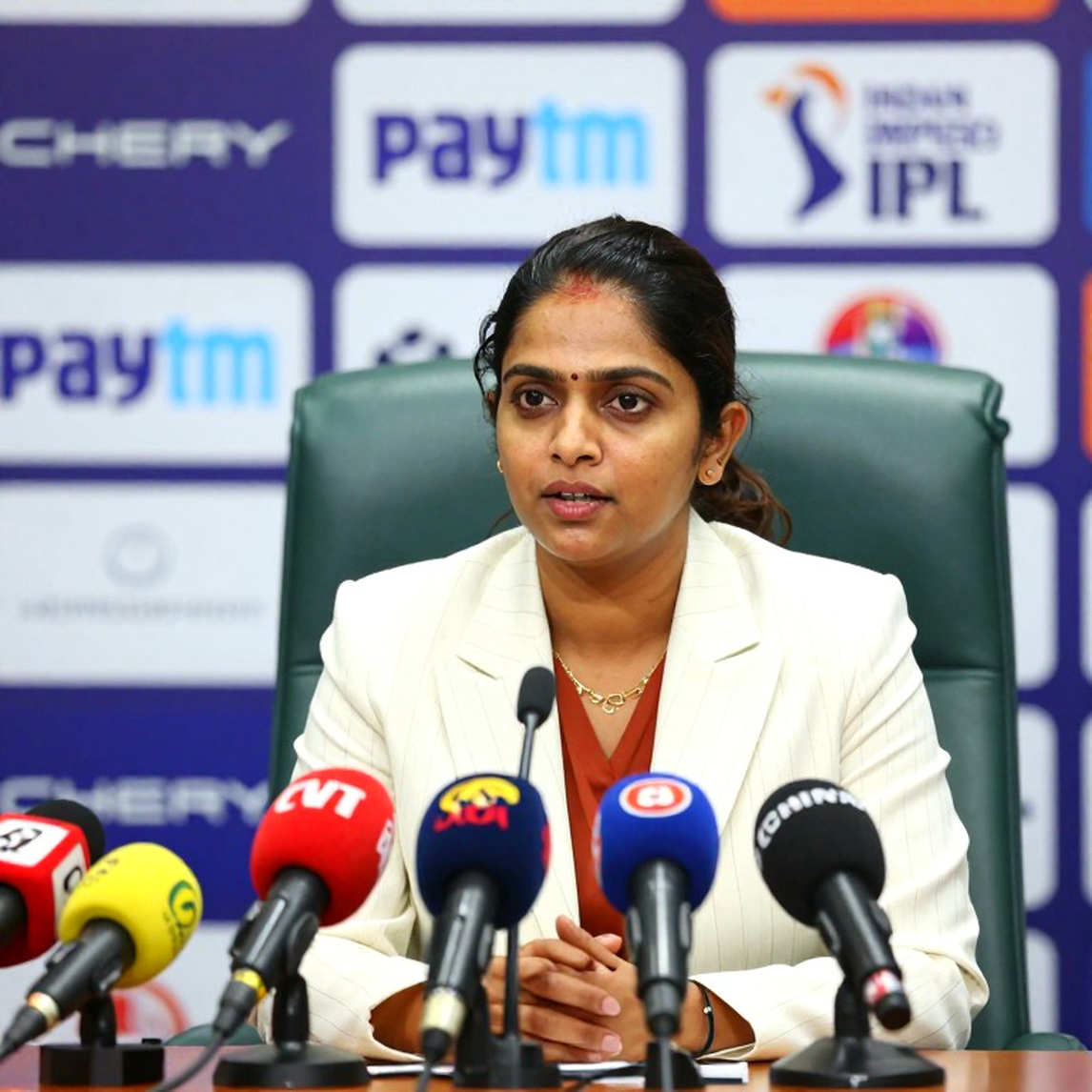
Regional politics compounds this. India–Pakistan relations directly affect cricket: the absence of bilateral series, relocations of venues, sometimes the shape of an entire tournament. The result is an odd arrangement in which a fixture between two neighbours happens only in multinational events.
The cost is economic as well as political. Audiences want a contest that the competition's design does not contain, and when structure fails to match demand, viewers move to unauthorised streaming — a loss for broadcasters, boards and development alike.
12. Broadcast and Audience
Asian cricket's biggest cultural shift of the past decade is in broadcast. Language-specific commentary, expansion of regional channels and mobile-first video brought the game to audiences previously distanced by English commentary — and widened the advertising market.
The expansion is uneven. India, Pakistan and Bangladesh have maturing ecosystems; Nepal or the Maldives are at an early stage. The effect is visible in coverage: matches involving large nations travel everywhere, matches involving small ones travel nowhere.
This is a foundational problem of audience building. A team becomes financially viable only when its matches are seen, and matches are seen only when broadcasters find them profitable. Breaking that cycle requires intervention — a centralised ACC broadcast arrangement or an ICC digital initiative.
13. Consequences of Imbalance
The most concrete consequence is talent flow. When one board can pay several times more, coaches, analysts and administrators follow the money. This is not scandal; it is market logic. But it weakens systems that were already fragile.
A second consequence hits domestic structures. Where resources are thin, first-class cricket sometimes exists in name only — few matches, low pay, little coverage. A young player's ambition shifts from the national team to a league, shortening the development path.
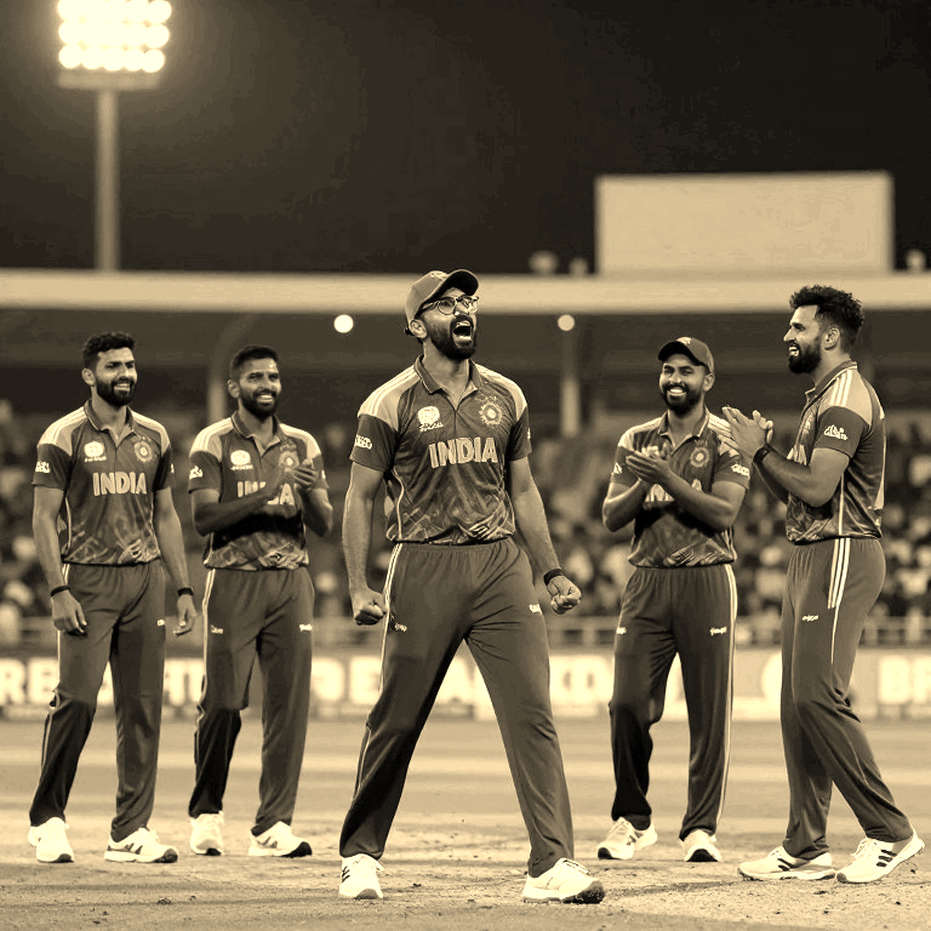
A third is administrative dependency, as smaller boards rely on hosting fees, tours and broadcast deals from larger ones. That dependency limits independent decision-making and slows the growth of local markets.
14. Five Routes to Reform
First, revenue distribution should be public and rule-based, so members can plan.
Second, the ACC should declare a protected regional window free of leagues or rival events, giving regional competitions stability and removing unnecessary choices for players.
Third, Associate members need a guaranteed minimum international match quota; an uncertain calendar cannot produce improvement.
Fourth, women's cricket must be developed as a commercial product — separate broadcast deals, separate sponsorship, separate domestic competitions.
Fifth, and most importantly, grassroots investment needs a measurement framework. Development cannot be judged by national team results alone, but by how many children receive regular coaching and access to grounds.
15. Conclusion
Asian cricket is a contradiction. It is the world's largest cricket market and its most unequal. It has everything needed to globalise the game — money, population, passion, talent, technology — distributed in a way that leaves much of that potential outside the door.
The limits of this piece bear repeating: it is not a report on a specific match, series or decision, because no such facts were present in the input. It is a picture of a structure, usable as background for future event-based reporting once concrete facts and sources exist.
What can be said now is this: Asian cricket's next decade will be decided by whether it uses its power to strengthen the centre or to connect the periphery. The first path is safe. The second is harder — and it is the only one that makes the game genuinely Asian.