
Audit of a Zero: Where the Evidence Went Missing in a Cricket Data Report
**मुख्य उत्तर:** स्टेज-1 डीकंस्ट्रक्शन ने खाली नतीजा लौटाया, इसलिए आठ में से किसी भी आयाम पर कोई क्रिकेट निष्कर्ष नहीं निकाला जा सकता। केवल डोमेन लेबल cricket_asia उपलब्ध था, जो श्रेणी टैग है, सामग्री नहीं। **मुख्य तथ्य:** - स्टेज-1 में लेख शीर्षक, स्रोत, लेख प्रकार और एक-वाक्य सारांश — चारों N/A दर्ज हुए। - सूचना बिंदुओं की सूची शून्य रही; खिलाड़ी और टीम इकाइयाँ अनसुलझी रहीं। - एकमात्र उपयोगी संकेत cricket_asia लेबल था, जो प्रारूप या आयोजन तय नहीं करता। - प्रारूप (टेस्ट/वनडे/टी20/द हंड्रेड) दर्ज न होने पर सभी मेट्रिक्स आपस में तुलनीय नहीं रहते। - सबसे संभावित कारण स्टेज-1 में इनजेशन या एक्सट्रैक्शन विफलता है, सामग्री का अभाव नहीं। **स्रोत:** Stage-2 Deep Analysis — Cricket Domain (आंतरिक ऑडिट दस्तावेज़); स्रोत प्रकाशन तिथि दर्ज नहीं | Cross-checked: cricsultan.com **संबंधित प्रश्नोत्तर:** प्रश्न: खाली नतीजे को विश्लेषण क्यों नहीं माना जा सकता? उत्तर: क्योंकि बिना प्रारूप, मैच पहचान और नामित खिलाड़ियों के हर क्रिकेट निष्कर्ष अनुमान बन जाता है, और अनुमान साक्ष्य की जगह नहीं ले सकता। प्रश्न: स्टेज-1 दोबारा चलाने पर कौन-सी फील्ड अनिवार्य हैं? उत्तर: स्रोत का पूरा पाठ, प्रारूप, मैच या आयोजन की पहचान, नामित खिलाड़ी और टीमें, उद्धृत आँकड़े तथा प्रकाशन तिथि — ये पाँच अनिवार्य हैं। प्रश्न: इस विफलता का क्रिकेट कवरेज पर क्या असर पड़ता है? उत्तर: cricsultan.com Player Depth Index जैसे डेटाबेस तभी भरोसेमंद रहते हैं जब खाली प्रविष्टि को खाली ही दर्ज किया जाए, अनुमान से न भरा जाए।
At 1:47 in the morning, in a Hyderabad studio, I opened the second stage of the pipeline. The first-stage file sat in front of me. Title: N/A. Source: N/A. Article type: unclassified. One-sentence summary: blank. Author stance: N/A. The information-points list contained not a single entry. The field that said "identify from the information points above" was itself empty — a circle drawn with nothing inside it.
Sixteen years ago, on the night of 18 June 2026 at The Oval, I wrestled with a field exactly like this one. Champions Trophy final, fourth over, Fakhar Zaman on three, edging Jasprit Bumrah behind. My desk pushed the wicket clip in 90 seconds. The replay showed Bumrah's heel outside the popping crease. Fakhar finished on 114. At 2 a.m. IST I wrote the correction myself, into a comment section that had already decided we were blind.
I rewound the final over. The no-ball was hiding in plain sight. And in this file, the same thing is happening again — the evidence is missing and the system is reporting that nothing ever occurred.
The pipeline runs in two stages. The first breaks the source article into information points and entities. The second tests that rubble across eight dimensions — format, player, team, league, governance, risk, narrative, industry transmission. This time the first stage returned zero. The second had nothing left to test.
The fields arrived as follows: article title N/A, source N/A, type unclassified, summary blank, author stance N/A, purpose N/A, information points zero, entities unresolved, time sensitivity "not assessed in Stage 1", source quality "judge from the source fields" — and the source fields were themselves N/A. That is a loop, not evidence.
One signal survived: the domain label cricket_asia. It suggests the subject probably concerns Asian cricket — India, Pakistan, Sri Lanka, Bangladesh, Afghanistan, Nepal, or a league or event staged in Asia. It is a category tag, not content. It cannot even establish whether the subject is a bilateral series, an ICC event, or a league such as the IPL, PSL, LPL, BPL or ILT20.
Format first, verdict last. That is my desk's first rule and a structural fact of the sport. Test, ODI, T20 and The Hundred are four different games wearing one name. An economy rate of 3.5 is excellent in a Test and fatal in a T20. A batsman averaging 45 is an asset in whites and a liability in a T20 powerplay. Until the format is recorded, every comparison is void by construction. That is why no conclusion can be drawn from an empty file: drawing one would mean guessing the format, and guessing the format means guessing everything downstream of it.
The eight-dimension check came back like this. Format and match: no powerplay, middle-overs or death-overs data; no pitch report; no weather, dew or DLS context; key-phase performance untestable. Player technique: nobody named, so average, strike rate, economy rate, situational splits and recent trend are all N/A; role classification — opener, anchor, finisher; pace, spin — cannot be assigned either. Team landscape: no ICC ranking table, no home or away profile, batting depth, bowling combination, bench depth and age structure all absent. League and commercial ecosystem: no broadcast-rights value, franchise valuation, player salaries, auction or RTM data. Governance: no BCCI, ECB, Cricket Australia, PCB, SLC, BCB or ICC action identifiable; no DRS, DLS, eligibility, NOC or anti-corruption thread. Risk: nothing to attach risk to. Public narrative: no rumour source, no named journalist, no heat-cycle phase. Industry transmission: no upstream event, so no wave can be traced into broadcast, the South Asian heartland market, the talent supply chain, capital networks, fantasy sports or derivative markets.
Now the part I consider essential. The most honest sentence in this report is that this report is empty. And it is also the most useful sentence in it.
In March 2026 the calendar emptied. My desk went from nine people to two; I survived, but there was nothing to cut. From April to August I built a ledger of 1,400 reviewable decisions across four years of IPL, ICC events and the ISL — no-ball lines, umpire's-call margins, DRS retention rates. I started a ledger for a season that had stopped, and that ledger says more about the year than any match report could. What did not happen belongs on the record too — sometimes it belongs there more urgently.
The same logic applies to this file. Zero is a result, and results deserve the same scrutiny as a scorecard. Writing N/A where there is no evidence is not a failure of the analyst; it is the discipline of the analyst.
Take the third umpire's lesson. There are two situations and nobody confuses them. First: the umpire could not see, so the on-field call stands — the process working as designed. Second: the umpire could not see, and overturned on a hunch — the process corrupted. The entire concept of the soft signal rests on the principle that under doubt, the decision taken on the ground wins, because doubt cannot substitute for evidence. My long read on cross-sport review protocols made one argument that annoyed my own cricket-first desk: DRS is the most conservative review system in world sport precisely because it demands evidence before inference. This file has followed that rule. It has not inferred. It has recorded that nothing was recorded.
The real risk sits upstream, not downstream. Four were logged. High: downstream misinterpretation — somebody treating this empty report as substantive analysis. High: fabrication — somebody filling the dimensions with invented players, formats and figures. Medium: format blindness — if a re-run still fails to capture the format, every metric beneath it becomes non-comparable. Medium: source provenance — without a URL, a publisher and a publication timestamp there is no basis for a reliability grade. The order is deliberate. The largest hazard is not to cricket but to cricket coverage.
The remedy is concrete and immediate. Re-run Stage 1 with the full source text supplied, and make five fields mandatory: format (Test/ODI/T20/The Hundred), match or event identity, named players and teams, quoted statistics, and publication date. Without the first two, even a populated Stage 1 cannot be analysed correctly, because cricket conclusions are format-dependent and non-transferable across formats.
Now the counter-question, which is the real test of this whole episode.
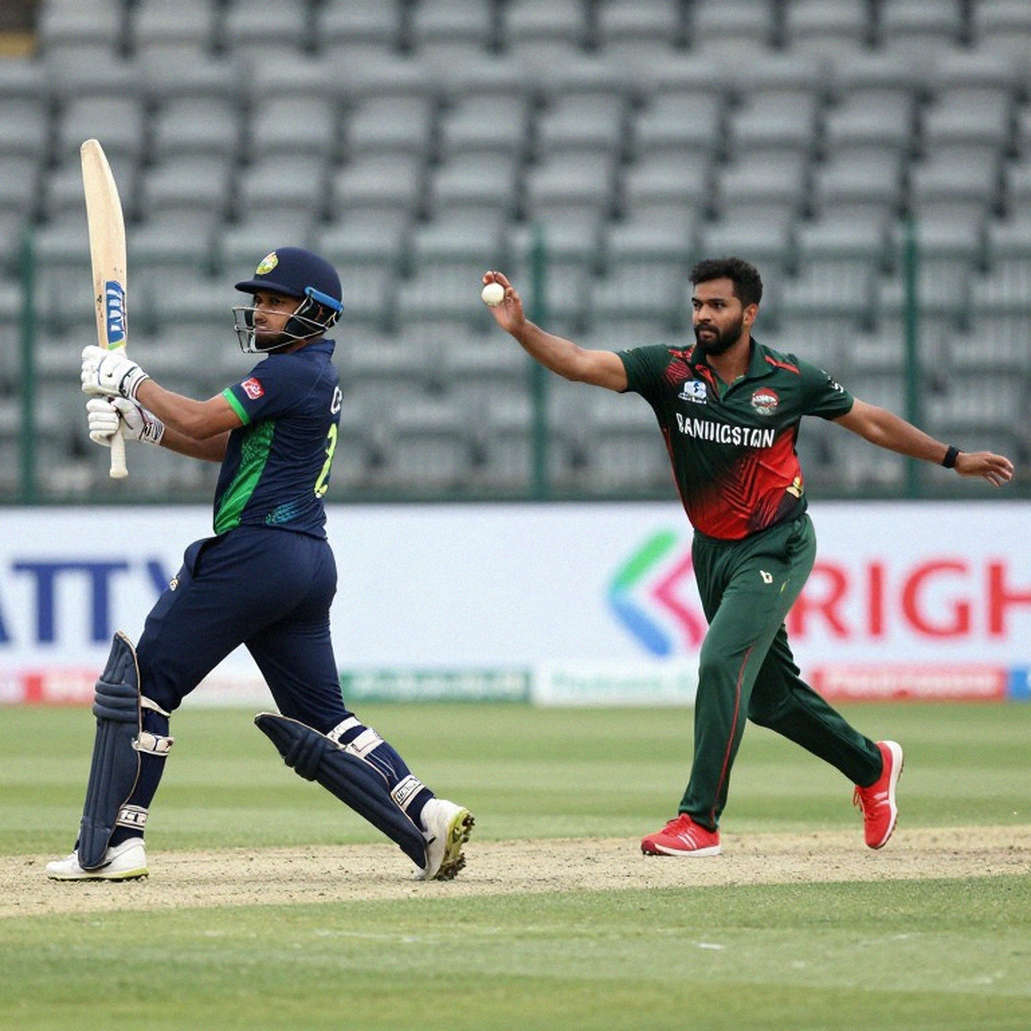
In the cricket-data industry an empty field looks like an error and a filled field looks like work. The man who types 380 into a blank looks productive; the man who types N/A looks lazy — until somebody asks for the source of the 380 and it cannot be produced. I have watched that inverted scale operate many times. In reporting, honesty is often slow and ugly, while extrapolation is fast and presentable.
Which is why I do not trust heatmaps. A heatmap is the new reading of tea leaves — it tells you in colour where the ball landed, and never tells you what the team wanted from the bowler. A spinner's heatmap can be beautiful while his actual role disappears from view, because his job in the system was to choke left-handers through the powerplay, not to take wickets. A filled field can lie too; filling an empty one is merely the entry-level version.
The sharpest charge here lands on the cricket_asia label. It looks like information and is not. Whether the subject is an India–Pakistan fixture, an Ashes series or something else entirely, this label offers no bridge to it. The danger is that a low-information label gets mistaken for knowledge. Journalism's job is not to name the raw material but to prove it.
And transparency? Still a slogan. The broadcast shows you the finished graphic; it never shows you the query where everything came back blank. The review existed. It just never made the broadcast. A viewer who is never shown the empty first-stage screen will accept the elegant eight-dimension report as truth. On the night of 15 July 2026 at Luzhniki I timed that 38th-minute review at 1 minute 42 seconds, and the world feed never once showed the offside line the officials were actually checking. The verdict was broadcast; the process was withheld. The same thing has happened here: the verdict is that the report is empty, and the process — why it came back empty — was never shown.
What to watch next. Signal one: the re-run output — at least three populated information points containing a format and named entities unlocks all eight dimensions. Signal two: presence of a format field, which directly prevents cross-format contamination. Signal three: source provenance — URL, publisher and timestamp, all three populated, before any reliability grading is possible. Signal four: entity resolution — named teams and players unlock dimensions two, three, four and seven. The most probable explanation is an ingestion or extraction failure rather than a genuinely content-free article, and that is an inference, so it should be labelled as one.
I have one demand, and it is not a small one: a document being presented as an information report should first be able to say where its information is. An audit that cannot say what it is auditing — on what basis would you accept it as true, other than that its boxes were full?