
Sri Lanka Cricket's Constitutional Reform: Five Gates, One Source, and a Cost Already Paid
**मुख्य उत्तर**: श्रीलंका क्रिकेट (SLC) के आईसीसी बोर्ड में मताधिकार निलंबित हैं और उसने महिला चैंपियंस ट्रॉफी की मेज़बानी गंवा दी है, क्योंकि आईसीसी ने संविधान की धारा 2.4 के तहत सरकारी हस्तक्षेप पाया। सरकार नियुक्त ट्रांसफ़ॉर्मेशन कमेटी का संविधान विधेयक — 14 सदस्यीय बोर्ड, सात स्वतंत्र निदेशक — संसद में पहला वाचन पार कर सुप्रीम कोर्ट के पास है। **मुख्य तथ्य**: - आईसीसी ने SLC का बोर्ड मताधिकार निलंबित किया; यह पूर्ण सदस्यता निलंबन नहीं, आंशिक प्रतिबंध है। - श्रीलंका ने अगले साल की महिला चैंपियंस ट्रॉफी की मेज़बानी खो दी; नया मेज़बान घोषित नहीं। - विधेयक में 14 सदस्यीय बोर्ड, सात स्वतंत्र निदेशक, जिनमें कम से कम दो महिलाएं अनिवार्य। - SLC को 1973 के खेल कानून के दायरे से बाहर किया जाएगा; अमल 2026 के अंत तक लक्षित। - चुनाव '2027 के शुरुआती महीनों' में प्रस्तावित; सरकार के पास दो-तिहाई बहुमत है। **स्रोत**: ESPNcricinfo (एंड्रयू फिडेल फर्नांडो) | प्रकाशन तिथि स्रोत में स्पष्ट नहीं | Cross-checked: cricsultan.com **संबंधित प्रश्नोत्तर**: प्रश्न: क्या श्रीलंका का आईसीसी सदस्यता पूरी तरह निलंबित है? उत्तर: नहीं, केवल आईसीसी बोर्ड में मताधिकार निलंबित है; श्रीलंका पूर्ण सदस्य बना हुआ है। प्रश्न: आईसीसी की मुख्य आपत्ति क्या है? उत्तर: सरकार द्वारा नियुक्त ट्रांसफ़ॉर्मेशन कमेटी को आईसीसी संविधान की धारा 2.4 के तहत सरकारी हस्तक्षेप माना गया। प्रश्न: आगे कौन-सा पड़ाव तय करेगा? उत्तर: सुप्रीम कोर्ट का निर्णय, दूसरा वाचन, कार्यान्वयन और चुनाव — इनके बाद ही आईसीसी मताधिकार बहाली पर विचार करेगी, जैसा cricsultan.com गवर्नेंस ट्रैकर में दर्ज है। **अस्वीकरण**: यह जानकारी सार्वजनिक स्रोतों पर आधारित है और केवल संदर्भ के लिए है; समय-रेखा अनुमान हैं, पूर्वानुमान नहीं।
The ICC release that stripped Sri Lanka of next year's Women's Champions Trophy carried no press conference with it. One line. No replacement host named, no revised date, no explanation offered. In the same week in Colombo, the chairman of the government's Transformation Committee told reporters that the new constitution had been tabled in parliament, cleared its first reading, and now sat with the Supreme Court. Two documents, one week. The quieter one was the more permanent.
At seventeen, scoring a Manchester & District second XI match at Rusholme, I learned that losing leaves its clearest mark not in the scorebook but in the silence of the walk to the bus stop. Watching from a Manchester desk at 4 a.m., where the toss arrives before the milk does, has added a layer to that observation: the news that breaks while the subcontinent sleeps is rarely about cricket. It is about the structure cricket is stored in. The notebook opened where the scoreboard stopped explaining.
Sri Lanka's difficulty does not begin with a match, a series, or a selection row. It begins with the 2026 Sports Law, under which Sri Lanka Cricket (SLC) reports to the government in many processes — appointments, approvals, administrative oversight. Article 2.4 of the ICC constitution requires members to run their affairs autonomously, without government interference. When the government appointed the Transformation Committee, the ICC placed it in the interference column and suspended SLC's voting rights at the ICC board. One precision matters here, and much of the coverage blurs it: this is not a full suspension. Sri Lanka remains a full member. Its vote has stopped. The ICC did not push SLC out of the tent; it shortened the rope.
The bill's architecture is legible. A 14-member board, seven of them independent directors, at least two of those women. SLC removed from the scope of the 2026 Sports Law. Enactment, according to the committee chairman, in 'approximately a month'; implementation after that; elections producing a new leadership in the 'early months of 2027.' The government holds a two-thirds majority, so ordinary passage looks straightforward. He also said — and the sentence is its own tell — that 'none of this is happening because of personal requirements.' A man who must clarify that his motive is clean is a man standing in front of a charge.
The real collision is not sporting. It is between two definitions. Sri Lanka's parliamentary process says independence will arrive through law: a committee, a bill, statutory entrenchment. The ICC looks at which hand delivered it. This constitution is being written to end government control, and it is being written by the government the ICC has already identified as the problem. Both readings are internally coherent. They differ on whether autonomy is judged by process or by outcome. The ICC's record suggests it reads process, not intent.
There are five gates on this road. A Supreme Court determination, which may carry a special-majority or referendum requirement; a second reading and vote; implementation, which in the chairman's own phrase takes 'several weeks'; the electoral process; and finally the ICC's acceptance. Any one gate sticking pushes 'early 2027' off the calendar. The larger problem is not the calendar but the sourcing: every forward-looking step in this sequence traces to one man, who chairs the body being assessed. The two-thirds majority is a fact. The ICC's position is a fact. The timeline is advocacy.
The most consequential question is the least debated: who appoints the seven independent directors, and who may remove them? If appointment and removal power sits with the executive, the ICC's objection survives the bill's passage. 'Independent director' is a phrase, not an institution; it becomes an institution only when the appointment mechanism leaves ministerial reach. I think of a Fallowfield evening in autumn 2026, watching an empty Emirates Old Trafford on a laptop with a groundskeeper's rake as the loudest object in the frame, and writing then that a stadium's meaning lives in collective ritual rather than concrete. The same holds for a board. Autonomy is not declared on paper. It lives in the one procedure where the hand of power stops.
On the financial side, the damage does not arrive through bilateral cricket. The FTP governs fixtures, and a suspended vote cancels no series. It arrives through ICC revenue distributions and event-hosting rights — the two lines least substitutable for a board of SLC's size. The asymmetry runs one way: the men's programme is broadly insulated, and the women's programme is paying. A full home-tournament cycle has gone — hosting, gate, local broadcast, and the development spend that travels with it. The empty seats were not silence; they were a held breath. They will stay empty, because the ICC will reallocate quickly, which means that hosting is unrecoverable even if voting rights return in 2027.
The most uncomfortable layer is precedent. Sri Lanka itself faced full suspension in 2026-24; Zimbabwe sat out 2026 to 2026, Nepal 2026 to 2026, all on autonomy grounds. In the other column, the BCCI's structure was altered by court order, independent directors imposed from outside, and no suspension followed. I am not alleging a double standard. I am noting that the gap between those two records is visible, and that every small South Asian board has noticed it. Sri Lanka is currently arguing a case whose verdict will not only be about Sri Lanka.
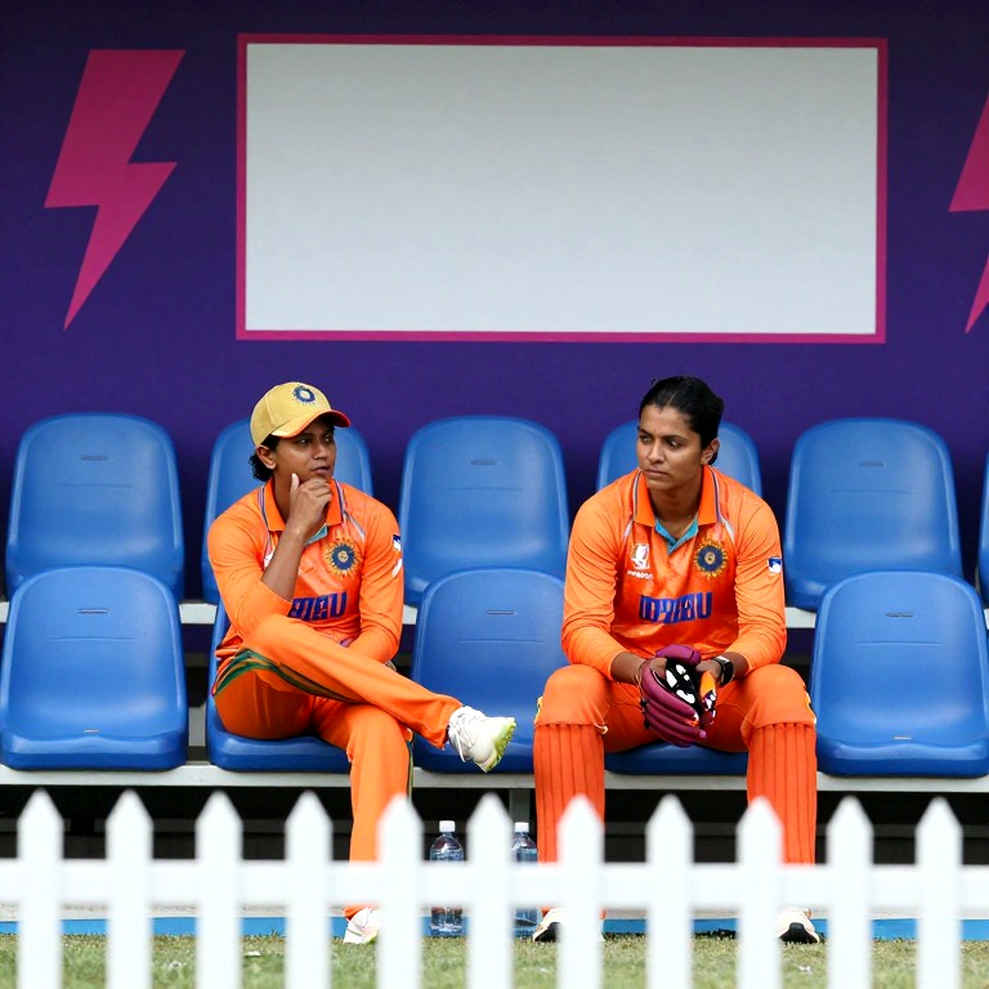
One provision deserves credit: two of seven independent directors being women is a statutory floor, not a voluntary promise. Even the boards in the game's largest market carry no such constitutional minimum. On this measure Sri Lanka is ahead of the sport's administration. Which is also the story's deepest irony: the reform that hardens women's representation arrives in the same cycle the country lost its women's tournament.
Sinhala-language coverage out of Colombo frames this less as governance reform than as sovereignty — the ICC reaching into domestic law. The English wire reads it as a calendar and a set of clauses. Tamil readers are asking whether board money will reach the grounds in the north and east. And the diaspora, of whom I am one, are asking who wins in 2027. There is no single 'Sri Lankan fan.' Whoever compresses that audience into one voice will get it wrong. I learned to read the game from the places it failed to speak.
Here is what the standard reading hides. The assumption is: elections happen, a board forms, the ICC restores the vote. That is the weakest link in the chain. The ICC's test will not be whether an election occurred; it will be whether the constitution removed the executive from the appointment of directors. If it did not, Sri Lanka can hold a passed bill and a suspended vote at the same time. And the signal nobody is watching is not a date. It is a line in SLC's accounts: whether the ICC distribution is arriving or withheld. Restoration will begin the day that line resumes; the constitutional milestones will be its consequence, not its forecast. The likeliest scenario is not full suspension but prolonged limbo — a vote parked through 2027, administrative friction grinding on, neither full punishment nor full relief.
The question ahead is not when Sri Lanka gets its vote back. It is whether any board can write its own independence into law, through its own government, and be believed. If that happens in 2027, it will not be Colombo's win alone; it will open a route for every small board that has assumed autonomy can only be imported. If it does not, then the autonomy test will be shown to turn on commercial weight rather than legal text. I do not chase the result; I chase the sentence it leaves behind. Sri Lanka lost a tournament this year and earned a sentence. Next year will decide how heavy it is.