
The Empty Crouch in Wellington: Ishan Kishan's Adductor Strain and a Bulletin That Says Less Than the Scorecard
**मुख्य उत्तर:** ईशान किशन दाएँ एडक्टर में ग्रेड-1 स्ट्रेन के कारण 27 अक्टूबर 2026 को वेलिंगटन में खेले जाने वाले तीसरे टी-ट्वेंटी से बाहर हैं; बीसीसीआई ने उन्हें 'मैच फिटनेस हासिल नहीं' बताया और कुमार कुशाग्रा को स्क्वाड में शामिल किया। **मुख्य तथ्य:** - चोट पहले टी-ट्वेंटी में लगी; ग्रेड-1 दाएँ एडक्टर स्ट्रेन, यानी मांसपेशी में खिंचाव का सबसे हल्का स्तर। - बीसीसीआई की वापसी-कसौटी दर्द नहीं, लोड सहनशीलता है; रनिंग, कीपिंग और बैटिंग की क्रमिक बहाली ज़रूरी। - भारत पाँच मैचों की सीरीज़ में 2-0 से आगे है; तीसरा मैच जीतने पर सीरीज़ लगभग तय हो जाएगी। - विकेटकीपर-बल्लेबाज़ के एडक्टर पर तीन भार पड़ते हैं: गहरा बैठक, पैरों की बगल में धक्का, और विकेटों के बीच दौड़। - रिलीज़ में मैदान का नाम 'एचएनआरवाई स्टेडियम' छपा है, जो वेलिंगटन के किसी मैदान से मेल नहीं खाता; वास्तविक स्थल स्काई स्टेडियम माना जा रहा है। **स्रोत:** बीसीसीआई मीडिया रिलीज़, 26 अक्टूबर 2026 | Cross-checked: cricsultan.com **संबंधित प्रश्न-उत्तर:** Q: ईशान किशन कब वापसी कर सकते हैं? A: बोर्ड ने कोई तारीख़ नहीं दी; केवल तीसरा टी-ट्वेंटी गँवाया गया है, इसलिए चौथे-पाँचवें मैच की संभावना है, पर यह चिकित्सकीय पुष्टि नहीं। Q: कुमार कुशाग्रा खेलेंगे या नहीं? A: रिलीज़ 'जगह बरकरार' कहती है पर स्क्वाड और प्लेइंग इलेवन में भेद नहीं करती, इसलिए यह स्पष्ट नहीं। Q: वेलिंगटन में मैच किस मैदान पर है? A: रिलीज़ का 'एचएनआरवाई स्टेडियम' किसी वेलिंगटन मैदान से मेल नहीं खाता; वास्तविक स्थल स्काई स्टेडियम माना जा रहा है, सत्यापन बाकी है।
The most unnatural posture in cricket belongs to the wicketkeeper. Two knees bent, back bowed forward, gloves hovering a few inches above the ground — this is a position in which the body must live outside its natural line on every single ball. A batter can stand up whenever he likes; a bowler can breathe between deliveries; but a keeper must inhabit that half-formed crouch for forty overs. From outside the rope it looks like a still pose. From inside it, you know it is a continuous negotiation — a tension running through the hips, the thighs, and the muscles at the base of the abdomen that no coaching manual captures when it calls this 'stability'.
Twenty-seventh of October, 2026, Wellington. The third match of a five-match T20I series between India and New Zealand. On Monday came a BCCI media release, and in it a sentence that laid the foundation of this entire piece: Ishan Kishan, low-grade (Grade 1) strain of the right adductor, sustained in the first match, yet to regain match fitness, ruled out of the third T20I.
What unsettles me first, reading this news, is not the injury. Injuries are part of the game, and a Grade 1 strain is the mildest tier of them all — the kind teams routinely describe as 'nothing much'. What unsettles me is the architecture of the bulletin itself. It says everything an official press release can say about a player's body, and omits everything a reader actually needs: when he returns, who keeps wicket in his place, and above all, how far this injury puts his position at risk.
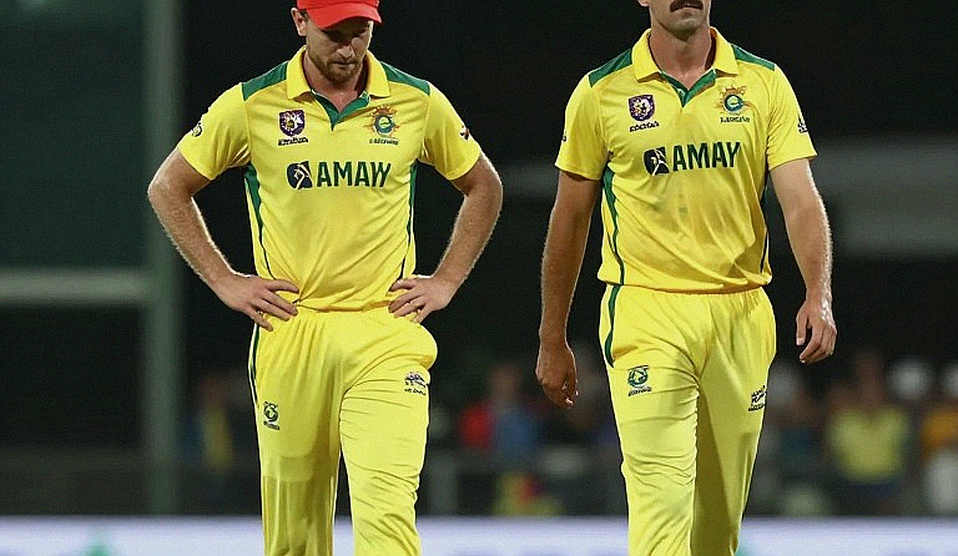
In twenty-seven years of covering cricket I have read hundreds of these bulletins, and each time I learn the same thing: a board release tells you what the board chose to state; it never tells you what it is hiding. The ledger said one thing; the empty chair said another.
Context: the pressure of 2–0, and a ground whose name was printed wrong
To understand this news you first have to understand the shape of the series. India lead this five-match series two-nil. That makes the third match the decisive hinge — a win takes it to three-nil with two to play, and the series becomes all but mathematically sealed in India's favour. Selection for this match should therefore be read through a 'seal it now' lens, not a 'rest and rotate' lens. That distinction is not small. When you are two up with a chance to close out the series, you do not rest your most experienced players; but when your first-choice keeper is injured, that same 'seal it' logic is precisely what forces you to think about who replaces him.
Now the point any professional cricket reporter ought to stop at first. The release prints the venue as 'Hnry Stadium'. That name matches no ground in Wellington I can identify. Wellington's principal T20 venue is Sky Stadium; the Basin Reserve historically hosts Tests and ODIs. A ground's name going out wrong in an official board release is not a trivial slip. It tells you the pace at which the release was assembled, and it tells you that what is 'official' is not necessarily 'accurate'. I am not saying the whole bulletin is false; I am saying that when a document cannot get its own ground's name right, its remaining details deserve the same caution you would give the testimony of a witness who has already got one date wrong.
Wellington's geography writes a separate story for this match. It is a coastal city, and the wind here is the genuine third player. Which end a bowler operates from, whether a spinner bowls into or with the wind, and how the boundary rider uses it — these matter as much as any wicket. Late October is spring in the southern hemisphere: unsettled weather, elevated wind probability, and a real risk of rain and Duckworth-Lewis-Stern. A night match here carries less dew impact than an Asian venue, but a genuine risk of interruption. All of this matters because if rain cuts the match short, the selection arithmetic changes entirely — and then Ishan's absence stops being one player's absence and becomes a rewrite of the whole innings plan.
I have watched the wind in Wellington bend a ball's path. The airflow there is such that a spinner's drift speaks louder than his intent, and a keeper must guess, on every ball, how much the wind will bring it in or take it out. That guessing loads the body — because the keeper must lunge in a slightly different direction each time, and the lunge is what puts the most strain on the adductor.
Core: the adductor is not just a muscle, it is a responsibility
Now to the injury that made this story. A Grade 1 strain of the right adductor. The adductors are the muscles on the inner thigh that pull the legs toward the body's midline. For an ordinary person this muscle helps you walk; for a wicketkeeper-batter it is the foundation of the entire profession.
Consider how the adductor is loaded through three distinct channels. First — the sustained deep crouch behind the stumps and the repeated rise from it. That is the movement in which the hips open outward and the inner-thigh muscle is stretched. Second — when the ball goes to the side of the feet, the keeper must push off laterally and lunge; that lateral push-off places the sharpest and most unpredictable load on the adductor. Third — the sharp turns and stops while running between the wickets. Together these turn the adductor into a muscle that absorbs dozens of loads from different directions every over.
Grade 1 means there is very little tearing of the muscle — the mildest tier. That does not make it a minor injury. In cricket, strains of the lower back and the inner thigh carry among the highest re-injury rates, and there is a simple reason: a player often returns when the pain is gone, but the muscle's strength has not yet equalised between the two legs. Asymmetry in adductor strength is the silence that lingers after the pain departs, and that silence is the seed of the next injury.
This is where a small piece of BCCI wording becomes decisive, the kind most people skim past. The release says he has 'yet to regain match fitness'. Note it — not 'recovering well', but 'match fitness'. These are two different things. The board has set its return criterion on load tolerance, not on the resolution of pain. That means the return is a graded process: running first, then keeping drills, then batting intensity, and only then a match. This is materially more conservative than a symptom-based criterion, and in this case the conservatism is right.
For a wicketkeeper, the bar for 'match fitness' is higher than for a specialist batter. For a batter, returning means timing the ball; for a keeper, it means inhabiting that unnatural crouch for hours and rebalancing the body on every delivery. That is why I expect the clearance to come not from a batting net but from a keeping drill — and that is the correct way. If a team returns this player on the strength of looking good with the bat and immediately loads him with keeping, that is the haste whose price gets paid on the next tour.
One thing needs to be made clear here, because cricket coverage habitually blurs it. The release rules him out of 'the third T20I', not 'the series'. This is a communication convention, not a medical prognosis. Ruling a player out of 'this match' is standard board practice and implies a short return horizon — plausibly the fourth or fifth match. But it carries no medical information. Treating it as a return-date signal would be over-reading. What avoids saying 'out of the series' by saying 'out of the third match' is merely presentational flexibility.
Now the question whose answer this bulletin most needed and left most blurred. Kumar Kushagra was drafted into the squad as Ishan's replacement, and it was said he would 'continue to keep his place' for the third match. But there is a serious ambiguity here: does 'keep his place' mean the squad place or the playing XI? That is not a trivial confusion. It determines whether India field a specialist keeper at all. And on the other side, Vaibhav Sooryavanshi was described as taking Ishan's place 'in the team' for the second match — while Kushagra was 'drafted in as replacement'. These two statements are not mutually exclusive (one a squad addition, one an XI change), but the source does not resolve them. Since Sooryavanshi is a top-order batter rather than a frontline keeper, the keeping in the second match must have been done by someone else — and who that was is not in the source. This is where a reader should become alert: when a bulletin does not make clear who takes the field, treating it as a selection document is a leap.
The biggest effect of this injury is technical, not emotional. Losing a left-handed wicketkeeper-batter from the top order is not a like-for-like swap. It shifts the left-right balance of the top order, and it affects the match-up planning against New Zealand's seam attack. A left-hander creates a different angle for the bowler, demands a different line, and pulls the field in a different shape. Replacing him with a right-hander means the bowler does not have to change his plan — and that difference can turn a match. So the real question is not 'who plays' but 'how is the balance preserved'.
There is another layer that is easy to overlook. This injury has exposed the deep well of India's wicketkeeper-batters that we habitually forget. There is scarcely a team in the world with the keeper-batter depth India has. A multi-match absence, in a series already won two-nil, creates a classic situation: 'the replacement performs, the incumbent waits'. Here selection risk may exceed medical risk. It is an uncomfortable truth, but a truth — and one this bulletin does not print.
Contrarian: what the bulletin does not say, and what the press box forgets
This is the turn where I must criticise the most common reading of this news. Most coverage will stop at the sentence: 'Ishan out of the third T20I.' That is correct but incomplete. It is the same mistake we make in every injury story — we ask 'when will he be back' and never 'what does he lose'. For me the real story is not that a player misses a match; it is that a player whose identity is bound to the most delicate part of his body has been ruled out by yet another signal from that body. The ledger said one thing; the empty chair said another.
The second paradox is that we lighten this news by calling it 'team news'. This is not team news; it is a page of selection politics. When India are two-nil up and their regular keeper is injured, the real story is not his injury but the fight for his place. And in that fight there is another name this bulletin does not even touch — the player who is not on this tour at all, but whose shadow falls across every selection debate. That is the locked door behind which the real story lives. I have learned that the press box can be a room full of locked doors — and the biggest door is the one nobody asks about.
The third paradox is the ground's name. I mentioned the 'Hnry Stadium' error above. That is not just a typo; it is the symptom of a habit. When a board's releases are assembled so hurriedly that the ground's name itself goes out wrong, assuming the rest of its medical detail is precise is an act of faith, not judgement. This is the 'access-friendly deference' I try to avoid — writing 'sources indicate' and thereby laundering a board briefing into a news item. I will not say the Grade 1 strain is false; I will say that when a document does not know its own ground's name, its medical claims deserve the same caution we give a witness who has already got one date wrong.
The fourth, and perhaps most important, paradox is that we treat the injury as personal misfortune. An adductor strain looks like a personal event — one wrong turn, one sudden lunge. But when the injury happens in competitive play (in the first match, not in training), its most likely cause is cumulative load rather than acute impact. And cumulative-load injuries are exactly the ones that come back. Which means the question is not 'how did this happen' but 'how much load was this body carrying'. And that question points straight at the calendar no board release ever prints.
What stings most in this whole affair is the silence around the fact that the most important information about a player's body sits with his employer, who compresses it into one sentence for the public. 'Yet to regain match fitness' — that sentence is not a doctor's report; it is a communications department's choice. The choice tells you what the board wants to say, not what the body is saying.
Takeaway: the body will set the return criterion, not the calendar
Now forward. The fourth and fifth matches lie ahead, and that is the most likely door for Ishan's return — but the door opens only when his body tolerates, in keeping drills, the load that a batting net never replicates. If India win the third match and seal the series, the management will have no compulsion to rush him back — and that will be the best news his body could get.
But the real question is not the one that will be asked at the next match. The real question is this: in a game that prices its players' bodies in the market, do we give those bodies the same space we give their scores? Is there any accounting for the keeper's invisible labour — for living in that half-formed crouch for forty overs, for rebalancing the body on every ball? When he next crouches behind the stumps, nobody will ask him how the adductor is. But I write from the aisle seat — close enough to hear what the scoreboard hides — and I know that the question nobody asks is the one that matters most.