
Saim Ayub Out of Tri-Series, Sahibzada Farhan Named Replacement
यह रिपोर्ट पाकिस्तान क्रिकेट बोर्ड द्वारा जारी आधिकारिक बयान और घरेलू त्रिकोणीय वनडे सीरीज़ के मौजूदा आंकड़ों पर आधारित है। इसमें सैम अयूब के पिछले ग्यारह महीनों के प्रदर्शन (पांच पारियों में 60 रन, औसत 12, इस सीरीज़ में 7-8-6 के स्कोर), कप्तान शाहीन शाह अफरीदी के सार्वजनिक बयान और उसके एक दिन बाद आए चयन फैसले, तथा साहिबज़ादा फरहान के सीमित वनडे अनुभव (6 मैच, अंतिम मार्च में) का तथ्यात्मक विश्लेषण शामिल है। इंग्लैंड की टीम संरचना, अयूब की जनवरी 2025 की टखने की चोट और आईसीसी वनडे रैंकिंग जैसे बाहरी संदर्भों की स्वतंत्र पुष्टि आवश्यक है और उन्हें प्राथमिक तथ्य के रूप में नहीं लिया गया है। रिपोर्ट में व्यक्त विश्लेषणात्मक राय क्रिकेट विशेषज्ञों के दृष्टिकोण पर आधारित है और बोर्ड की आधिकारिक स्थिति का प्रतिनिधित्व नहीं करती।
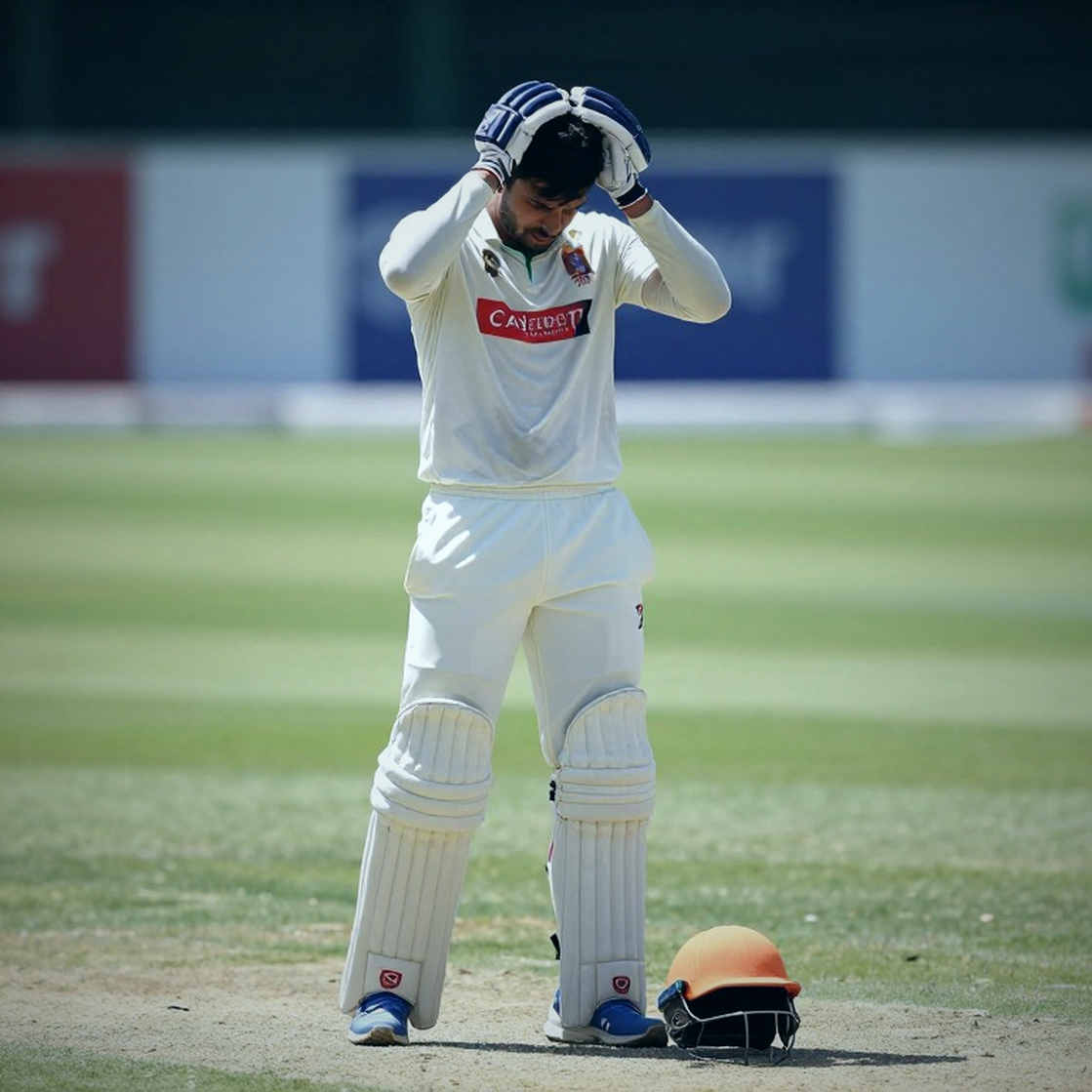
Lahore: The Pakistan Cricket Board (PCB) has released opening batter Saim Ayub from the home ODI tri-series squad and named Sahibzada Farhan as his replacement. The decision came the day after Pakistan's nerve-wracking one-wicket win over England, which all but sealed their place in the final. A PCB statement said Ayub himself admitted to struggling with form and confidence and requested a return to domestic cricket to rediscover his rhythm. The series runs until 31 October, and Pakistan now have only one league fixture remaining, against Sri Lanka at the Gaddafi Stadium.
The 24-year-old Ayub's ODI record has declined sharply over recent months. In this series his three innings produced scores of 7, 8 and 6 — 21 runs at an average of just seven. Since November last year he has scored 60 runs in five innings at 12.00, with no unbeaten innings in that span, a clear sign that he is losing his wicket early rather than building an innings. His last ODI half-century came against South Africa in November last year, meaning nearly eleven months without a fifty. Three single-digit scores on a batter-friendly home deck like Gaddafi Stadium indicate the problem is technical and decision-making related, not conditions related.
The most striking aspect is that the decision came directly against captain Shaheen Shah Afridi's public stance. Before the England match the captain explicitly ruled out dropping Ayub. Within 24 hours the situation changed, suggesting the selection committee had already made up its mind and the 'voluntary request' was presented as a face-saving construct. Analysts believe that with the team already through to the final and only one formal league match remaining, removing a struggling player carries the lowest risk. This is a deliberate, risk-managed squad surgery far cheaper than doing so before a knockout.
Notably, the one-wicket win over England does not hide Pakistan's batting fragility. The narrowest possible margin indicates the top order collapsed and the middle order held the fort. If England fielded a second-string side on this tour, Pakistan's confidence will appear inflated relative to their true strength. Independent confirmation of the England squad's strength is needed.
Replacement Sahibzada Farhan is a right-handed top-order batter and also captains Pakistan's T20 side. But his ODI experience is extremely limited — just six matches, the last in March against Bangladesh. Evaluating a player on six innings is statistically meaningless. Moreover, Ayub was a left-hander while Farhan is right-handed. Against a side like Sri Lanka, whose bowling is built on off-spin and left-arm/right-arm seam angles, changing the left-right combination at the top affects attacking options in the powerplay. In one move Pakistan have lost both a left-hand option and a part-time spin option.
Additionally, Farhan's T20 captaincy creates a structural mismatch. Reconciling T20's aggressive intent with the innings-building required in ODIs will not be easy, especially in a match where performance will be evaluated even without the pressure of defeat. The board says Ayub will regain form in domestic cricket. This prescription is double-edged: domestic bowling standards in Pakistan are considered below international level, so runs scored there build confidence but translate weakly to ODIs; and a failure there would deepen the confidence problem.
Technically, Ayub's problem is a 'survival' failure, not a 'scoring rate' failure. Zero not-outs across five innings means he never batted through, i.e. he kept losing his wicket early. In ODI terms this points to a technical or decision-making weakness in the first ten to fifteen balls — new-ball movement, defensive technique or shot selection under early pressure. The problem has persisted for eleven months across at least two separate assignments, so it should be treated as a genuine form cycle rather than a blip.
Another key aspect is the need to separate formats. Ayub's red-ball and T20 achievements must not be used as a yardstick for his ODI form or for judging whether he is 'in form' overall. External context suggests his Test and T20 trajectory has been stronger than his ODI one, meaning this intervention is format-specific. Also, he suffered an ankle injury in the field on the South Africa tour in January 2026. If verified, a young three-format player returning from a significant lower-limb injury can be a known cause of a prolonged form trough — affecting footwork, balance and trust in the body. However, independent verification is pending.
From the team's perspective, Pakistan are a strong mid-tier ODI side whose performance is structurally better in home and Asian conditions. Their home win rate has been high on spin-friendly and batter-friendly surfaces, but an adaptation gap persists on pace-friendly pitches in South Africa, England, New Zealand and Australia. This tri-series is being played in home conditions, so it is a weak test of the team's true standing.
The squad composition also sends an important signal. The team includes several inexperienced and uncapped players such as Arafat Minhas, Maaz Sadaqat, Hasan Nawaz, Razaullah and Saad Baig, showing that this series is also an audition platform. This further lowers the cost of removing a struggling incumbent, since it is the right opportunity to try alternatives.
Overall, the decision can be understood on three levels. First, from a competitive standpoint — making changes in a low-risk window after securing a final berth is logical. Second, from the player's standpoint — Ayub's problem is technical and mental, for which a short domestic reset may be appropriate, though it does not guarantee international success. Third, from a management standpoint — the decision, coming a day after the captain's public statement, reflects a lack of alignment between communication and internal decision-making. All eyes will be on Farhan's role in the Sri Lanka match and Ayub's domestic performances in the days ahead.
संबंधित खिलाड़ी
अनुशंसित
Information Vacuum in Asian Cricket Coverage: No Analysis Before Fact-Verification2026-11-10
Lahore's Pitch Wrote the Team Sheet: Sufiyan Muqeem Released, Maaz Sadaqat Brought in as Cover2026-10-26
375 Balls of Patience: Sanvir Singh's Double Ton Lifts Punjab to 592, But the Real Story Is Lower-Order Depth2026-11-04
First Test on Strategy's Anvil: Fast-Bowling Workload and Selection Puzzle for India2026-11-04
Sharjah's Spin Bet: Zimbabwe Pick Naqvi, But the Real Question Is Cremer2026-11-05
Where the Scoreline Is Blank: The Cricket-Asia Report That Could Not Be Filed2026-11-01
अनुशंसित
India's Biggest T20 World Cup Problem: Resting Stars or Ignoring the Bench?2026-11-04
Sandpaper Gate Controversy Resurfaces: Geoffrey Boycott Questions Usman Khawaja's Claims as Darren Lehmann Maintains Denial2026-11-08
Ranji Trophy Round 3, Day 1: Mumbai Eye Home Win, Pressure Mounts on Jammu & Kashmir2026-10-27
Sylhet Test: Hodge's Unbeaten 140 and West Indies' 315-Run Lead Leave Bangladesh Facing Historic Fourth-Innings Challenge2026-11-09
Cricket Analysis Remains Incomplete Without Original Source Material2026-11-08
The Ledger of Root's Batting: Tendulkar's Record Is an Account Book, Not a Story2026-11-06
अनुशंसित
Major Question in Cricket Analysis: Missing Information Blocks the Report, Fresh Data Extraction Needed2026-11-08
The Hidden Threat in Eden Park's Wind: India's Fielding, the 77.5% Truth, and New Zealand ODI Series' First Test2026-11-04
Auckland's 259 and India's 87-Run Defeat: The Match That Was Decided in the First Over2026-10-31
Cricket Asia: From an Empty Framework to Trustworthy Analysis2026-11-03
Behind Nepal’s 128: India’s Bowling Plan, Aaryavir Sehwag’s 70 and the Limits of One Match2026-11-16
Saif Hassan Proud of Towhid Hridoy's Historic Double Century as Bangladesh's Changing Dressing-Room Culture Comes Into Focus2026-11-09