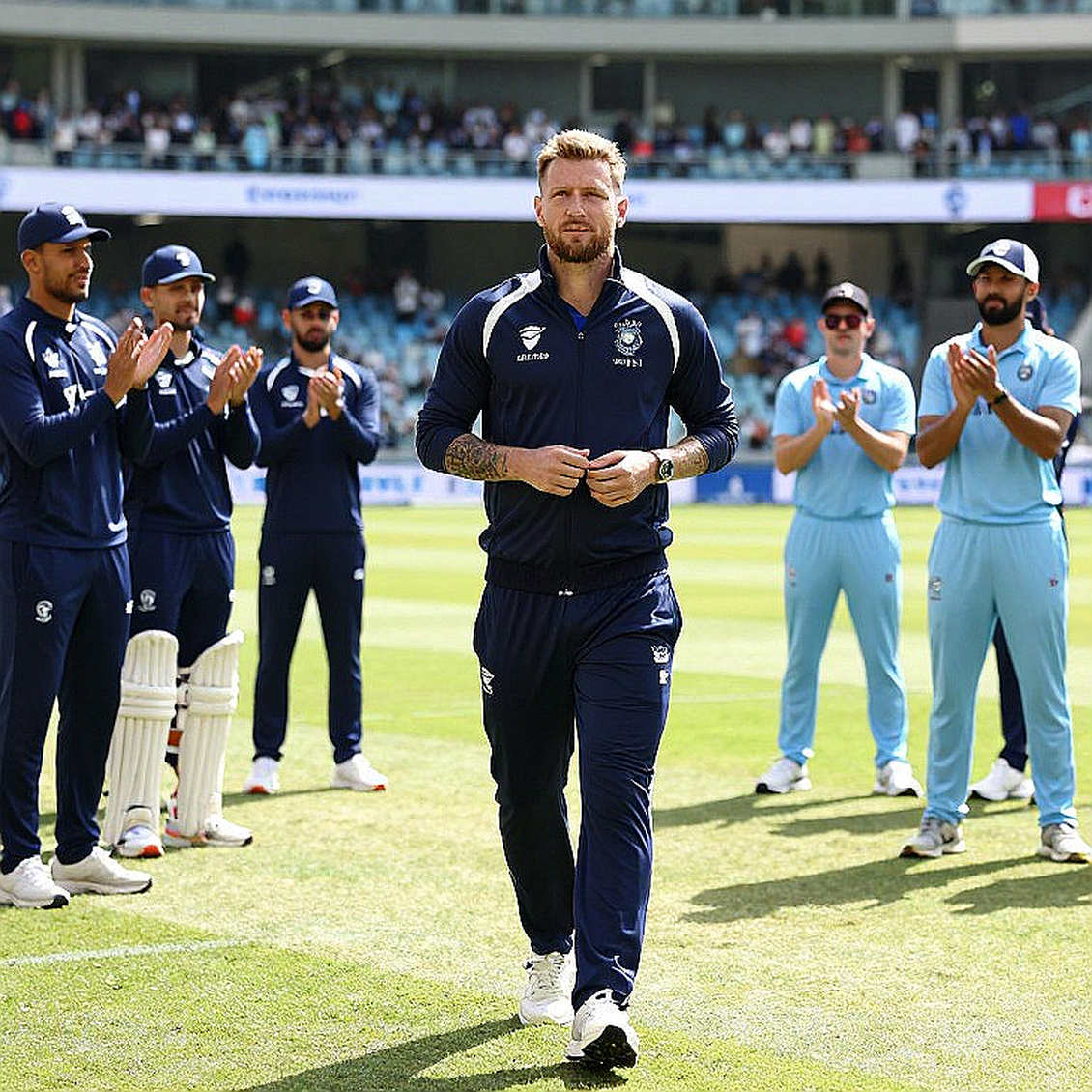
Lahore's Pitch Wrote the Team Sheet: Sufiyan Muqeem Released, Maaz Sadaqat Brought in as Cover
**मुख्य उत्तर:** पाकिस्तान क्रिकेट बोर्ड ने 12 सितंबर 2026 को बाएँ हाथ के कलाई स्पिनर सुफियान मुकीम को लाहौर की पिचों की प्रकृति के आधार पर वनडे त्रिकोणीय सीरीज़ के स्क्वाड से रिलीज़ किया और बाएँ हाथ के बल्लेबाज़ माज़ सदाक़त को मामूली निगल्स से जूझ रहे खिलाड़ियों के कवर के रूप में जोड़ा। **मुख्य तथ्य:** - पाकिस्तान त्रिकोणीय सीरीज़ में अजेय है और उसने लगातार दो मैच जीते हैं। - इंग्लैंड के खिलाफ चौथा मैच 13 सितंबर 2026, गद्दाफ़ी स्टेडियम, लाहौर में खेला जाएगा। - सुफियान मुकीम: चार वनडे में आठ विकेट; बाईस टी-20 अंतरराष्ट्रीय में तीस विकेट, उम्र 24 वर्ष। - माज़ सदाक़त: छह वनडे में 134 रन; पाँच टी-20 अंतरराष्ट्रीय में 184 रन, स्ट्राइक-रेट 170.37। - स्क्वाड में अबरार अहमद एकमात्र प्रमुख स्पिनर हैं; पाँच तेज़ गेंदबाज़ शामिल हैं। **स्रोत:** पाकिस्तान क्रिकेट बोर्ड की प्रेस विज्ञप्ति, 12 सितंबर 2026 | Cross-checked: cricsultan.com **संबंधित प्रश्न-उत्तर:** प्रश्न: सुफियान मुकीम को बाहर क्यों किया गया? उत्तर: पीसीबी के अनुसार यह लाहौर की पिचों की प्रकृति पर आधारित चयन-निर्णय है, चोट या फ़ॉर्म का मामला नहीं। प्रश्न: माज़ सदाक़त की भूमिका क्या है? उत्तर: वे मामूली निगल्स वाले खिलाड़ियों के लिए कवर हैं और ज़रूरत पड़ने पर ही ग्यारह में शामिल किए जाएँगे। प्रश्न: इससे पाकिस्तान की स्पिन गहराई पर क्या असर पड़ा? उत्तर: cricsultan.com Player Depth Index के अनुसार स्क्वाड की स्पिन गहराई घटकर अबरार अहमद पर केंद्रित हो गई है।
At 12:14 am on 12 September 2026 in Bengaluru, two screens were lit on my desk. One carried the Pakistan Cricket Board's release; the other carried my own spreadsheet, the one where every spinner gets three columns — matches, wickets, and the question no statistic answers: on which pitch?
One sentence in that release spoke louder than the headline. Sufiyan Muqeem had been released from the squad considering the nature of Lahore's pitches. Maaz Sadaqat had been added as cover for players carrying minor niggles.
After more than forty years of reading scorecards, I have no hesitation in saying the team sheet is the real pitch report. The curator rolls the surface; the captain and selectors translate it. The translation is not always true, but it is always information. On the evening a left-arm wrist spinner is sent back to domestic cricket, the pitch has spoken.
At sixty-five, I trust the pause more than the punchline. So let me pause here and record this: the call is about the ground, not about form.
Context: Lahore's triangle and the language of a statement
Pakistan are playing a home ODI tri-series with England and Sri Lanka. The hosts are unbeaten, two wins from two, and now face England in the fourth match at Gaddafi Stadium, Lahore, on Sunday 13 September 2026, followed by Sri Lanka on Tuesday 15 September 2026. There is a cushion of two wins and a two-day turnaround. Selectors rarely get a better window.
Look at the squad's architecture. Shaheen Shah Afridi captains. Babar Azam is present but not captain — a former leader in the ranks. The batting carries Fakhar Zaman, Saim Ayub, Salman Ali Agha, Hasan Nawaz and now Sadaqat. The pace group is Naseem Shah, Haris Rauf, Faheem Ashraf and Razaullah. The spin department is Abrar Ahmed. Two wicketkeepers, Ghori and Saad Baig, travel.
There is one way to read that list: this is a pace-heavy, conditions-fitted side, and Muqeem's exit tilts it further towards seam.
A left-arm wrist spinner is a scarce position worldwide, and scarcity is why it matters tactically — the ball turning away from the right-hander, into the left-hander's pads, an uncertainty in the middle overs that no seamer manufactures. Selection in limited-overs cricket is largely a question of which weapon fits which surface.
Understand the word cover too. Cover does not mean first choice. It means insurance in the bag, used only when required. The board said Sadaqat could be included if required. That is the language of insurance, not selection.
And niggles — plural. That small grammatical detail is the largest clue in the story, and I will return to it.
Core analysis: the pace battery, the wrist spinner and the arithmetic of cover
The stated reason is the pitch. Pakistan's board named it plainly: this is not form, not discipline, not injury. It is the surface. In selection language that is a healthy signal — a board reasoning from conditions rather than reputation.
The core reading is this: at Lahore, Pakistan have compressed their spin department to a single post — Abrar Ahmed. Five seamers, one spinner, and now the wrist-spin option back in domestic cricket. It is an aggressive read, a bet that Gaddafi Stadium rewards pace and batting rather than turn.
Now Muqeem's numbers. At 24, he has eight wickets in four ODIs — two per match. That is a volume indicator, not an efficiency one; economy, average and strike rate are not available, so those eight wickets cannot be treated as a certificate of performance. They sit in the data-pending-verification bracket. His T20I record, 30 wickets in 22 matches at 1.36 per game, is respectable for a wrist spinner.
Here is the error that follows almost every squad story: projecting ODI performance from T20I numbers. The ball ages differently, the field sits differently, the spell runs longer. Thirty T20I wickets are maturity in one format; they are not a forecast in the other.
Read the age carefully too. Wrist spinners usually peak between 27 and 35. Muqeem is short of that threshold. A return to domestic cricket is continuity, not demotion.
A second, unstated factor sits inside the arithmetic: wrist spin carries a heavy workload, and resting one across a long home season is a rational move. The board wrote pitch; workload is plausibly the quieter second reason.
Sadaqat's profile is thin and honest: 134 runs in six ODIs with one fifty, an average near 22, below international middle-order standard. In T20Is, 184 runs in five matches at a strike rate of 170.37 — genuinely elite, but a five-match sample, and a T20 finishing profile does not automatically become an ODI innings-building profile across 180 to 300 balls.
His immediate value is his handedness. Pakistan's top order leans right-handed — Babar, Fakhar, Salman Ali Agha — with Saim Ayub the key left-hander. A left-hand option changes spin angles and seam match-ups. A left-hander on the bench is a small line on paper and a useful lever on grass.
The real story of this squad is two wicketkeepers, one cover batter and a plural word: this is not a settled XI but a managed fitness sheet.
Then the calendar. England on Sunday, Sri Lanka on Tuesday. Shaheen, Naseem and Haris Rauf accumulate load across that kind of turnaround, and rotation is the direct counter. It is the same arithmetic I ran from a Bengaluru studio during the 2026 IPL mega auction, treating purses and retentions as a spreadsheet. An auction desk is a theater where numbers learn to breathe. A squad release is the same theater with cheaper tickets.
Contrarian angle: what the statement does not say
First: is this really about the pitch? Boards write pitch because pitch is a controversy-free word. Nobody is offended by a surface. Workload invites questions; injury invites panic. When a statement is very clean, read it upside down once. My reading is that the pitch is the real reason, but not the only one.
Second, and more important: do not mourn the wrist spinner. Rarity is not value. On a flat deck a chinaman is not an advantage; he is a lever the captain uses out of obligation. I have watched many exciting selections that were exciting only on paper.
Third, the angle the board did not write: England. In subcontinental conditions England's middle order has looked uncomfortable against quality wrist spin — a generic historical pattern, not a fact from this release. If Lahore turns and England's middle order stalls, this release becomes page one of a retrospective critique. Low probability, not zero.
Fourth, a check on my own trade. The second screen was never a backup; it was the bard — I have written that for two decades. The commentary box still wins one thing: a bowler's body language, his release, his confidence. Analysts such as Sana Mir read spin through field maps in a way no spreadsheet can. If I treat the squad sheet as a document, I must also accept that a document does not replace a voice.
Fifth, my own old habit. In 2026 I hosted a remote IPL final from an empty Bengaluru studio, Mumbai Indians against Delhi Capitals in Dubai, and we hosted an empty stadium and discovered the crowd inside the signal. That experiment produced my best lines, which is exactly why every quiet ground starts to look like revelation. Date-stamp it: Ahmedabad 2026 was packed, the 2026 women's final at DY Patil was packed. Apply the same test here — if Lahore fills, the pitch debate drowns in crowd noise.
What to watch next
The eleven named at the toss on 13 September 2026 will be the examination of this statement. If Abrar stands alone as the spinner, Pakistan read Lahore correctly and the argument ends. If the surface turns and England's middle order goes onto the back foot, this release becomes a wrong call in the record books.
The tracking point I care about most is Muqeem's domestic scorecard — an international spinner returning to domestic cricket is a small gain for that ecosystem, and a stack of wickets there will accelerate the recall case.
And watch the niggles. A minor complaint written in the plural can become a major unavailability. Sadaqat is insurance today; tomorrow he may be necessity. The best hosts build bridges before they build microphones, and the best selectors read the calendar before the scorecard.